Buying an unfinished or stalled building in Bulgaria: what you are actually buying, what to check and where the risks lie
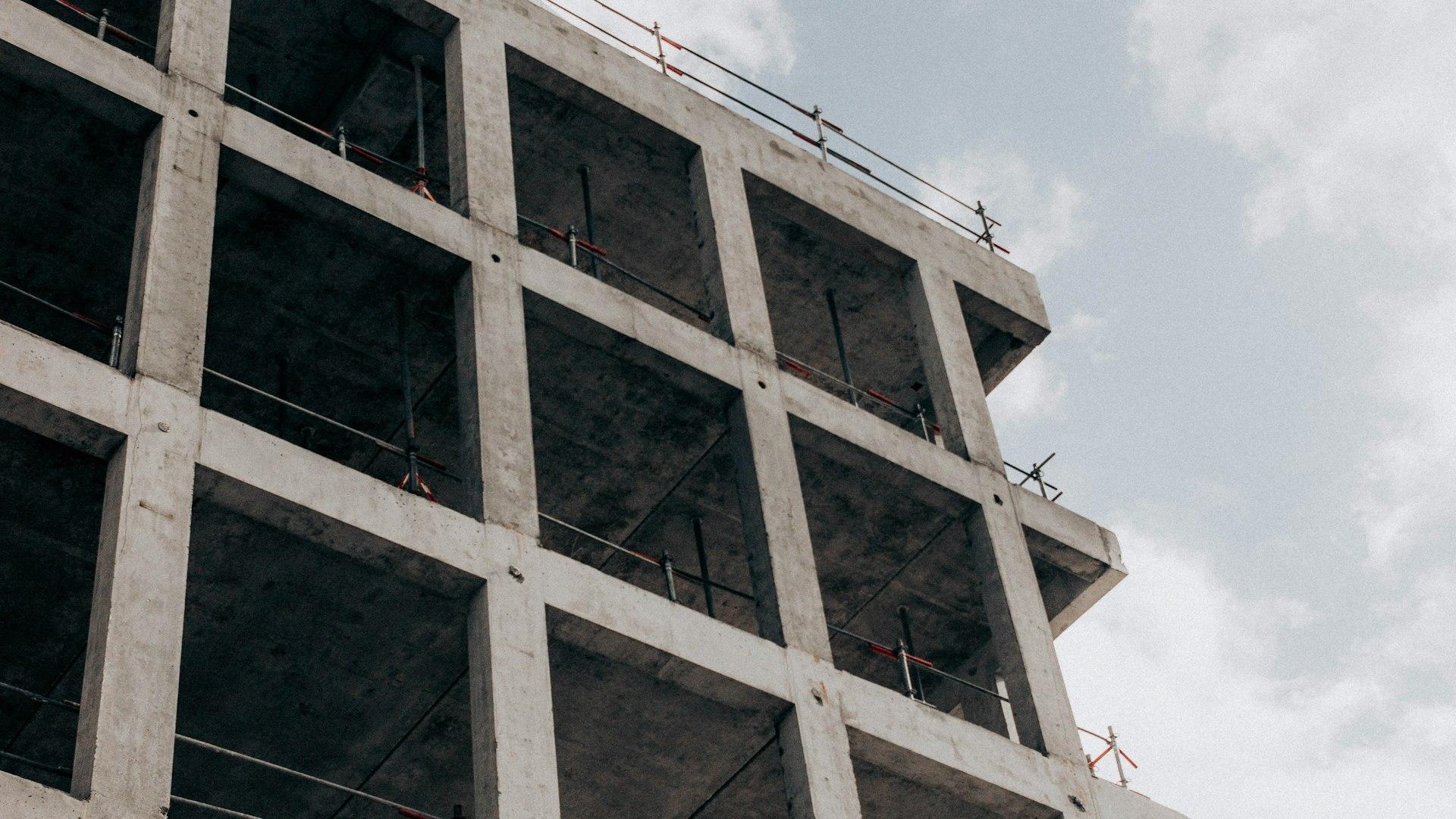
Almost every Bulgarian town has a building that has stood as a bare concrete frame for years: no façade, no windows, sometimes a crane that stopped turning long ago. To an investor it looks like a chance to buy below market value. To a buyer who has already paid for a flat in it, the question is how to save their money.
Either way, the first step is the same: work out what exactly is being bought and whether construction can lawfully continue at all. Below is what we check in these deals. The information is verified as of November 2026.
If you are buying a flat in a building that is going up normally, see our guide to the stages of a new-build purchase. This guide is about construction that has stopped.
What you buy depends on the stage
Bulgarian law draws a sharp line at rough construction (the structural shell):
- Before rough construction, what can be sold is the right to build the building or part of it (Art. 181(1) of the Spatial Development Act, ЗУТ). You are buying the right to build, not walls.
- After rough construction, the building itself or its individual units can be transferred (Art. 181(2) ЗУТ).
Completion of the rough construction is certified by a protocol (commonly called "Act 14"). It is drawn up by the construction supervisor in the presence of the developer, the contractor, the designer and a municipal building-control officer (Art. 181(3) ЗУТ). Without that protocol the building is not legally at rough-construction stage, however finished it may look from the street.
If the seller owns the land rather than holding a right to build, the general rule of Art. 92 of the Property Act applies: what is built belongs to the landowner. The deal then usually includes the land or a share of it. If the seller holds only a right to build (Art. 63 of the Property Act), check it has not lapsed. Our guide to the right to build covers this in detail.
Is the building permit still valid?
For a stalled project, this is the question that sets the price. A permit lapses if work has not started within 3 years, or if the rough construction including the roof is not finished within 5 years of the start (Art. 153(2) ЗУТ). It can be re-certified only once, on an application made within three months of expiry (Art. 153(4)–(5)). If it is not re-certified, the approved design lapses with it (Art. 153(10)). How these deadlines work is explained in our guide to building your own house.
For an unfinished building the consequence is practical. If the permit has lapsed, completion requires a new permit under the rules and the detailed development plan in force today. Those may allow fewer floors or a lower density, or require more parking. So we always check:
- the date the permit became final, and the date of the building line and level protocol, from which the five-year period runs;
- whether the permit has already been re-certified, since a second time is not possible;
- what the current detailed development plan allows on the plot.
The new owner becomes the developer
Under the law, the developer (vazlozhitel) is the owner of the land or the person holding a right to build (Art. 161(1) ЗУТ). So when you buy the land with the unfinished building, or the right to build, you take on that role. In practice the municipality issues an order entering the new developer in the permit.
With the role come the developer's obligations: a contract with a builder registered in the Central Professional Register of Builders, and contracts for construction supervision and designer's supervision where they are required (Art. 161(4) ЗУТ). The old contracts do not pass to you automatically. Ask for the site order book and every protocol drawn up so far; without them a new supervisor will struggle to take the site over.
Can the design be changed?
Buyers of stalled buildings often want to rework them, for example with smaller flats or a different use for the ground floor. Once a permit is issued, the law allows only non-material deviations (Art. 154(1) ЗУТ). Some material deviations are not allowed at all, such as breaching the detailed development plan or the building regulations (Art. 154(4)). Others, such as changes to the structure, to the use of units or to the common parts, are possible only with an approved design and the notarised consent of the interested parties (Art. 154(2) and (5)).
If the building already has buyers with preliminary contracts or owners of units, getting their consent can be the hardest part of the deal.
Has a control authority stopped the works?
Not every project stalls for financial reasons. The National Construction Control Directorate (ДНСК) stops first- to third-category construction, and the mayor fourth- to sixth-category construction, where it is carried out without a valid permit, with material deviations from the design, without construction supervision, among other grounds (Arts. 224(1) and 224a ЗУТ). If the construction is unlawful, its demolition can be ordered (Art. 225 ЗУТ).
So ask the seller for every order and inspection report on the site, and check with the municipality and in the Unified Public Register of Spatial Development. A building under a demolition order is not "cheap"; it may be worth nothing.
An abandoned building comes with obligations
The owner of a structure must maintain it (Art. 195(1) ЗУТ). If they do not, the mayor can order repair and strengthening works within a set period (Art. 195(4)). For structures that have become dangerous or are at risk of collapse, the mayor orders demolition (Art. 195(6)). If the order is not carried out, the municipality does the work and recovers the cost from the owner (Art. 196(5)–(6)).
Buy such a building and you buy these obligations too. Ask the municipality whether any proceedings under Arts. 195–196 have been opened.
Technically: concrete ages too
A frame that has stood for years without a roof or façade is not the same as one completed on schedule. Water in the slabs, exposed reinforcement and missing waterproofing can mean strengthening work before construction resumes. Before you agree a price, commission a structural survey from an engineer; it usually costs less than the first unexpected repair.
If you already have a contract in the stalled building
If you hold a preliminary contract and construction has stopped, first check the Commercial Register to see whether insolvency proceedings have been opened against the developer. In insolvency, claims secured by a mortgage or pledge are paid first from the proceeds of the encumbered property (Art. 722(1) of the Commerce Act). Buyers with preliminary contracts are usually unsecured creditors and receive whatever is left.
Buyers then often organise and look for a new developer to finish the building in return for extra payments or a share of the units. Your options for leaving the contract are covered in our guide to transferring an off-plan preliminary contract. What to check before you sign next time is in our guide to vetting the developer.
Short checklist
- Building permit, approved design, building line and level protocol, any re-certification.
- Rough-construction protocol (Act 14): does it exist, and for which part of the building?
- Ownership of the land or a registered right to build; encumbrances and mortgages in the Property Register.
- Stop, demolition or repair orders from ДНСК or the municipality.
- Preliminary contracts with third parties and units already sold.
- Site order book, protocols, contracts with the designer and supervisor.
- An on-site structural survey.
In short
- Before rough construction you buy a right to build; after it, the building or units in it (Art. 181 ЗУТ).
- A lapsed permit means a new permit under today's rules and plan.
- The new owner becomes the developer, with all the obligations and the need for a new builder and supervisor.
- A stop order or an Art. 195 order can change the price fundamentally.
- If the developer becomes insolvent, the mortgage lender is paid before the buyers.
If you are thinking of buying an unfinished building or a flat in a stalled project, or you already have a contract in one, call us or come into the office. We will go through the documents, check the status of the construction and tell you what you are really buying.
This guide is general and does not replace legal and technical advice on a specific property. Verified as of November 2026.

