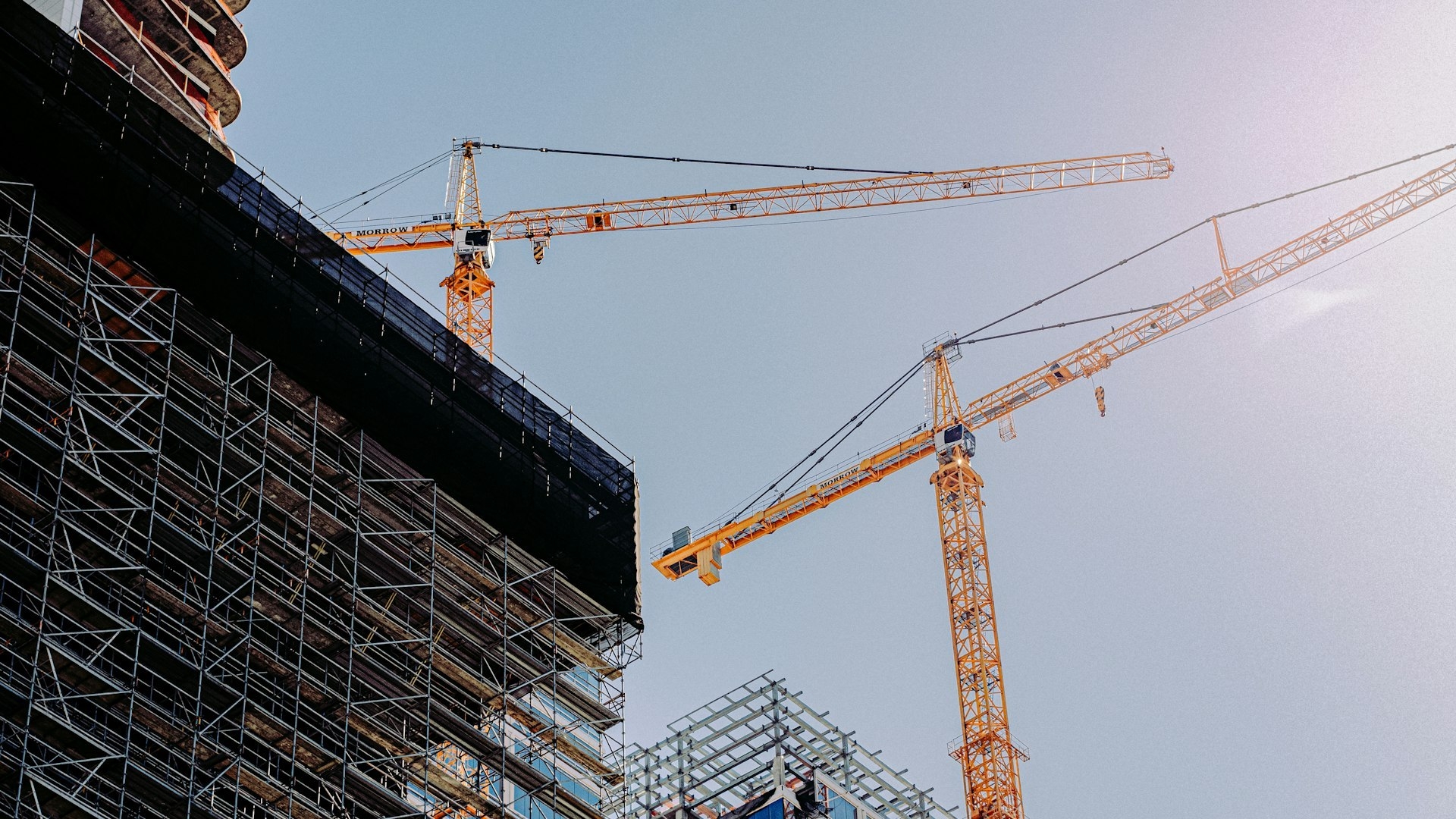
When you buy a home off-plan, you pay a large part of the price for something that does not exist yet. Bulgaria has no mandatory mechanism to protect that money — no escrow account, no bank guarantee or insurance in the buyer's favour. Such measures have been proposed (including by the expert council of the Association of Prosecutors in October 2025), but as of November 2026 none has been adopted.
In practice your best protection is to check who is building before you sign. In our guide to the construction stages we explained what Acts 14, 15 and 16 mean and why the developer's mortgage over the land is the most underestimated risk. Here we focus on the company itself — and on checks you can run yourself, most of them free.
A residential project usually involves several different parties, and each is worth checking:
It is common for the developer to be a company set up for this one project. That is not a warning sign in itself, but it means you need to find out who is behind it and what they have built before.
The Commercial Register is public and free — anyone has the right to access it. Search for the developer and the contractor by their company number (EIK) and look at:
The best indicator of a developer is what they have already completed. You are looking for buildings that have been put into use — that is, they hold a use permit or a commissioning certificate.
Who issues that document depends on the building's category under Art. 137 of the Spatial Development Act (ZUT):
| Building | Category | Commissioning |
|---|---|---|
| High-rise residential building (over 15 m) | III | use permit from DNSK (national construction control directorate) |
| Medium-rise residential building | IV | certificate from the municipality (district) |
| Low-rise residential building, holiday home | V | certificate from the municipality (district) |
DNSK keeps a public register of the use permits it has issued, which can be searched by the developer's EIK — so you can see which of this developer's buildings have been put into use, and when. In Sofia, the city's architecture department (NAG) publishes registers of building permits and commissioning certificates.
Then do the simplest check of all: go and see the finished buildings. Talk to the residents — are the common areas finished, are there unresolved defects, did the developer keep to the timetable, when was Act 16 actually obtained compared with what was promised.
Ask for a copy of the building permit and the approved design and compare them with what you are being sold: number of floors, areas, your unit on the approved drawings. In Sofia the permit can also be checked in NAG's public register.
DNSK also keeps a public register of final demolition orders for illegal buildings — check the developer and the address there.
Contractors carrying out construction in categories one to five must be entered in the Central Professional Register of Builders (CPRS) kept by the Bulgarian Construction Chamber (Art. 3(2) of the Construction Chamber Act). The register is public and published on the chamber's website.
Registration is by group and category of works. For a residential building you want a contractor registered in group one — "building construction" — and for the category of the building in question. If the contractor is not registered, or only for a lower category, that is a reason to stop.
A search on the property in the Property Register shows whether the land carries any mortgages, attachments (vazbrana) or registered lawsuits. A mortgage in favour of a bank financing the build is normal practice — what matters is the terms on which it is released when your unit is sold (covered in detail in the construction stages guide).
Note that since 15 January 2026 access to copies of the registered deeds themselves is limited to a defined list of people — the parties, lawyers, notaries, enforcement agents and others. A search will show that an entry exists, but to read the mortgage deed itself you will probably need a lawyer or notary.
Bulgaria's e-justice portal does not allow searches by party name — you can only view a case if you know its number. So work from indirect traces: registered lawsuits and attachments in the Property Register, insolvency entries in the Commercial Register and — simplest of all — ask the developer directly whether there are any disputes with buyers or with the municipality. The answer, and how it is given, is information too.
Ask openly what money the building is going up with: the developer's own funds, a bank loan, or mainly buyers' advance payments. A bank-financed project has been through the bank's due diligence, but it also means a mortgage on the land. A project that relies entirely on buyers' advances is the most exposed if sales slow down.
Tie your instalments to the construction stages — the acts under Ordinance No. 3 of 31 July 2003 (Act 14 for the shell, Act 15, Act 16) — rather than to calendar dates. Pay only by bank transfer to the seller's account named in the contract; see also the proposed ban on cash payments in construction.
The preliminary contract must be in writing and contain the essential terms of the final contract (Art. 19(1)–(2) of the Obligations and Contracts Act). If the seller refuses to transfer the property, you can bring a claim under Art. 19(3) — the court then declares the contract final. The statement of claim is entered in the Property Register, and the judgment must be noted within six months for that protection to hold.
The preliminary contract itself, however, cannot be registered. Until the claim is registered, it does not protect you against third parties — for instance if the developer mortgages or sells the same unit to someone else. For more on clauses, deposits and penalties, see our guide to deposits and preliminary contracts.
| Check | Where | Warning sign |
|---|---|---|
| Owners and managers | Commercial Register | links to failed companies |
| Annual accounts | Commercial Register | missing accounts |
| Completed buildings | DNSK / NAG registers | not a single building put into use |
| Building permit | NAG / municipality | you are sold something not in the design |
| Contractor | CPRS | not registered, or only for a lower category |
| Encumbrances on the land | Property Register | attachments, registered lawsuits |
| Court disputes | indirect traces, question to the developer | evasive answer |
Information verified in November 2026 and general in nature. For a specific transaction, have the contract and documents reviewed by a lawyer.
Considering an off-plan purchase and want a second look at the developer, the documents and the preliminary contract? Call us or visit our office — we will go through together what has been checked and what is still open before you pay the first instalment.