
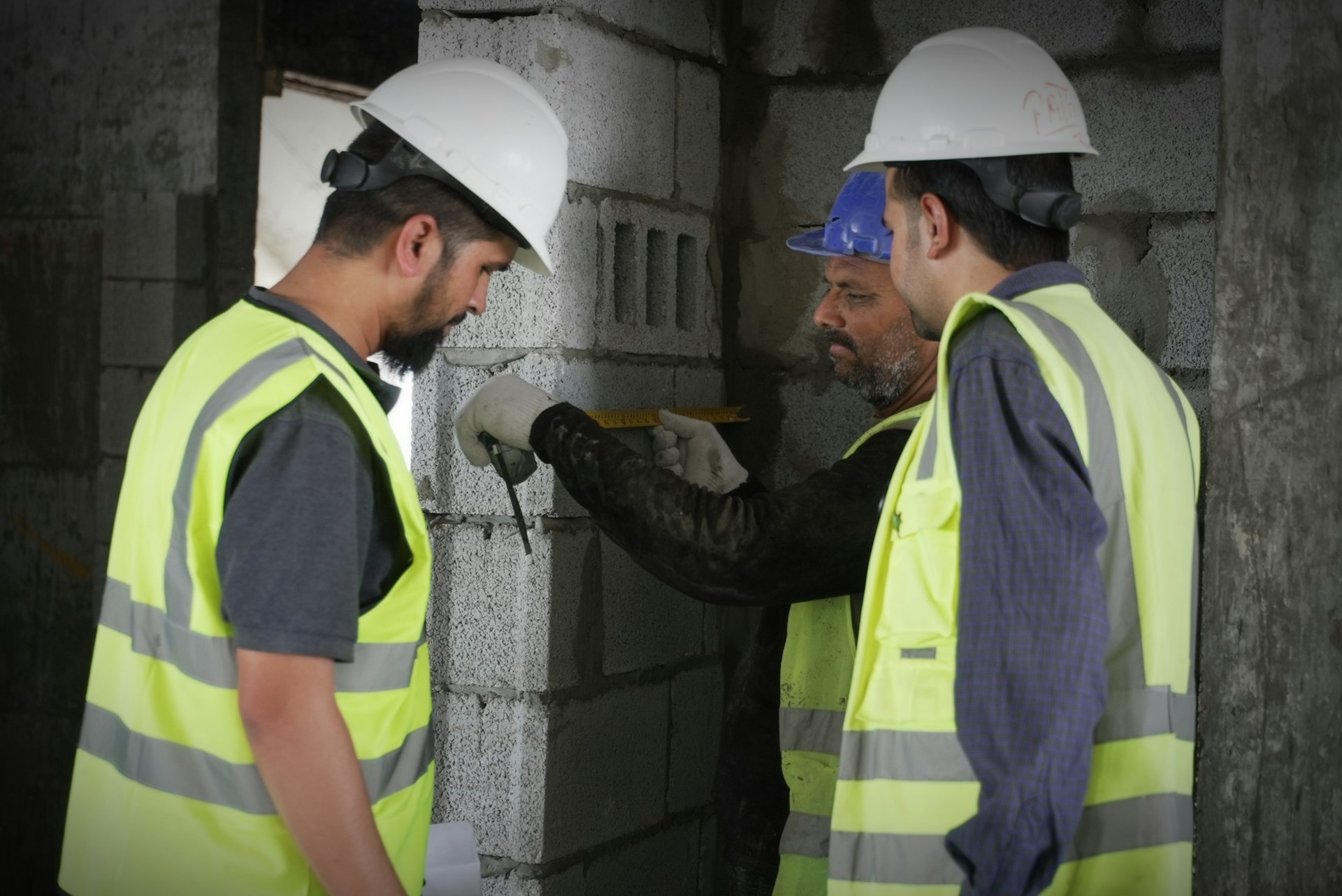
Bulgaria's Ministry of Finance wants payments between construction companies, contractors and subcontractors to go through a bank account only — whatever the amount — from 1 January 2027. The provision does not sit in a tax law. It is in the draft amendments to the Gambling Act, published for public consultation on 23 September. Comments are open until 23 October 2026.
If you are buying off-plan, finishing an apartment or planning a renovation, here is what is actually proposed, what already applies, and what to do now.
Section 80 of the bill adds a new point 5 to Article 3(1) of the Limitation of Cash Payments Act. It requires a bank transfer or a deposit into a payment account for:
"payments between construction companies, contractors and subcontractors under contracts for construction or installation work, the supply of construction materials, machinery or equipment, and related services, including partial payments and/or advance payments."
What is new is that there is no threshold. Until now the cash ban started at a set amount. For construction, it would also cover a materials advance of a few hundred euro.
Under the draft, the law takes effect on 1 January 2027. The exceptions with later dates concern gambling fees, not construction.
Restrictions on cash are not new. The Act already requires a bank payment for anything from BGN 10,000 — about €5,112.92 at the fixed rate. The same applies to smaller payments on the same basis that together reach that threshold. Splitting one sum into several cash instalments is therefore already not an option.
The penalties are steep and hit both the payer and the recipient: a fine of 25% of the full amount for an individual and a 50% penalty for a company. For a repeat breach these become 50% and 100%.
That is why some press commentary argues the draft bans something that, for most construction payments, is already banned. In practice the change bites on smaller amounts — which in construction usually means payments to small subcontractors, tradespeople and suppliers.
In its explanatory memorandum, the ministry says the sector relies heavily on subcontractors that are "very often small businesses and individuals". In its view, cash payments make money hard to trace and make it easier to hide income, employ people off the books and claim fictitious costs. The aim is a traceable payment trail "from the client and the main contractor down to the individual subcontractors and suppliers".
Press coverage also notes that the ministry has not published an expected revenue effect, and that putting the measure in the Gambling Act is unusual.
Here the text is not clear-cut. The provision refers to payments "between construction companies, contractors and subcontractors". It does not expressly mention a private individual who commissions a renovation or buys a home. The memorandum, however, describes the chain as starting "from the client".
Our reading: the draft is aimed mainly at payments inside the construction chain — developer, main contractor, subcontractors, suppliers. Whether it will also cover a homeowner paying a firm to redo a bathroom remains to be clarified. The wording may still change during consultation, at the Council of Ministers and in Parliament.
There is also an indirect effect. If the firm you hire can no longer pay its tradespeople and suppliers in cash, it will ask you for a bank payment against an invoice too. And the cost of formalising — taxes, social contributions, accounting — usually shows up in quotes.
Whatever the final text, paying by bank is already in your interest:
The measure is part of the Ministry of Finance's tax package for the 2027 budget. Another proposal from the same package that affects new construction is mandatory VAT registration for sellers of new buildings and plots — covered in an earlier article. We will follow both texts through to final adoption.
A bank-only rule for construction payments from 2027 is a draft, not law. The direction, though, is clear: every payment along the construction chain should leave a trail. For buyers and homeowners, the sensible move is to work that way already — with a contract, an invoice and a bank transfer.
If you are buying a home under construction or agreeing a renovation and would like someone to review the contract and payment schedule — call us or come into the office.
The draft is open for public consultation until 23 October 2026 (strategy.bg, consultation 12738). The text may change. Information verified as of 9 October 2026; this is not legal advice on a specific case.