
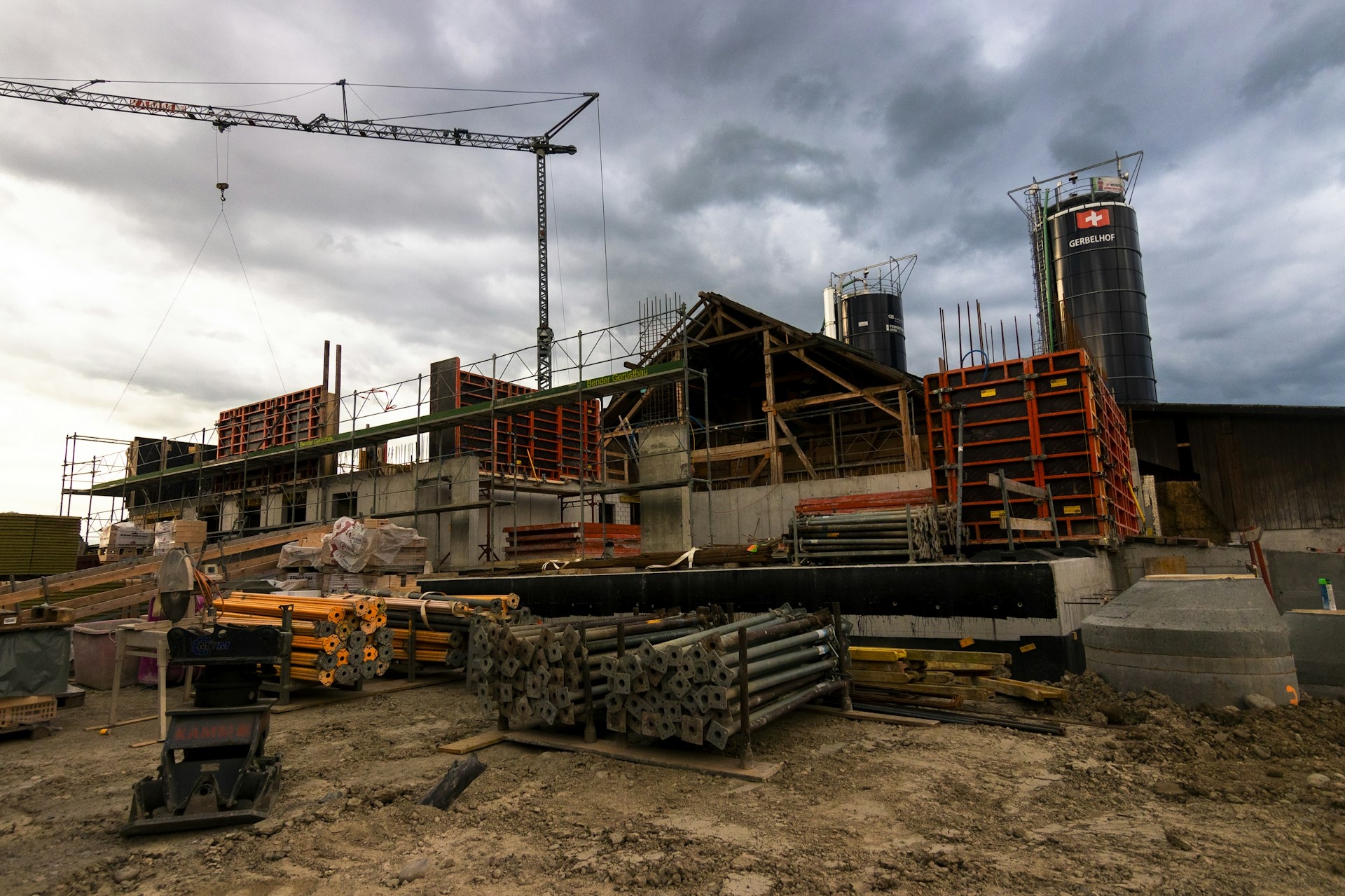
With new-build property, the price almost always depends on the construction stage. The earlier you commit, the better the terms — and the larger the share of the risk you, rather than the developer, are carrying.
The difficulty is that these stages are discussed in shorthand that does not match their legal meaning. "The building has Act 14" sounds like the finish line, when in fact it is not even sufficient to establish that the building has reached rough-construction stage. Here is what each stage actually means — and where it is decided whether your purchase is protected.
Until the building is completed to rough-construction stage, what can be transferred is the right to build, not the apartment itself. This follows directly from Article 181(1) of the Spatial Development Act (ЗУТ).
In practice, off-plan purchases are structured through a preliminary contract under Article 19 of the Obligations and Contracts Act, combined with a construction agreement. A preliminary contract does not transfer ownership — it creates an obligation to conclude a final contract. If the other side refuses, the performing party may ask the court to declare the contract final under Article 19(3). That is real protection, but it is a court route: it takes time, and it assumes the contract was drafted precisely enough to be enforceable.
At this stage, therefore, the quality of the contract matters more than anything else.
This is where the most common mistake is made.
Act 14 is the acceptance protocol for the structure under Regulation No. 3 of 31 July 2003. It is drawn up by the participants in the construction process — the structural designer, the contractor and the structural engineer acting for the construction supervisor. In other words, it is an internal document signed by the parties building the project.
The document with external legal force is a different one: the certificate of completion stage under Article 181 of ЗУТ. It is issued by the municipal administration, following an inspection on site and of the documentation, and certifies that the building meets the "rough construction" stage as defined in § 5, item 46 of the Act's supplementary provisions — enclosing walls and roof completed.
Why this matters to you:
If a seller tells you the building is "at rough construction", ask for the Article 181 certificate — not the act.
Act 15 is the protocol establishing that the works are fit for acceptance. Through it the contractor hands the building and the construction documentation over to the developer.
Two clarifications that prevent misunderstandings:
Buying after Act 15 but before Act 16 is common practice — but it carries the risk of an open-ended delay. There is no fixed deadline for commissioning, and it can be extended by another owner's refusal to sign.
Act 16 is the protocol establishing fitness for use, on the basis of which either an occupancy permit (for higher construction categories) or a commissioning certificate (for category IV and V buildings, issued by the municipality's chief architect) is granted.
Its practical significance is twofold: the building may lawfully be occupied, and the statutory warranty periods begin to run from commissioning — not from Act 15, and not from the notarial deed.
The minimum periods are set out in Article 160(3)–(5) of ЗУТ and Article 20 of Regulation No. 2 of 31 July 2003:
A contract may provide for longer periods, but not shorter ones than the statutory minimums.
And one point rarely explained to buyers: if you purchase from the developer as the commissioning party, you can negotiate longer periods directly. On a resale, however, you are a third party to the contract between developer and contractor and can rely only on the statutory minimum — unless the warranty rights are expressly assigned to you with the contractor's prior consent. It is worth asking about that clause before you sign.
Under § 1, item 5 of the supplementary provisions of the VAT Act, "new buildings" are those which at the date of supply are at rough-construction stage, or for which 60 months have not elapsed since the occupancy permit or commissioning certificate was issued.
The sale of a new building by a VAT-registered person is a taxable supply carrying 20% VAT. That is why new-build asking prices are normally quoted "VAT included", whereas resales of older homes between private individuals carry no VAT at all. When comparing offers, check explicitly whether the quoted price includes the tax — the difference is not cosmetic.
In most projects the developer finances construction with a bank loan secured by a mortgage over the plot. That mortgage encumbers the units in the building as well.
If it is not discharged — or at least partially released for your unit — before or simultaneously with the notarial transfer, you acquire a property burdened by someone else's debt. The mechanism is standard and entirely solvable: the developer's bank issues consent to a partial discharge, coordinated for the completion date. But it has to be written into the preliminary contract as an obligation with a deadline, rather than arranged on the day.
Encumbrances are checked through a certificate from the Property Register, obtained immediately before the notary — we set out the full procedure in our guide to legal checks before buying.
For new construction the minimum is broader than on a resale:
If you are buying with a loan, note that the bank will only release funds after the stage it recognises. For an initial estimate you can use the mortgage calculator, and we have summarised lending conditions in our mortgage guide.
On new-build transactions, checking the project is part of our ordinary work rather than a separate service. We verify the construction status from the documents, not from the listing description; we ask for the Article 181 certificate rather than Act 14; we trace the encumbrances over the plot and negotiate the mechanism for discharging them; and we renegotiate the preliminary contract instead of signing it as presented.
If you are considering a new-build purchase and would like the contract reviewed by a lawyer before you pay a deposit — call us or come by the office. We will go through the documents together and tell you plainly what is in order and what needs to be settled before the notary.