
When a buyer walks into a home full of things, they see fewer square metres. When they walk into the same home, tidy and with well-hidden storage, it looks larger and newer. Storage is therefore not just about order – it is about the sense of space, and ultimately about price. Here is how to find room without turning the home into a warehouse.
Before ordering a wardrobe, take a simple inventory: clothes by season, bedding, sports equipment, suitcases, papers, tools, vacuum cleaner, ironing board. You will find that much of it is not needed every day – and that is the key: everyday things close at hand, seasonal things up high, rarely used things outside the living space (basement, loft, under-bed boxes).
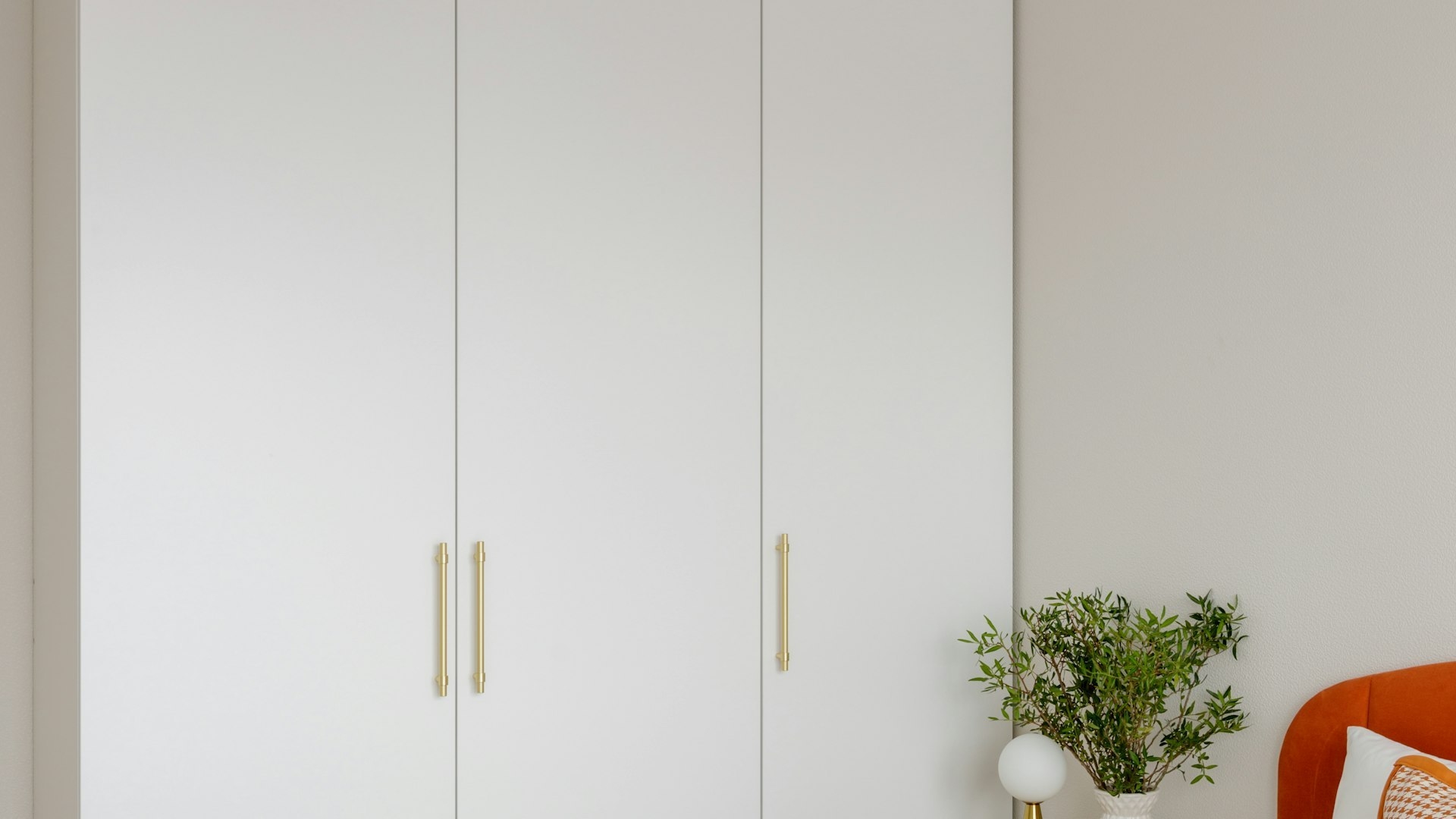
A built-in wardrobe (made to measure, floor to ceiling) uses every centimetre, including the height above 2 metres, and looks like part of the wall – so in small rooms it often visually "disappears". The downsides: it cannot be moved, it is made for one specific wall, and it stays when you sell.
A freestanding wardrobe is cheaper, moves with you and lets you change the room. But it leaves empty space above and around it that gathers dust and clutter, and the room looks less finished.
A practical rule from our viewings: in bedrooms and hallways a built-in solution almost always looks better; in a children's room and a rental flat, the flexibility of freestanding furniture is often worth more. More on this dilemma for compact homes in our guide to small spaces.
For carcass materials and emissions from chipboard and MDF, see our guide to eco-friendly furniture.
Two wardrobes of the same size can hold very different amounts:
Many older homes have niches, recesses beside chimneys and ventilation shafts, or corners under stairs. They are ideal for a built-in cupboard or shelving – space that would otherwise go unused. Just take care not to close off access panels, stop valves or the electrical consumer unit – they must remain accessible.
Other places with potential: above doors (a shelf or cupboard), under the window (a bench with a lid), under the bed (drawers or a lift-up base).
In most panel and brick flats the entrance hall is narrow, and it is the first thing a guest or buyer sees. What works:
Layout, scale and the role of storage in the whole home are covered in our guide to decorating your own home.
A basement storage room is the cheapest extra storage – as long as it is dry. Use metal or plastic shelving and lidded boxes, and keep nothing directly on the floor. Clothes, books and papers belong in airtight boxes there.
One important point: stairwells, landings and corridors in a block are common parts. The Condominium Management Act prohibits an owner from taking over common parts (Art. 6(1)(3)). A shoe cabinet outside the door, a bicycle or old furniture on the landing are a frequent cause of disputes and obstruct evacuation in a fire.
Under Art. 98 of the Property Act, an accessory follows the principal item unless agreed otherwise. In practice buyers expect a built-in wardrobe to stay – and it is usually part of the home's value. If you want to take something with you, agree it explicitly in the preliminary contract and in the handover protocol.
Before photographs and viewings:
If you are buying a new-build flat, wardrobes are a significant cost in the second budget – plan them together with lighting and sockets.
If you are preparing your home for sale or looking for a home with more storage, call us or come into the office.
This is general information and not legal advice for a specific case. Verified as of October 2026.
