Living in Pazardzhik: neighbourhoods, housing stock, the Plovdiv connection and what to check before you buy
Pazardzhik sits at the westernmost edge of the Upper Thracian Plain, on both banks of the Maritsa river. The town is almost perfectly flat — around 205 m above sea level throughout. It lies about 37 km west of Plovdiv and 112 km south-east of Sofia.
For a buyer, it is a town with a compact centre, large panel-block estates from the late twentieth century and a growing number of houses on the outskirts. It is often considered by families who work in Plovdiv and want a quieter town without cutting the tie to the bigger city.
The descriptions are general and reflect our experience; every neighbourhood has better and weaker streets. Checked as of November 2026.
Getting to Plovdiv and Sofia
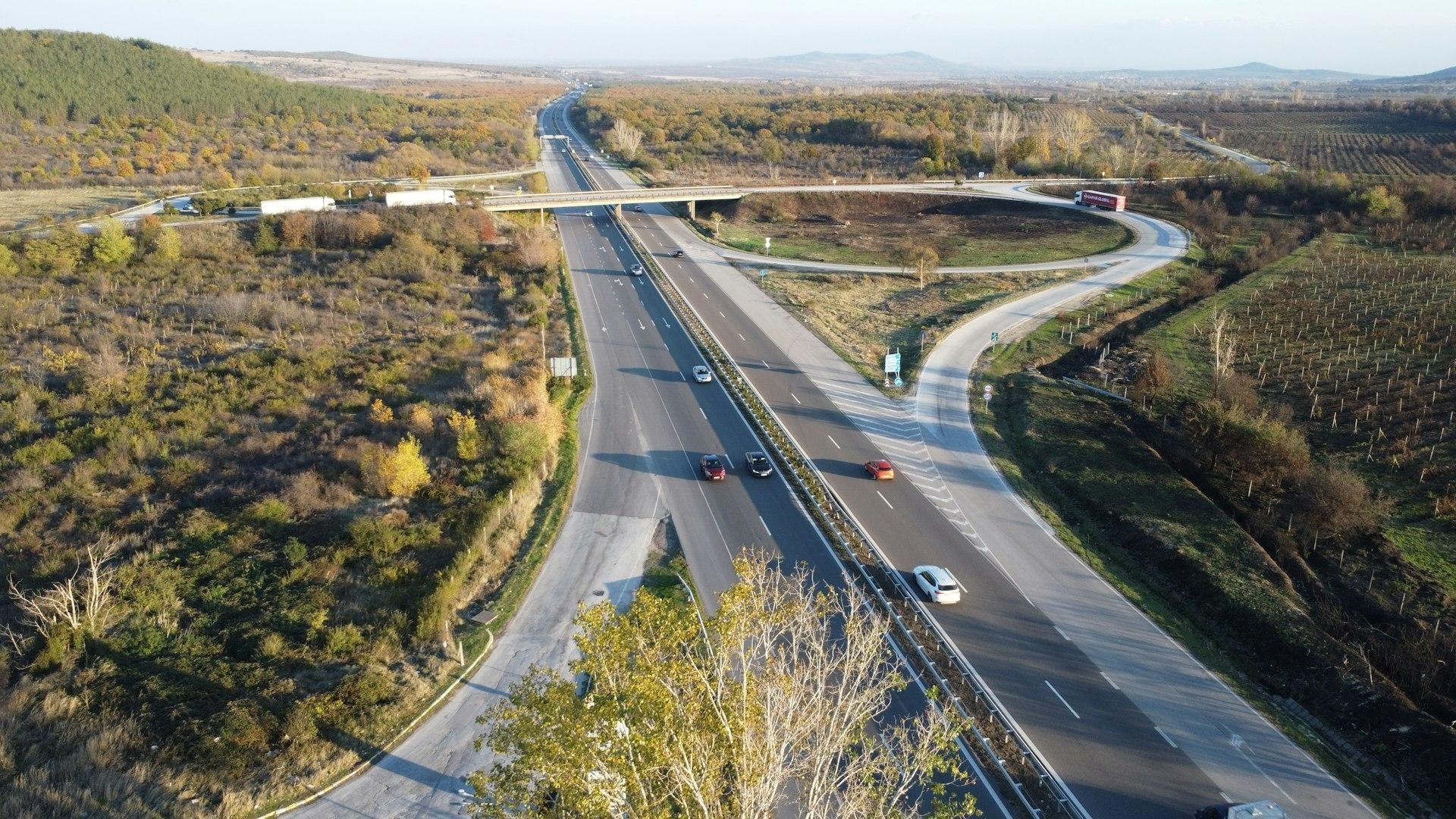
The Trakia motorway runs past the town and has its own "Pazardzhik – Panagyurishte" junction. Pazardzhik is also on the main Sofia–Plovdiv railway line, and both the railway station and the bus station are in the southern part of town.
If you plan to commute to Plovdiv every day, drive the route at the time you would actually travel, from the specific address. The difference between a neighbourhood near the motorway exit and one on the far side of town is something you will feel every day.
The centre and Varosha
The centre has a pedestrian zone, the Old Post Office with its clock tower, the theatre and the Regional History Museum. Around it lies the wider centre — a mix of brick apartment buildings, newer developments and a few blocks.
Varosha is the town's National Revival quarter. It is home to the Cathedral of the Dormition of the Theotokos (1836–1837), the largest Revival-era church in Bulgaria. If you are considering an old house here, check whether the property or neighbouring buildings are listed cultural heritage, because that governs what you may renovate and how.
Close to the centre, on the Maritsa, is the Svoboda park-island — the town's largest green space for walks.
The large housing estates
- Zapad — in the west of town, built mainly with panel blocks. Practical for people who want everything nearby at a sensible price.
- Ustrem and Stavropol — the north-west and north, between Zapad and the "Stadiona" area around the Georgi Benkovski stadium park.
- Mladost — towards the edge of town in the direction of the cemetery and the village of Dobrovnitsa.
- Yabalkite — blocks in the north-east.
- Maritsa and Manastiri — next to the river; Manastiri faces Svoboda island.
The usual rules apply to panel blocks: the condition of the joints, the roof and the vertical risers, the floor, whether the building has been renovated, and what has been done inside the flat over the years. We cover them in detail in our guide to buying a flat in an older apartment block.
Houses and newer construction
Newer houses are mostly on the outskirts. Piskovets is developing towards the village of Mokrishte as an area of new houses. Besapara is a residential area beyond the railway lines towards the village of Glavinitsa, and the Dimcho Debelyanov area lies past the edge of town towards Miryantsi.
For a house on the outskirts, check whether the plot is within the regulated urban area, whether there is mains sewerage or a cesspit, how water and electricity are supplied, and what the street is like in winter.
The river, groundwater and climate
The Maritsa runs along the southern edge of town, and the river's flood terraces are rich in groundwater. For a buyer that means two specific checks:
- Basements and semi-basements — look for damp, seeping water and a musty smell. Ask the neighbours what happens during prolonged rain.
- Flood risk — for properties near the river and the canals, look at the flood hazard and flood risk maps. Our guide to floods, landslides and earthquakes explains how, step by step.
The climate is fairly dry — around 500 mm of rain a year, which puts Pazardzhik among the driest towns in Bulgaria. Winter, however, brings temperature inversions and fog, especially in December. So at a viewing, pay attention to the heating system, insulation and windows.
Work, education and population
Among the largest employers in town are automotive components maker Kostal Bulgaria Automotive and paper packaging producer DS Smith Bulgaria. Pazardzhik also has a branch of Plovdiv University "Paisii Hilendarski" and several specialised secondary schools, including the Bertolt Brecht language school.
One number every buyer should know: the town's population is falling. Census figures show 82,578 residents in 1992 and 55,716 in 2021; by the end of 2025 it stood at about 53,700. That does not mean buying here is a bad idea. It does mean that at resale, the choice of neighbourhood, floor and building condition matters more than in a growing city.
Prices
We do not publish average prices for Pazardzhik, because we could not find a reliable, dated source for the town. If you are comparing with Plovdiv, see our guide to Plovdiv's neighbourhoods. For the costs of the transaction itself, use our notary fee calculator.
A short pre-purchase checklist
- Drive the commute at the real time of day.
- Near the Maritsa or the canals — check the flood risk maps.
- Inspect the basement or semi-basement for damp and groundwater.
- Old house in Varosha — check its cultural-heritage status.
- Panel block — joints, roof, risers and renovation.
- House on the outskirts — regulation, sewerage, water and power, the street in winter.
- Think about resale at the moment you buy.
If you are thinking of buying in Pazardzhik or comparing it with Plovdiv, call us or come into the office. We will help you weigh up the specific neighbourhood and property.
The descriptions are general and do not replace a viewing and checks on the specific property. Data as of November 2026.

