
In Plovdiv almost everything is twenty minutes away by bike or bus. That makes choosing a neighbourhood less about distance and more about how you want to live: an old house or a new block, a busy centre or a quiet edge of town, a panel estate with everything already in place or new construction where the infrastructure is still catching up. Below are the five areas we are asked about most, and what we check in each.
These descriptions are general and reflect our experience; every neighbourhood has better and weaker streets. Verified as of October 2026.
Karshiyaka lies north of the river, linked to the centre by several bridges. The housing stock is mixed: old family houses and single floors of houses, mid-century brick blocks, panel blocks and a great deal of new construction from the last twenty years. The rowing canal and the parks along the Maritsa are close by — one of the area's biggest draws.
Suits: families who want greenery and sport; people who work in the centre but prefer a calmer setting.
What to check: in new buildings, the certificate of use (the Act 16 on its own is not enough) and whether the parking spaces actually exist as separate units or are only "agreed"; in older buildings, the roof, the riser pipes and the basements. Near the river, ask about damp in basements and how the building coped with heavy rain.
Trakia is the biggest residential estate in the east of the city and a district in its own right. It is a classic panel-block estate from the 1970s and 1980s, filled in with newer cast-concrete buildings. There are schools, kindergartens, markets, supermarkets and parks, and plenty of bus routes into the centre.
Suits: buyers on a tighter budget, first-time buyers, long-term buy-to-let, families with school-age children.
What to check: in panel blocks, whether the building has been insulated under a renovation programme or has an approved project, when the lift was replaced, whether there is a repair fund and what state the roof waterproofing is in. Top and ground floors carry their own risks (leaks, damp) that should show in the price. Evening parking between the blocks is a real problem in many places — view the flat at that time too.
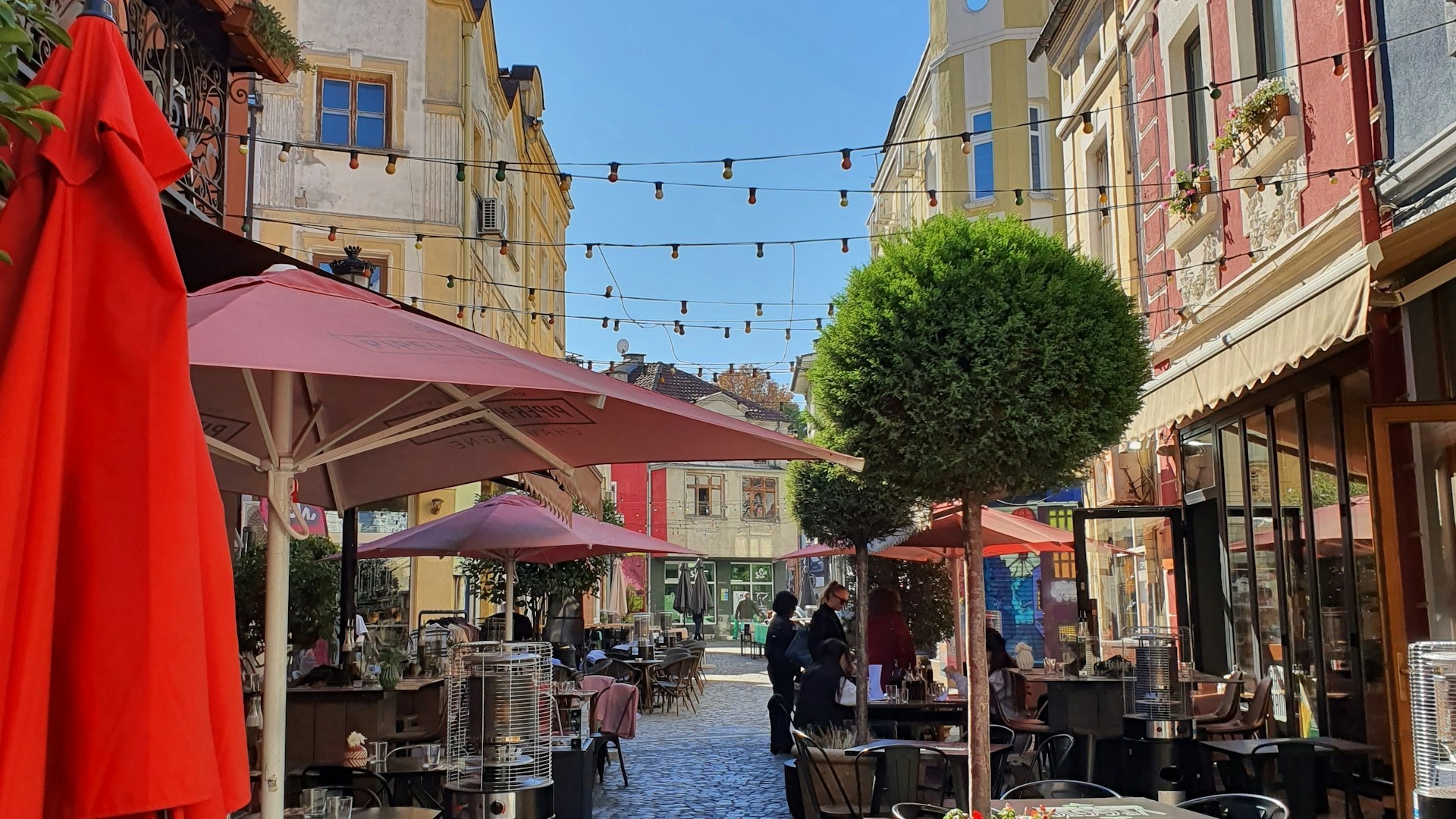
The centre is everything between the Main Street, the hills and the Tsar Simeon Garden. Kapana is the small grid of old craft streets north of the Dzhumaya Mosque, now full of studios, galleries, cafés and restaurants — especially since Plovdiv was European Capital of Culture in 2019. The housing stock is old houses, brick blocks and a little new construction on individual plots.
Suits: people without a car who want to walk everywhere; short-term letting; anyone who values atmosphere.
What to check:
Hristo Smirnenski is in the south of the city and is among the areas local buyers want most. It mixes brick and panel blocks with newer buildings, has schools and parks and a good link to the centre. The market here is more liquid — homes sell and let more easily, but they are rarely a bargain.
Suits: families, couples, buyers thinking about resale in a few years.
What to check: in new buildings squeezed between older blocks — daylight (the distance to the next building), parking access and whether more construction is planned next door. In older ones — energy performance and the condition of the common parts.
Ostromila sits on the southern edge of the city, next to the woods and Ostromila park. Much has been built here in recent years: houses, semi-detached homes and small apartment buildings, often with gardens and views of the Rhodopes. It is quiet and green, but the neighbourhood is still being built out.
Suits: families who want a house or a larger home at a more accessible price; people with a car who work flexibly.
What to check:
If you are looking for a home in Plovdiv and would like us to compare a few neighbourhoods against your budget and way of life, call us or come into the office. We'll show you the current listings and what lies behind them.
This is general information and does not replace checks on a specific property. Verified as of October 2026.
