
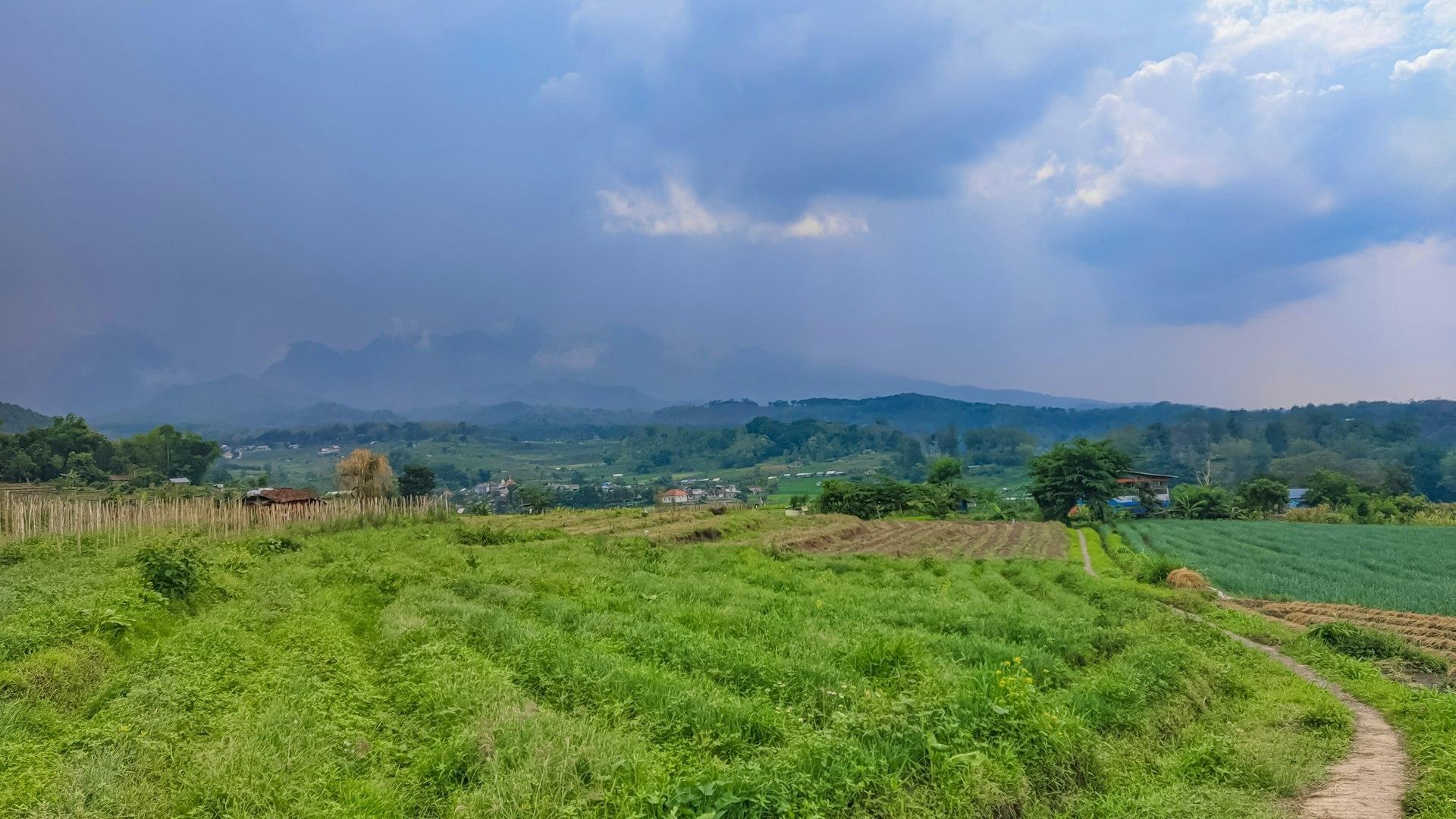
Many "plots" on the edge of Sofia and around villages are in fact agricultural land — a field, meadow or orchard. No dwelling can be built on such land until its designation is changed under the Agricultural Land Protection Act (ЗОЗЗ). The Act allows a change only as an exception, where the need is proven (Art. 2(3)).
Our guide to buying a plot summarised the procedure briefly. Here we go into detail: who decides, what it costs under the new euro tariff, and which deadlines can cost you money already paid.
Land inside urbanised areas defined by a detailed development plan is not agricultural land in the legal sense. So the first check is at the municipality and on the cadastral sketch: what the permanent land use is and whether the plot lies within the building limits.
The decision is taken by a committee (Art. 17(1)):
1. Site approval. The owner (or a buyer holding a preliminary contract for a building right — Art. 30(2) of the Regulation) files an application with a sketch or draft sketch, the land-category certificate, an irrigation certificate, the environmental inspectorate's opinion under the Environmental Protection and Biodiversity Acts (Natura 2000), proof of title and an explanatory note. Land of categories I–VI normally requires two alternative sites (Art. 21(4)), but where an individual or company changes the designation for its own needs, one site is enough regardless of category (Art. 28(7) of the Regulation). The committee decides within one month. If the change is already provided for in an approved general development plan, this step is skipped (Art. 17a(3)).
2. Detailed development plan (ПУП). Once the site decision is in force, permission is sought to prepare a ПУП, which is approved under the Spatial Planning Act. Note: the site decision lapses if you do not apply for the change of designation within one year of the ПУП entering into force (Art. 34(1)).
3. Change-of-designation decision. With the ПУП in force, you file the proposal, adding the ПУП, the order approving it and a health opinion from the regional health inspectorate. The committee decides within 30 days and sets the fee (Art. 24(2); Art. 41 of the Regulation). Decisions can be appealed under the Administrative Procedure Code.
4. Paying the fee. The decision enters into force only once the fee is paid (Art. 24(4)). You have 3 months from notification — otherwise the decision lapses.
5. On to the building permit. A building permit is issued only with a decision in force, after the boundaries are set out on site and the topsoil is removed (Art. 26). The decision is sent to the municipality and the cadastre.
What happens next — from the permit to the certificate of use — is covered in our guide to building your own house.
This is the most underestimated part. The change-of-designation decision loses legal effect if (Art. 24(5)):
If a seller tells you "the designation has already been changed", ask for the decision and proof that the fee was paid, and work out how much time is left on these clocks.
Since 1 January 2026 a new tariff in euro applies (Council of Ministers Decree No. 268/2025, State Gazette 103/2025). It converts fees that were raised substantially in July 2025 (State Gazette 60/2025) — according to the ministry's own reasoning, precisely to reduce the number of change requests.
The fee per decare is calculated by the formula in Art. 5 of the tariff:
T = (SBB × Karea × Ksettlement × Kirrigation) / 1.95583
For a non-irrigated plot of up to 1 decare, that works out at roughly €15.95 per bonitet point per decare in Sofia Municipality, €11.04 in a category IV–V settlement and €7.36 in a category VI–VIII settlement.
Illustrative example with a hypothetical score: if the category's average bonitet score were 40 points, re-designating 0.8 decares of non-irrigated land in Sofia Municipality would cost about 40 × 15.95 × 0.8 ≈ €510, and in a category VI–VIII village about €236. On top comes a one-off €102 fee for reviewing the application (projects up to 50 decares). The real score for your plot is stated in its category act.
There is no exemption for an owner's own home, young families or a "first house" — neither in the Act nor in the tariff. The fee is owed by the owner who requested the change (Art. 30(1)); who bears it between buyer and seller is a matter for your contract.
The fee is only part of the cost. Add preparing the ПУП, survey work, utility companies' opinions and design.
Building on agricultural land without a change of designation has consequences. If the building is later legalised, a sanction applies plus double the fee (§ 2 of the Act's supplementary provisions).
If you want land that stays agricultural — as a holding or to lease out — see our farmland guide.
A field becomes a house plot in several steps: site approval (unless a general plan already provides for it), a detailed development plan, the committee's decision and a paid fee. Since July 2025 the fee is noticeably higher, and the decision has a shelf life — 3 months to pay, 3 years to apply for a building permit, 6 years to start building. Before you pay a building-plot price, make sure you are buying a building plot.
If you are thinking of buying land for a house, give us a call or drop by our office — we will review the plot's documents and tell you exactly where it stands.
