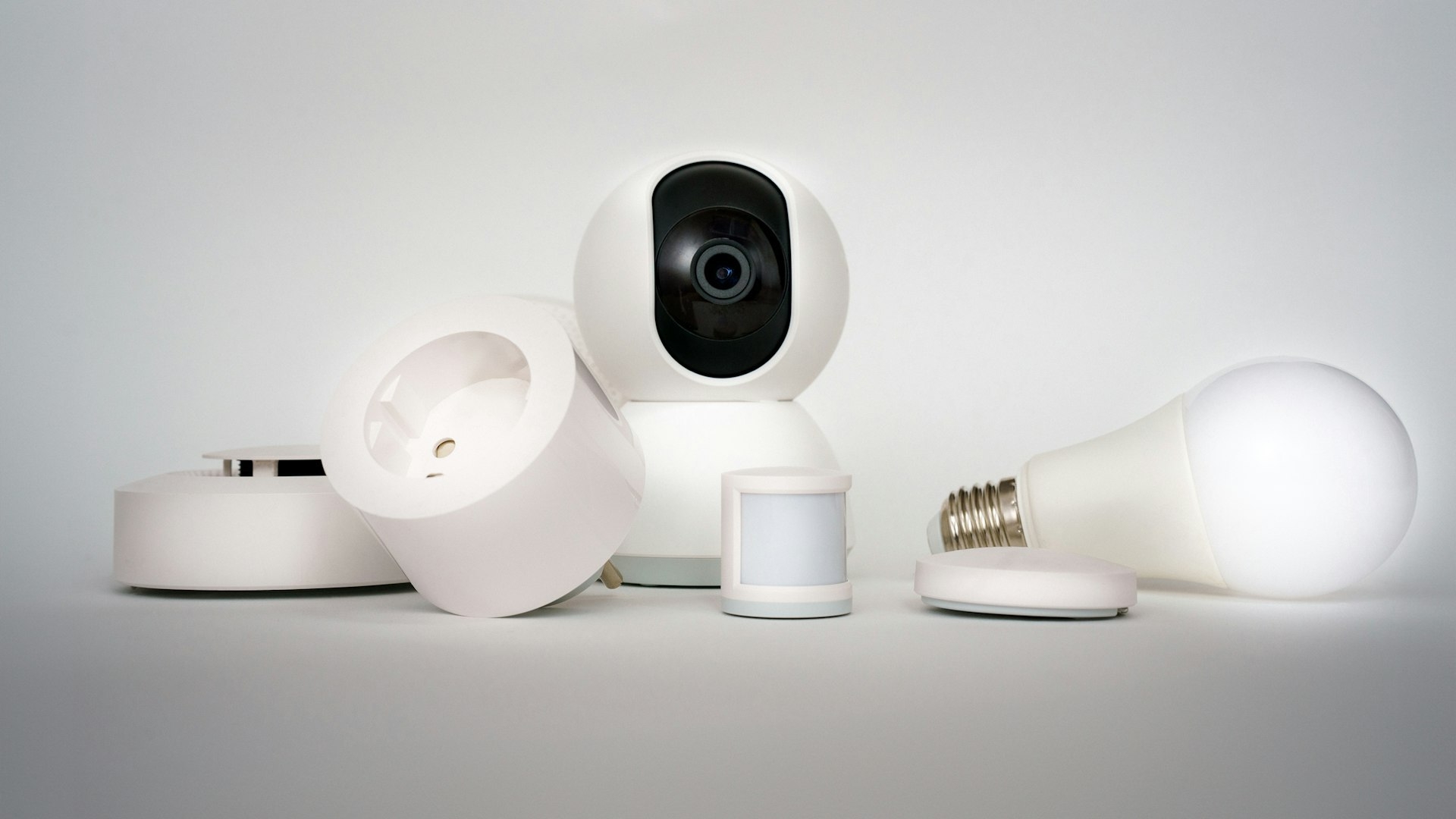
Most people enter the smart home through a single purchase — a bulb, a plug or a camera — and a year later they have five apps that don't talk to each other. As an IT specialist, I recommend the reverse: decide what problem you are solving, then choose a system, and only then buy devices. Below is a lean plan, written for a flat or house in Bulgaria.
Ask what costs you money, time or peace of mind:
The first two usually give the best value. We covered energy saving — thermostatic valves, air conditioning, standby — separately in Saving energy without a major renovation, so this guide focuses on the system as a whole.
A small sensor on the floor next to the washing machine, the dishwasher, under the sink and by the water heater alerts your phone at the first drops. The more serious option is a sensor plus a motorised shut-off valve on the water inlet, so the system closes the supply itself. Fitting the valve takes a plumber, but it is a one-off job.
It is worth reading your policy too: home insurance covers water damage under certain conditions, and early detection keeps both the damage and the argument smaller. More on policies in Home insurance in Bulgaria.
A smart plug is the easiest step: plug it into an ordinary socket and control the appliance from your phone, on a schedule or as part of a scene. Many models also show consumption — useful to see what the water heater or an old fridge really uses.
Be careful with high-power appliances — water heaters, cookers, heaters: check the plug's maximum current and don't overload it. For these, a better solution is a relay in the junction box or the consumer unit, installed by a qualified electrician.
Two approaches:
For lighting itself — layers, lumens, colour temperature — see Lighting your home.
A smart thermostat makes sense when it controls your own heat source — a gas boiler, a heat pump, electric heating. In a block on district heating, the radiator thermostatic valves do that job. Before buying, check that your boiler has a room-thermostat input and that the model is compatible.
This is where money gets wasted.
The practical rule: pick one platform and buy devices it supports. For new purchases, prefer Matter devices so you are not locked into one brand.
Cameras and video doorbells come with their own data-protection rules, especially in a block — we cover them in a separate guide.
This is where technology meets law. Under Bulgaria's Property Act (Art. 98), an accessory follows the principal item unless the law or the parties provide otherwise. In practice, built-in elements — switches, relays in the consumer unit, a wall-mounted thermostat, a shut-off valve — are usually treated as part of the home. Smart speakers, bulbs and plug-in sockets are movable items.
To avoid a dispute:
If you are selling or buying and wondering how to present the "smart" extras — or what exactly stays with the property — call us or come into the office. We'll help you set it out clearly in the contract.
This is general information, not technical or legal advice. Verified as of October 2026.