The big measures — insulation, new windows, a new heating system — take money and time. But there are smaller steps that depend only on you and can be done this winter, in a home you own or rent. Below are the measures worth taking, what the sources say about their effect, and what to ask about running costs when you buy.
In their joint "Playing my part" campaign (2022), the International Energy Agency (IEA) and the European Commission note that the average temperature in heated EU homes is above 22 °C, while many people would be comfortable at 19–20 °C. According to the same source, lowering the thermostat by 1 °C saves around 7% of heating energy. For air conditioning in summer it works the other way: setting it 1 °C warmer cuts its electricity use by almost 10%.
Not every room needs the same temperature: the bedroom can be cooler than the living room, and rooms you are not using cooler still.
Cold draughts around window sashes and under the front door make people turn the heating up by degrees. Checking is simple: on a windy day run your hand along the edges of the sashes. What can be done without building work:
We have not found primary sources putting a percentage on these measures — the effect depends on the state of the windows. Note: do not seal the home so tightly that it stops being ventilated; regular short airing remains essential.
In a condominium on district heating (топлофикация), the heating bill is calculated under Ordinance No. Е-РД-04-1 of 2020 on heat supply. The building's heat is split into three parts: heat given off by the building installation (risers and distribution pipes), heat for common areas, and heat for individual flats, measured by heat cost allocators on the radiators. In 2026 the Ministry of Energy published a draft amendment to the ordinance that keeps this split.
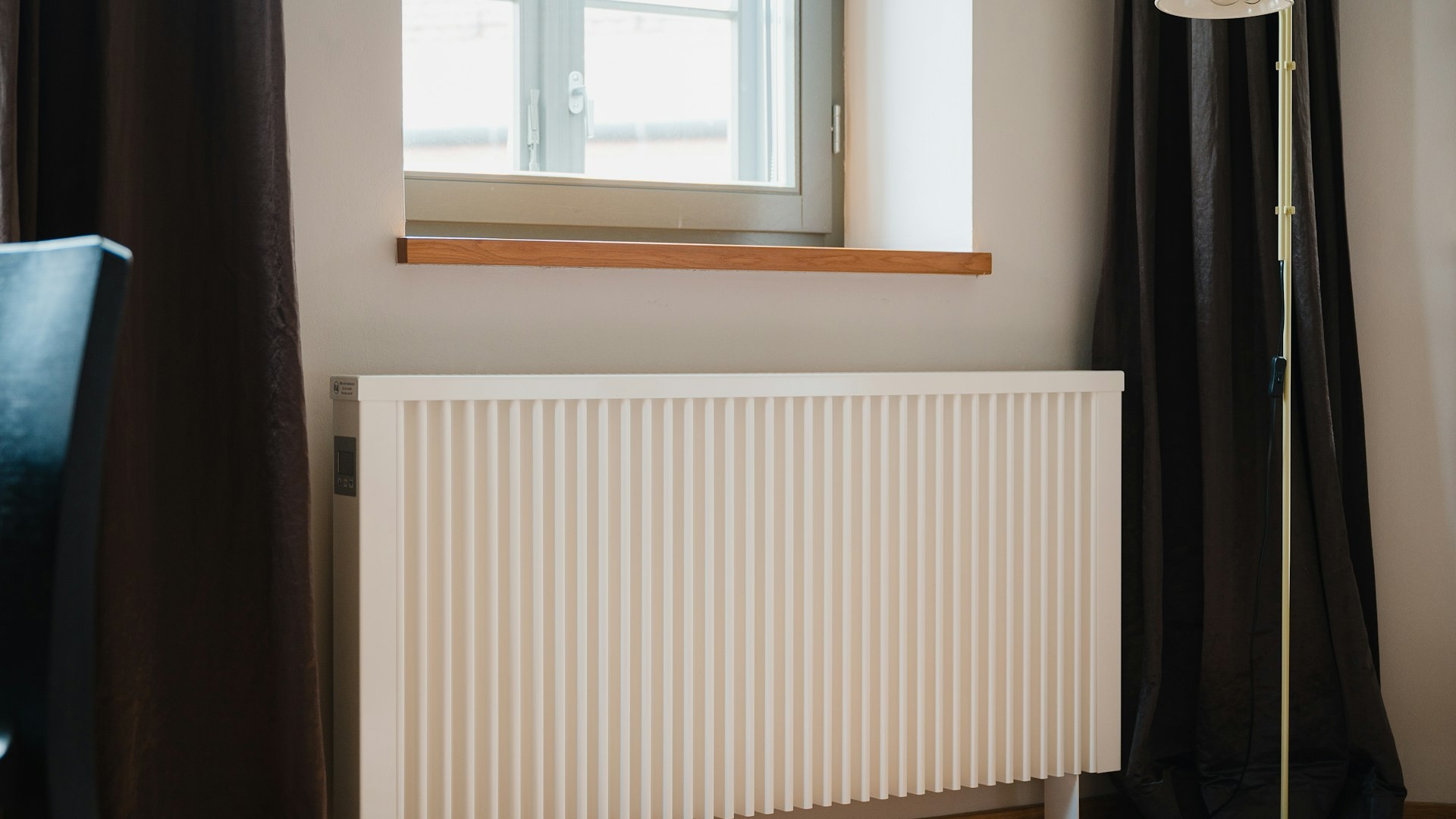
What that means for a thermostatic radiator valve:
If you are buying a flat in a district-heated block, ask for the annual reconciliation statements (изравнителни сметки) from the heat-allocation company for the last one or two seasons — they show how much of the bill is installation heat and how much is own consumption.
For many Bulgarian homes the air conditioner is the main heating. A few rules:
According to the IEA, smart controls and digital thermostats can save up to 15% of energy consumption. The key words are "up to": the saving comes from the system lowering the temperature when you are out or asleep, not from the device itself. If you already run a disciplined manual routine, the extra saving will be smaller.
Practical options:
A good schedule: lower temperature at night and while you are at work, warming up shortly before you get home.
Regulation (EU) 2023/826 requires new devices placed on the market from 9 May 2025 to draw no more than 0.50 W in off mode and no more than 0.80 W in standby with a display. Older devices — TVs, set-top boxes, routers, chargers — often do not meet these values. A switched power strip or a smart plug turns the whole group off at once.
If you still have halogen or old bulbs, switching to LED is the easiest measure on this list.
Between two similar homes the difference in bills can be significant. So ask:
For sellers and landlords the reverse holds: a home with low, documented bills sells and lets more easily.
Information verified October 2026. Percentages are from the sources named and are indicative.
If you are comparing homes and want to understand what they will cost to run, call us or visit our office. We will help you gather the right documents and figures.