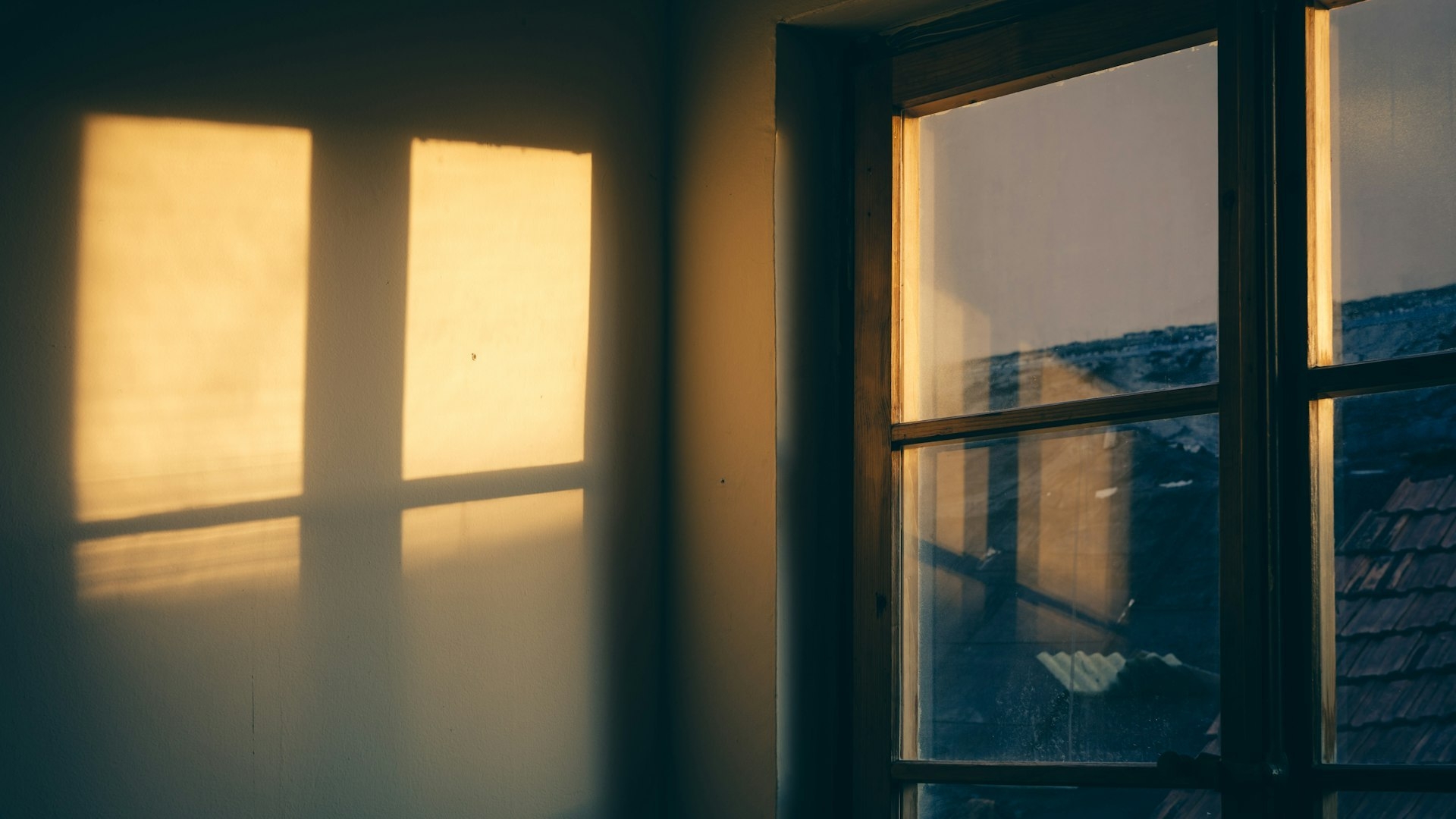
Orientation — which way the windows face — decides how much light you get, how much you pay for heating in winter and whether you swelter in summer. Two flats in the same block, on the same floor but on opposite sides of the corridor, can feel completely different to live in. Here is what each direction gives you and how to check the real orientation at a viewing.
How the sun moves in Bulgaria
Bulgaria is in the northern hemisphere, so during the day the sun travels from the east, through the south, to the west:
- In winter it sits low above the horizon and reaches deep into south-facing rooms — exactly when its warmth is most welcome.
- In summer it is high at midday, so south-facing windows are easily shaded by an overhang or a balcony above. But in the morning and afternoon the rays come in low, from the east and west, straight through the windows.
That is where the main differences between the four directions come from.
South: the most sought-after aspect
- Light: the most direct sunlight throughout the day.
- Winter: the sun "helps" the heating — south-facing rooms are noticeably warmer on clear days.
- Summer: the midday sun is high and easily blocked by an overhang, a balcony, an awning or external blinds.
- Best for: the living room, a child's room, a kitchen-diner.
- Price: as a rule, a south-facing aspect is what buyers value most, and it sells most easily.
East: bright mornings, cool afternoons
- Light: morning sun, then diffuse light after midday.
- Winter: cooler than south, but the morning sun still warms the rooms.
- Summer: pleasant — rooms warm up early and cool down by evening.
- Best for: bedrooms (you wake up with the light), a breakfast kitchen.
- Price: well liked, especially combined with south (south-east).
West: afternoon sun and summer heat
- Light: afternoon and evening sun — lovely in winter and autumn.
- Summer: the most problematic aspect for overheating. The low afternoon sun shines straight in, and the walls have been storing heat all day. Rooms stay hot into the evening.
- The fix: external blinds or awnings — curtains inside block the light, but the heat is already in; air conditioning.
- Best for: a living room, if you love the evening sun and are ready to shade it.
- Price: a purely west-facing aspect is usually valued less than south or east.
North: even light, colder rooms
- Light: almost no direct sun, but even, diffuse light without glare — prized by artists and for home offices.
- Winter: the coldest rooms — no solar gain; a higher risk of condensation and mould in corners if the building is uninsulated and poorly ventilated.
- Summer: the coolest aspect.
- Best for: a bedroom (for those who like it cool), a bathroom, a storeroom, a study.
- Price: a flat facing only north is usually harder to sell and cheaper.
Combinations are the best option
Flats with two aspects — south and north, east and west, or a corner (south-east, for example) — have an edge: they can be cross-ventilated, the light moves round during the day, and the layout can put the living room to the south and the bedrooms to the east or north.
Heating and overheating: what to ask
- How much is the heating bill in winter — and which way the main rooms face. A north-facing flat in an uninsulated block can cost noticeably more to heat.
- Whether the façade and roof are insulated. Insulation narrows the differences between aspects but does not remove them.
- Whether there is air conditioning and external blinds on the west- and south-facing windows.
- A top-floor flat facing south-west — be doubly careful about summer overheating.
Practical tips for lower bills without a major renovation are in our energy-saving guide.
How to check the orientation at a viewing
- Use the compass on your phone — stand at the window with your back to the room and read the direction.
- Mind the time of the viewing — the light at 11 a.m. and at 6 p.m. is very different. If you can, come twice, at different times.
- Look at what is opposite — a tall building 15 metres away can steal the sun even from a south-facing flat, especially on lower floors. Ask too about future construction on empty plots nearby.
- Trees — they give welcome shade in summer; deciduous trees let the sun through in winter, evergreens do not.
- Damp marks on north walls and in corners — a sign of thermal bridges.
How light shapes the feel of a home and how to boost it with artificial lighting is covered in our lighting guide.
In short
- South: the most light, warmth in winter, easy shading in summer — the most valued.
- East: morning sun, cool evenings — excellent for bedrooms.
- West: pleasant in winter but overheats in summer — you need external blinds.
- North: even light, but the coldest and the hardest to sell on its own.
- Best of all: two aspects, and a check on site at different times of day.
If you are looking for a home with the right orientation for the way you live, call us or come into the office — we will show you suitable properties and tell you the best time of day to see them.
This information is general and does not replace individual advice. Verified as of October 2026.