Almost every listing for a flat in a Bulgarian apartment block includes a line saying “with basement storage” or “with attic room”. Buyers treat it as a bonus of a few square metres; sellers sometimes treat it as something they can split off and sell later. Legally, both assumptions are often wrong. Here is what actually sits behind that line.
In the typical case the basement storage room (mazé) and the attic room are accessories of the flat — premises intended to serve it. Article 98 of the Property Act provides that an accessory follows ownership of the principal thing. Sell the flat and the basement goes with it; gift the flat and the same applies.
That is why basement and attic rooms usually have no cadastral identifier of their own. They are described in the notarial deed and on the flat's cadastral sketch, with a number, area and location. If the deed describes one basement room and the seller shows you another, clear that up before signing. How to read the property description and the undivided shares is explained in our guide on how to read a Bulgarian notarial deed.
The logic is the same as for a parking space that is an accessory of a flat — covered in our guide to garages and parking spaces.
As a rule, no. The prevailing case law holds that a basement or attic room which is an accessory of a dwelling cannot be sold as a stand-alone object under a separate notarial deed, apart from the flat. A contract transferring “just the basement” to an outsider risks being void, leaving the buyer to recover the money through the courts. The same applies to a partition between heirs: the basement cannot go to one heir and the flat to another.
There are exceptions, but each needs a specific assessment:
If someone offers to sell you a basement or attic without a flat — or suggests you “keep” the basement when you sell your flat — get a legal check first.
This is the most common misunderstanding. Article 38 of the Property Act lists the common parts of a building — the roof, the walls between individual attic and basement rooms, the doors to shared attic and basement areas, and everything that by nature or purpose serves common use.
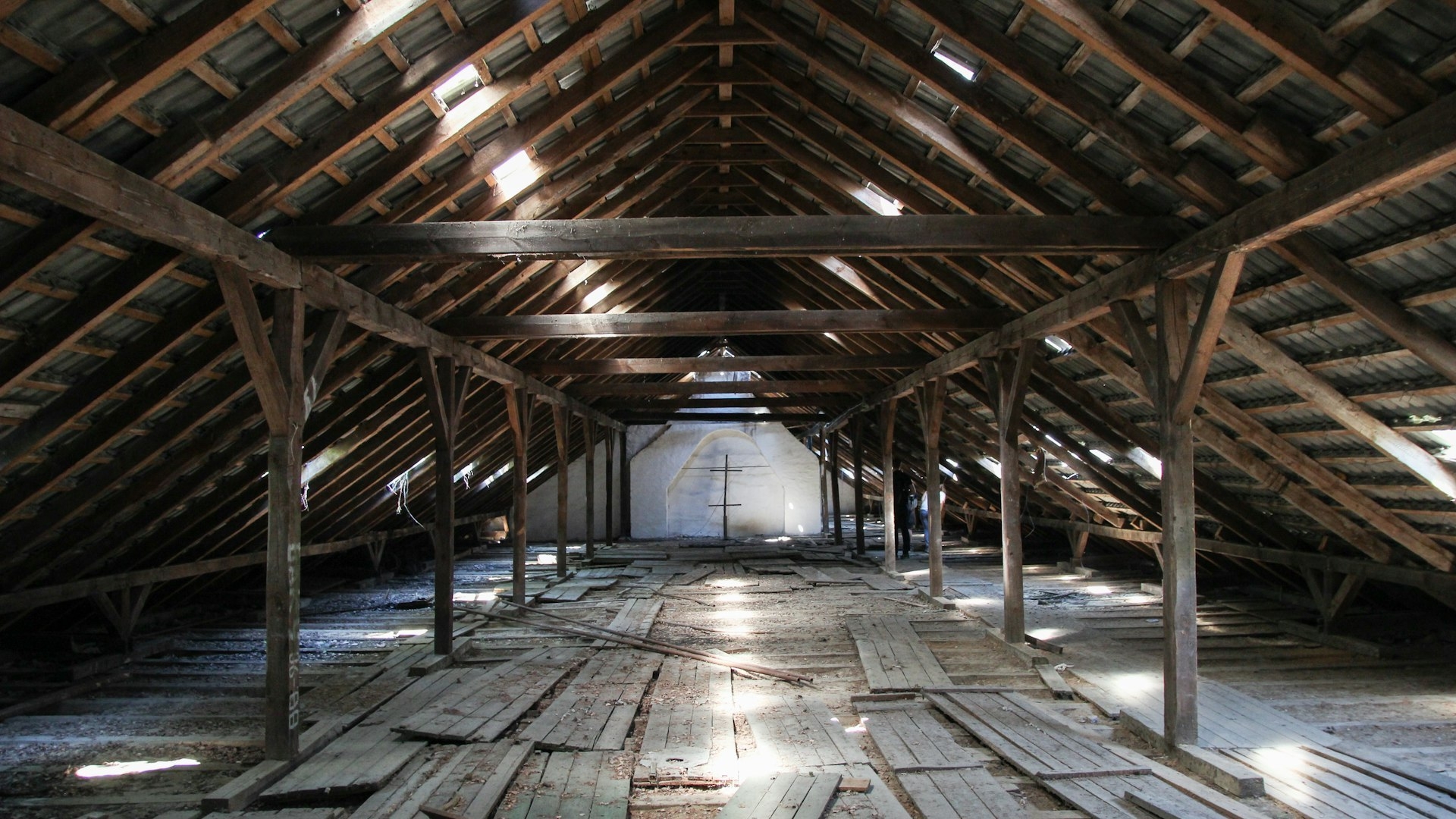
If the roof space was not designed as flats, studios or individual attic rooms, it is as a rule a common part belonging to all owners — even if someone's notarial deed says the attic is theirs. A title deed cannot turn a common part into private property.
In practice: before you pay for a “flat with attic”, check the approved design and the cadastral sketch to see whether the attic room is set up as an accessory of that flat, or whether this is really the shared roof space the neighbours use.
Converting an attic room into a dwelling counts as construction under the Spatial Planning Act, not as a renovation. It needs an approved design and a building permit, followed by formal completion and entry into use.
Where the conversion affects common parts or changes the designated use (which with an attic it almost always does), Article 185 of the Spatial Planning Act requires the notarised consent of the owners — in practice, all of them. How majorities work in a block is covered in our guide to the general assembly of an apartment block.
The dwelling itself must meet the minimum requirements of Article 40(1) of the Spatial Planning Act: its own entrance, at least one habitable room, a kitchen or kitchenette, a bathroom with WC, and a storage room (which may be outside the dwelling). A roof space with no proper stair access and insufficient height will struggle to meet them.
Which changes to a flat need no permit and which do is explained in our guide to renovating a flat in an apartment block.
Mansards and attic flats sometimes come up at attractive prices. Before going further, check:
An attic room furnished as a home without these documents is still an attic room. That affects the mortgage (banks finance lawful dwellings), address registration and any future sale.
Almost never. The standards for dwellings — position in the building, natural light, ventilation, ceiling height — generally cannot be met in a basement storey, and the courts do not recognise a converted basement room as a dwelling. If you see a listing for a “basement studio”, ask for the documents legalising it as a dwelling; their absence is a serious warning sign.
Basement and attic storage rooms are, as a rule, accessories of the flat: they follow it on sale and cannot be sold separately. Roof space that has not been set up as individual rooms is a common part, whatever one deed says. Turning an attic into a home is construction, with a design, a permit and the neighbours' consent.
If you are buying or selling a flat with a basement, attic or mansard and want us to check exactly what the deal includes — call us or come into the office.
General information only; not a substitute for legal advice on a specific case. Verified as of October 2026.