
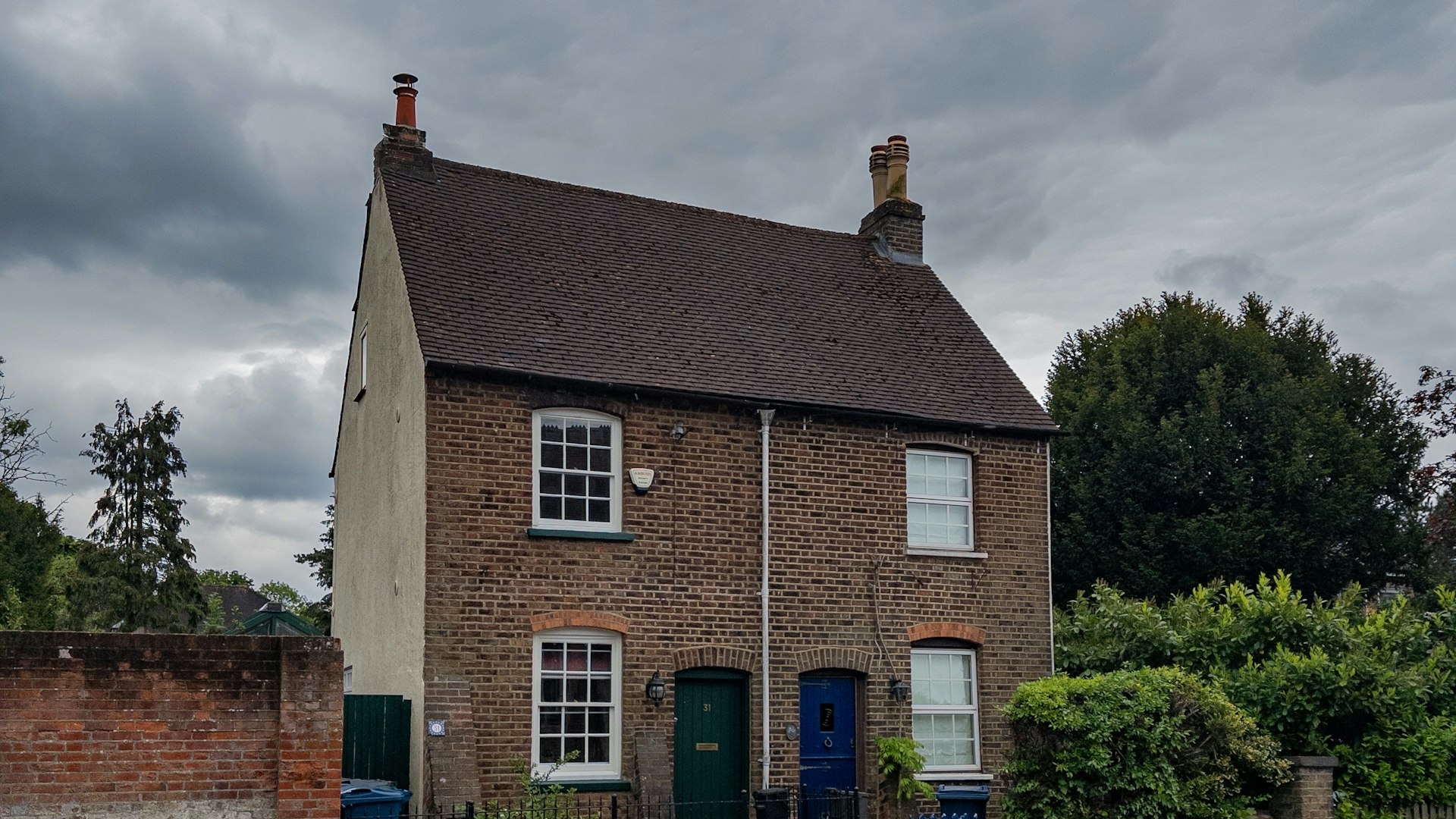
Semi-detached houses — two homes sharing one wall — and terraced houses are a common find around Sofia, Plovdiv, Varna and Burgas. Buyers look for them because they offer a yard and a front door of your own at a price below a detached house. Sellers often sum them up in two words: "half a house".
Behind those words, though, sit quite different legal situations. They decide whether you are buying a self-contained property with its own plot, or a share of a yard you hold together with the neighbour. Here is what to check.
Option A — each half sits on its own regulated plot (УПИ). The two buildings stand on the shared side boundary and touch — what Bulgaria's Spatial Development Act (ЗУТ) calls linked development. Each owner holds their own plot and their own house. The yard is not shared; only the wall on the boundary is.
Option B — both halves sit on one shared plot. The owners then hold the land in undivided shares. The building is either divided into self-contained units (a condominium) or co-owned as a whole. In practice this is the same position as buying a floor of a house — shared yard, shared roof, joint decisions. We covered those rules in detail in our guide to buying one floor of a house and will not repeat them here.
The rest of this guide is mainly about option A — and about how not to mistake it for option B.
If the documents and reality disagree — for example the sketch shows one plot, but on site there is a fence down the middle — that is a reason to check further, not to pay a deposit.
ЗУТ allows buildings on two neighbouring plots to be built as linked — only on the side boundary between them (Art. 21 ЗУТ). For linked low-rise development the law requires the consent of the neighbouring plot's owner, given in writing with a notarised signature.
That matters in three situations:
The wall on the boundary usually stands on both plots. It carries both buildings, transmits sound and moisture, and is where the two roofs meet. Before you buy:
A written agreement with the neighbour on maintaining the shared wall and the roof junction is not compulsory, but it is valuable to both of you — including when one of you sells.
Under option A the yard is yours, but check:
If the property is option B and you would like it to become option A, that is possible only where the planning regime allows it. Dividing a regulated plot requires an amendment to the ПУП, and the new plots must meet the minimum size and street frontage set by ЗУТ. In many cases the plot is simply too small. Do not buy on the assumption that "we'll split it later" until an architect or surveyor has checked that it can be done.
A terraced house is the same idea with more neighbours. End-of-terrace houses have one shared wall; mid-terrace houses have two. Everything said about the shared wall applies twice over, and plot sizes for this kind of development are usually set by the ПУП itself. Also check how shared elements — a path, parking, green space — are held: on a separate jointly owned plot, and who pays for their upkeep.
Under option A banks accept the half as a self-contained property for security — it has its own plot and its own identifier. Under option B it is worth asking the bank in advance whether it will accept the specific unit.
The price usually sits between a flat and a detached house, and so does the upkeep. A comparison of the two ways of living is in our guide house or apartment.
The full list is in our guide to legal checks before buying a property.
"Half a house" can be a self-contained property with its own plot, or a share of a yard held with the neighbour. The difference shows up in the sketch and in the notarial deed. With linked development, what you share is the wall, not the yard — and it is the wall, the roof above it and the relationship with the neighbour that deserve the most attention.
If you like a semi-detached or terraced house and want us to check the documents, the ПУП and the shared wall, call us or come into the office — we will visit the property with you.
Verified November 2026. This is general information, not legal advice for a specific case.
