
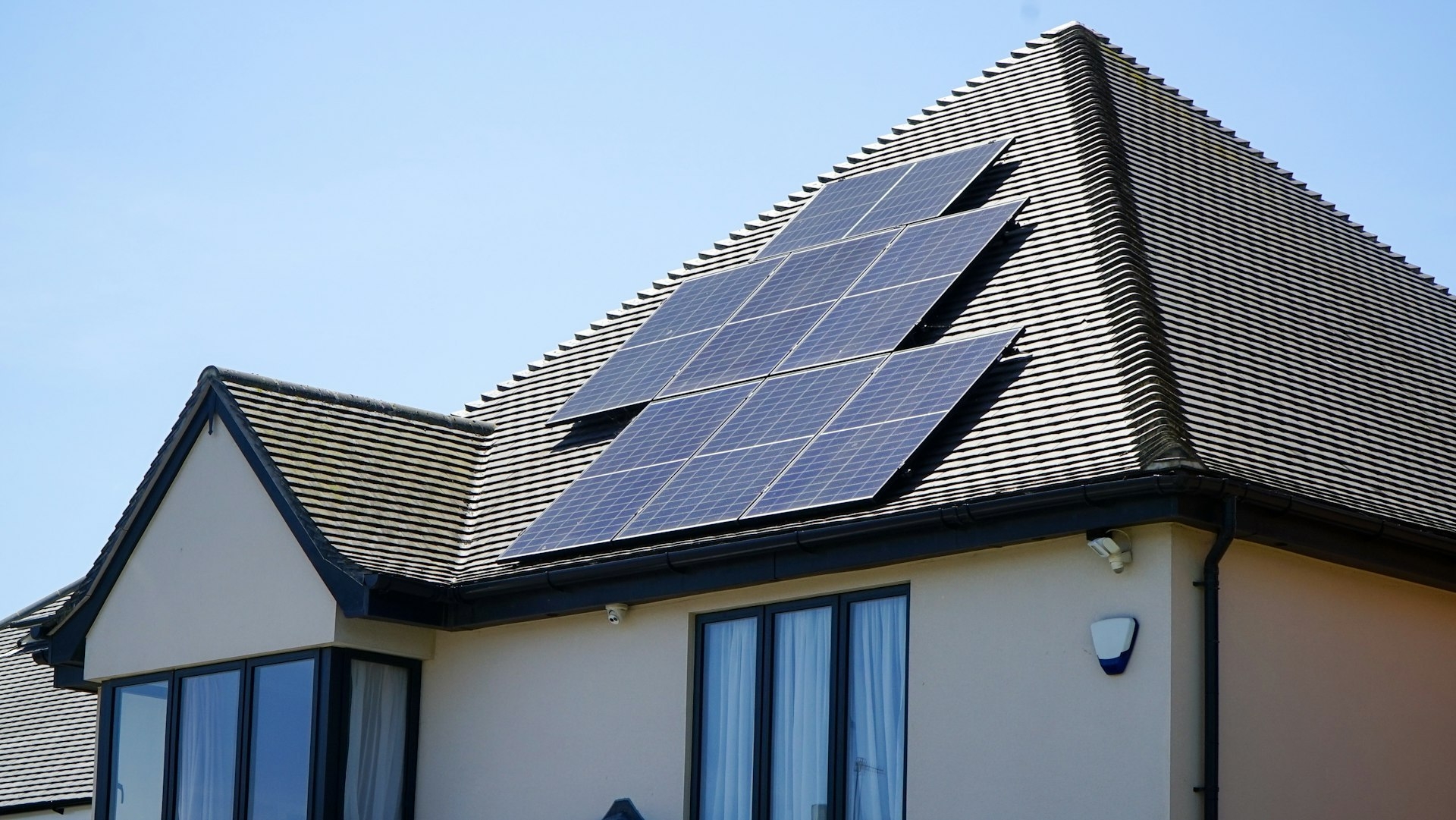
Solar panels on the roof are no longer unusual in Bulgaria — especially on houses around Sofia, Plovdiv and on the coast. To a buyer they sound like a bonus: lower electricity bills. To a seller, like an argument for the price. Both can be true, but only if the system was installed and documented properly.
This guide is for owners thinking about rooftop solar, and for anyone buying or selling a property that already has it. If you are looking for smaller measures to cut running costs, see our guide to saving energy without a major renovation.
Since 20 January 2023, Art. 151(1)(19) of the Spatial Development Act (ЗУТ) allows installations producing electricity, heat or cooling from renewable sources to be built, overhauled or replaced without a building permit when they:
"No permit" does not mean "no paperwork". The Act requires a declaration signed by the owner and the installer confirming that the system has been energised and built to the technical documentation; it is sent to the municipality's chief architect and to the grid operator (the regional distribution company). The alternative is a design solution — structural, electrical and/or HVAC parts — that ensures safe operation and protection against exporting power to the grid.
In practice, have a structural engineer confirm that the roof can carry the extra load before anything is mounted. On an old roof it is cheaper to repair first and fit the panels afterwards, not the other way round.
If you are building a new house, plan the system into the design from the start. The whole route from building permit to entry into use is covered in our guide to building your own house.
The simplified regime applies to single-family houses and holiday homes. In a multi-family building the roof is a common part, so:
How the general assembly is convened, what quorum it needs and how a decision is challenged are explained in our guide to the general assembly of an apartment block.
This is where people get confused. The permit-free regime is for own consumption — the system is set up not to feed power back into the grid.
If you want to sell your surplus, the route is different: connection through the grid operator's procedure, a bidirectional meter and a purchase contract. Traders buy surplus from household installations of up to 30 kW — ENERGO-PRO, for example, states exactly that threshold and requires two-way metering. Final suppliers do not buy power from installations built only for own consumption.
The purchase price is negotiated and market-driven, so we give no figures. If you are counting on income from the surplus, get a written offer before you size the system.
Many households received funding under procedure BG-RRP-4.026, "Support for renewable energy for households", from Bulgaria's Recovery and Resilience Plan — for PV systems up to 10 kWp, with or without a battery.
The terms matter when the property is sold. The beneficiary must maintain the investment for at least 5 years from payment and must not allow production to stop or the system to be transferred or leased to third parties. The assets must be insured for 5 years, and the system fitted with a device that limits export to the grid. Selling electricity is not allowed under this procedure.
If you are selling or buying a house with such a system before the five years are up, read the grant agreement and check with the implementing body before the transaction. It is not something you want to discover after the notary.
In the preliminary contract, describe the system explicitly — capacity, inverter, battery — as part of what you are buying, and agree who transfers the utility accounts and contracts.
A well-documented system with a history of bills is a real selling point. Missing paperwork turns the argument around: the buyer and their bank will see a risk rather than an advantage. Prepare the file in advance, together with the rest of the property's documents.
If you are considering a house with solar panels, or selling one and are not sure the paperwork is in order, call us or come into the office. We will go through the file with you before you get to the notary.
Information verified as of October 2026. It is general in nature and does not replace advice from a designer, the grid operator or a lawyer. Renewable-energy rules in Bulgaria change frequently.
