
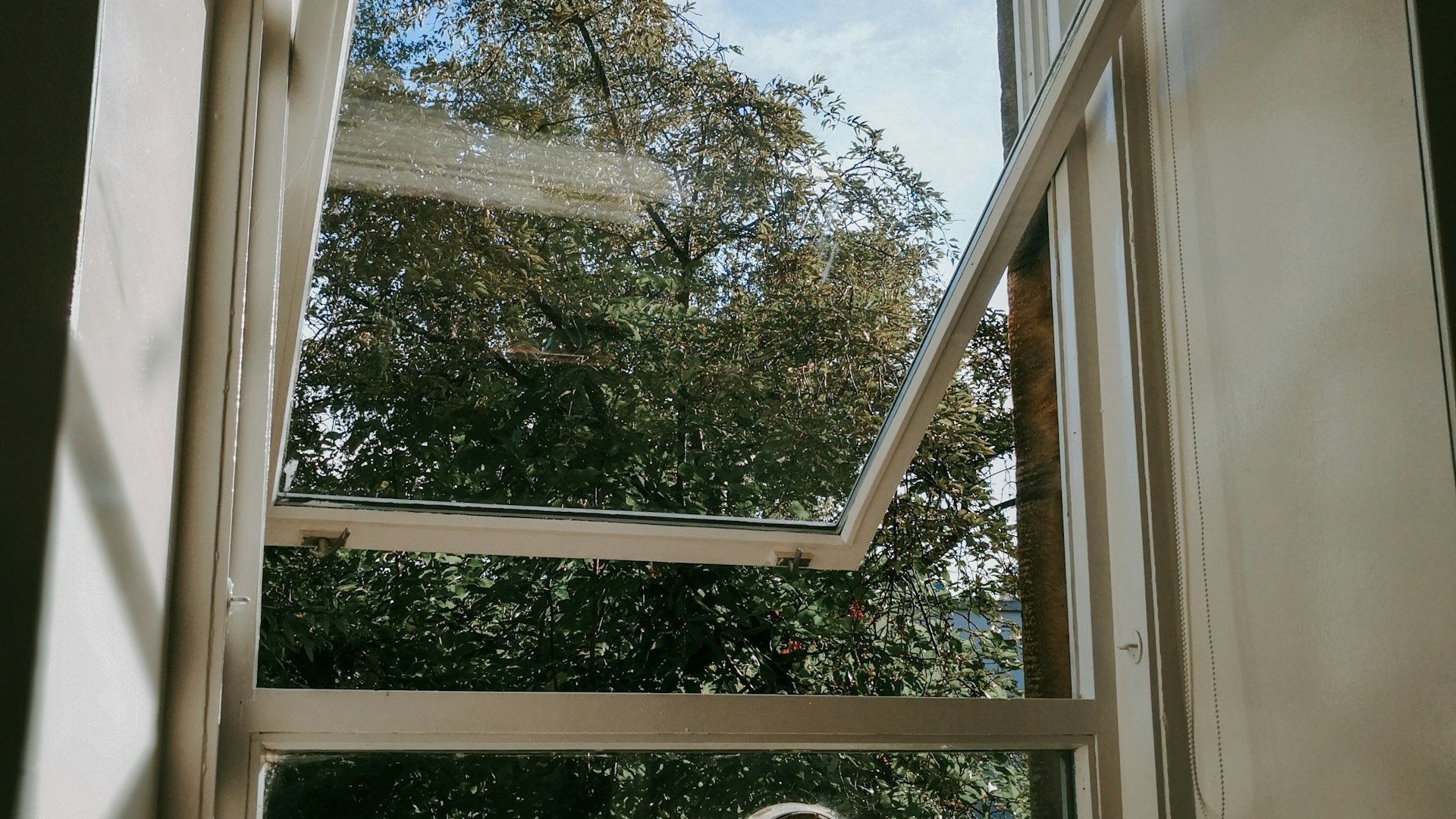
New windows are a renovation you feel straight away: fewer draughts, less noise, lower bills. They are also one where mistakes cost you for years — condensation, mould, sashes that stick, or a row with the neighbours over the facade. Here is how to approach it.
Replacing windows and balcony doors within the existing openings is usually routine repair (tekusht remont) and needs no building permit (Spatial Development Act, Art. 151(1)(1)). The Act defines routine repair as work that does not affect the structure and does not create new openings in load-bearing walls (§ 5(43) of its Supplementary Provisions).
It is a different matter if you want to widen an opening, turn a window into a door, or remove the wall section under a window in a load-bearing wall — that affects the structure and requires an engineer's opinion and, as a rule, a design and a permit. Our guide to renovating a flat in a block explains where the line runs.
For listed cultural heritage buildings and buildings in their protection zones, even routine repair must be cleared under the Cultural Heritage Act (Art. 151(2)). Timber windows with a specific glazing pattern are often required there.
The law does not expressly require your neighbours' signatures to replace your own windows. But the Condominium Management Act obliges every owner carrying out repairs not to alter the building's architectural appearance (Art. 6(1)(5)). In practice that means:
Many buildings adopt a general assembly decision on a uniform look for windows and balcony glazing. Ask the building manager before you order. In new buildings, facade rules are sometimes written into the house rules. Agreeing in advance costs far less than replacing windows after a dispute.
uPVC — the most common choice for homes.
Thermally broken aluminium — for large glazed areas, sliding systems, ground-floor shops.
Timber (laminated) — for houses, older buildings and protected areas.
There are also timber-aluminium systems: timber inside, aluminium cladding outside — less maintenance while keeping the interior look.
An excellent frame badly fitted performs like a bad window. What to insist on:
New windows are almost airtight. Old ones "breathed" through the gaps; new ones do not. Without ventilation, moisture from cooking, showers and laundry condenses on cold spots and mould appears. Remedies: short, intensive airing several times a day, a micro-vent setting on the hardware, trickle vents in the frame, or local heat-recovery ventilation. More in our article on healthy indoor air. And if your windows are fairly new and the only issue is draughts, sealing and adjustment may be enough.
If you are thinking of new windows before selling, or buying a home and unsure about the state of the windows, call us or visit our office — we will tell you what to check and when replacement is worth it.
This is general information and does not replace advice from a designer or engineer. Verified as of October 2026.
