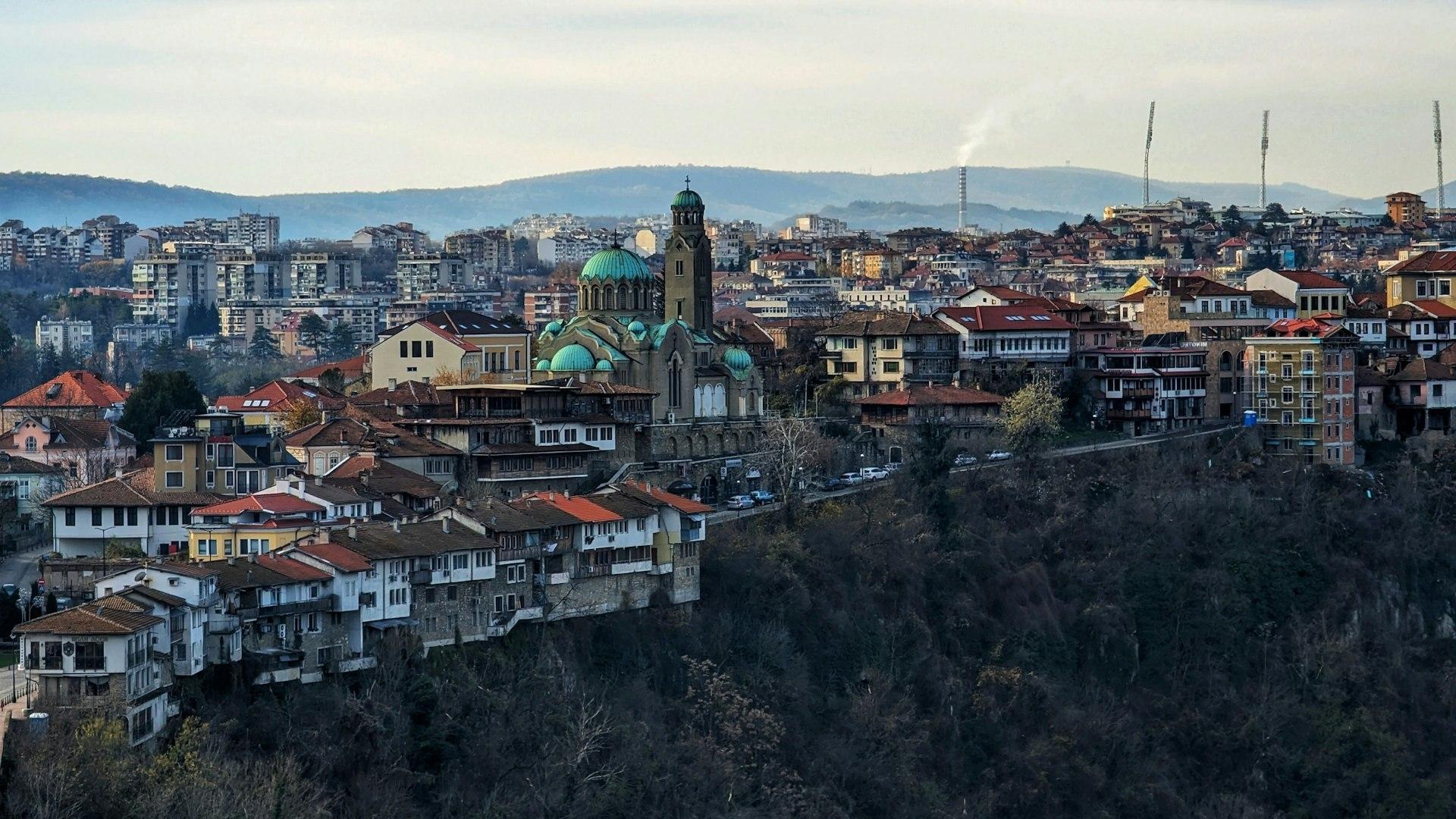
Living in Veliko Tarnovo: the neighbourhoods, the housing stock and what to check before you buy
People rarely end up in Veliko Tarnovo by chance. They come for the universities, for work in the region, for the calmer pace or for the history, and they often stay. The city has one feature that shapes everything else, though: the terrain. Hills, steep streets and the meanders of the Yantra make the difference between two neighbourhoods greater than the map suggests.
Below we describe the city's main residential areas, what was built there and when, and what we check before a client signs.
The city in brief
- A student city. The region leads the country in students relative to population (Regional Profiles 2025). It is home to St Cyril and St Methodius University of Veliko Tarnovo and the Vasil Levski National Military University, which keeps rental demand steady.
- An older population. In the region, 27.6% of residents are over 65, against 24% nationally (NSI, 2024). Wages are below the national average, and the market is calmer than in Sofia, Plovdiv or Varna.
- A compact city. Distances are short; gradients are not. Walkability here is measured in metres of climb as well as distance.
The Old Town, Varusha and Asenov
This is the Tarnovo of the postcards: Tsarevets, Trapezitsa, the Samovodska Charshia craft street, the houses above the Yantra. Asking prices are the highest in the city, and supply is small.
Many properties are listed cultural monuments or sit in a protected zone, which governs what can be renovated and how. We do not repeat that here; it is covered in our guide to buying a heritage-listed property.
Varusha is an old quarter with character and narrow streets. In 2025 the municipality included several of its streets, among them cobbled sections, in its investment programme. Asenov (the Asenova Mahala) lies below Tsarevets and Trapezitsa, within the historic reserve. Listings in these areas are few, and median prices jump from month to month.
Suits: people who want atmosphere and accept compromises on parking, car access and renovation.
Buzludzha — the largest neighbourhood
Buzludzha was laid out in a plan approved in 1974 (then called "Pishmana"), on the slope visible from the city. The southern and western parts were built with prefabricated panels, the northern slope with cast-in-place concrete. According to the municipal plan, it is the most populous single neighbourhood in the city.
Its strengths are full infrastructure, with schools, kindergartens and shops close by. In 2025 the municipality announced a full upgrade of the western part of the neighbourhood. Asking prices are below the city average.
Suits: families and buyers on a tighter budget who want everything nearby.
Check: the condition of the block and whether it has been retrofitted, the floor and lift (on sloping ground, entrances are sometimes on different levels), and parking.
Kolyu Ficheto
The neighbourhood was planned in 1971 (as "the Triangle"): about 70 hectares of prefabricated construction. Today it mixes panel blocks with newer buildings. Among the neighbourhoods with more listings, its median asking price is one of the highest. In 2025 the municipality added its streets and the spaces between blocks to its programme.
Suits: buyers who want a large, established neighbourhood with new construction and good rental demand.
Akatsia and Kartala
Akatsia dates from a plan of 1968: a quiet residential area with fewer listings.
Kartala is the city's northward extension, planned in 1976, with buildings adapted to the terrain. In 2025 the municipality planned infrastructure and a park beside the new kindergarten here, as well as a public car park.
Suits: families with young children looking for a quieter setting.
Sveta Gora
The neighbourhood grew up around Sveta Gora hill, where the university stands. It is a mix of older and newer buildings near a park, with steady rental demand from students.
Suits: students, academic staff and buy-to-let investors.
Zona B and Cholakovtsi
Zona B is a developing neighbourhood with new construction and prices more accessible than in the centre.
Cholakovtsi was planned in 1970 next to the industrial zone, with large-panel construction. Its asking prices are among the lowest in the city, though listings are few.
Suits: buyers on a limited budget and people working in the industrial zone.
Indicative asking prices
Median asking prices in euro per square metre, from imot.bg data as of 8 October 2026 (as cited by finansovsuvet.com). These are listing prices, not completed sales:
| Neighbourhood | €/m² |
|---|---|
| Old Town | ~2,170 |
| Kolyu Ficheto | ~1,770 |
| Akatsia | ~1,680 |
| Kartala | ~1,670 |
| Centre | ~1,610 |
| Sveta Gora | ~1,500 |
| Zona B | ~1,380 |
| Buzludzha | ~1,350 |
| Cholakovtsi | ~1,160 |
| Varusha | ~1,160 |
| Asenov | ~1,110 |
For Asenov, Varusha, Cholakovtsi and Akatsia the number of listings is small and the median is unstable. Why asking prices differ from completed deals is explained in our guide on how to read property market statistics.
What we check before buying in Veliko Tarnovo
Terrain and landslides. Landslides are a real risk in the region. In a study of 2010–2020, Veliko Tarnovo and Vratsa regions together accounted for almost half of the landslide emergencies in the area covered by the Geozashtita Pleven agency. For a house, a plot or a building on a slope, ask the municipality whether the property is in a registered landslide area, and look for cracks, leaning fences and retaining walls.
The Yantra. On 23 May 2026 the river overflowed in Veliko Tarnovo, affecting more than 100 households in the city and surrounding villages. For properties near the riverbed, ask neighbours and the municipality about past flooding and check the insurance. How to check natural hazards is explained in our guide to floods, landslides and earthquakes.
Heritage status. In the Old Town, Varusha and Asenov, check the status before the preliminary contract.
Parking and access. In the old quarters and on steep streets parking is a problem. Check whether the property has a space and how you reach the entrance in winter.
Letting to students. If you are buying to let, proximity to the university and to public transport matters more than the view. Expect tenants to change at the start of each academic year.
Arbanasi. The village above the city is a separate market: traditional houses, holiday and tourist demand, more volatile prices. The numbers there are different from those for a home in the city.
In short
- In Veliko Tarnovo the terrain shapes price, access and risk more than in flatter cities.
- The Old Town, Varusha and Asenov have character and constraints: listed buildings, parking, little supply.
- Buzludzha and Kolyu Ficheto are the large neighbourhoods with full infrastructure; Akatsia and Kartala are quieter; Cholakovtsi and Zona B are more affordable.
- Asking prices as of October 2026 range from roughly €1,100 to €2,200/m² by neighbourhood. These are indicative listing prices, not deals.
- Check the landslide risk, proximity to the Yantra and the property's status.
If you are looking for a home in Veliko Tarnovo, for yourself, for a student son or daughter, or to let, call us or come into the office. We will help you choose the neighbourhood and check the property before you sign.
Information verified as of November 2026. Prices are indicative median asking prices, not completed transactions.

