
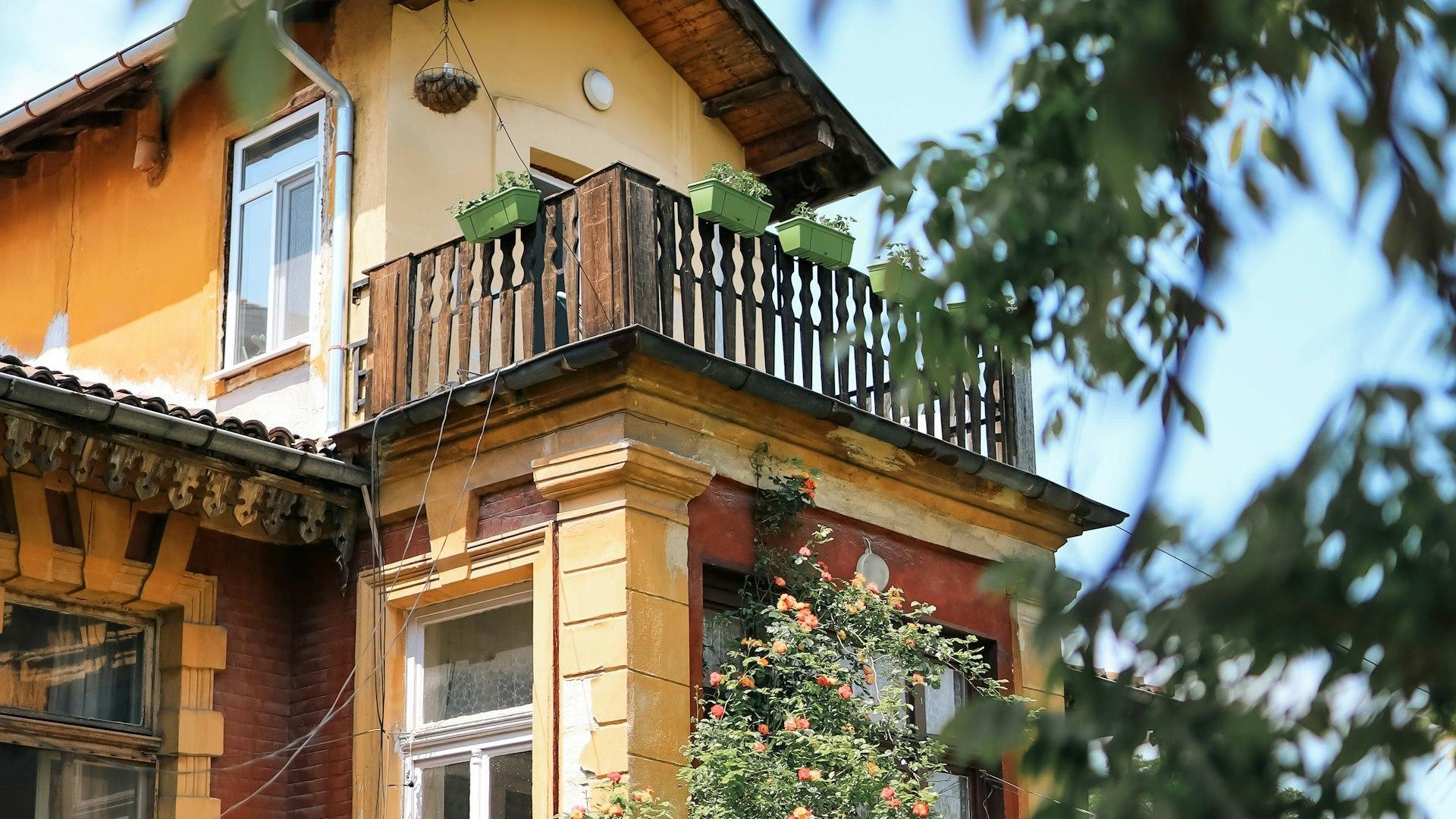
Many of the most sought-after properties in the historic parts of Bulgarian towns — houses in Plovdiv's Old Town, early-20th-century buildings in central Sofia and Varna, National Revival homes in Veliko Tarnovo, Koprivshtitsa or Nessebar — are immovable cultural values under the Cultural Heritage Act (ЗКН). Colloquially, "monuments of culture".
The status does not prevent a property from being bought, sold, gifted or inherited. It does, however, place the property under a special protection regime: what may be repaired and how, who approves the project, and what obligations the owner carries. Here is what you need to know before buying one.
The Act classifies immovable cultural values by significance (Art. 50):
The category determines who reviews renovation projects — the National Institute for Immovable Cultural Heritage (NIICH, НИНКН in Bulgarian) or the municipal heritage unit (see below).
In addition there are:
The NIICH keeps the National Register of Immovable Cultural Values (Art. 68). Before the transaction, request a statement from the NIICH on the specific property and, for sites of local significance, from the municipality as well (its architecture and heritage unit).
Do not rely on the title documents alone — the status does not automatically appear in the notary deed or the listing. Ask the seller directly and request any instructions issued to them and any approved projects.
The sale itself follows the normal procedure — a notary deed and registration. On the transfer or inheritance of an immovable cultural value, the Registry Agency notifies the NIICH within 14 days (Art. 68(4)). The new owner thus comes onto the authorities' radar as the person bearing the obligations under the Act.
So it makes sense to know what those obligations are before you sign.
The owner (and any user) of a cultural value must maintain and preserve it, notify the competent authorities of damage, and provide access for inspection (Art. 71).
If the building is at risk of collapse or damage, the owner must notify the mayor immediately and take securing measures. If they do not, the municipality carries out the emergency works at the owner's expense (Art. 72).
In practice, buying a neglected listed house means taking on not only the renovation you want, but also the one the law requires.
This is the biggest practical difference from an ordinary property.
Investment projects and requests for intervention in immovable cultural values and their protected territories are approved by the Minister of Culture (Art. 84 read with Art. 83):
| Category | Opinion issued by |
|---|---|
| World and national significance | NIICH |
| Local significance, ensembles, "for information" | municipal heritage unit under Art. 17(3) |
Indicative deadlines and fees from the government's administrative services register (verified October 2026):
Note that approval under the Act covers not only construction projects but also "requests for intervention". So do not assume that smaller work on the façade, roof or windows is "free" just because on an ordinary property it would need no building permit — check with the NIICH or the municipality first. For the general rules on renovation, see our guide Renovating a flat in an apartment block.
Projects are prepared by designers experienced in restoration, and the works often call for specific materials and techniques. From our experience: allow more time and a larger budget than for a comparable renovation of an ordinary building, and do not plan to move in or let the property before the project is approved.
The Local Taxes and Fees Act exempts from property tax buildings that are cultural values, where they are not used for commercial purposes (Art. 24(1)(11a) ЗМДТ). The exemption is not automatic — it is claimed by declaration to the municipality (Art. 27).
If you use the building, or part of it, for business — an office, a shop, a guesthouse — no exemption applies to that part. More on property tax and the waste fee in our guide Property tax and the waste fee in Bulgaria.
The status brings rights as well. Owners of cultural values may apply for support under programmes funded by the state and municipal budgets for emergency, conservation and restoration works (Art. 70). Ask the municipality whether a programme is currently open before you set your renovation budget.
Banks do lend on listed properties, but their valuation will take the status and the building's condition into account. From our experience: for a building that needs serious restoration the valuation can be more conservative and the bank may ask for more documents. Talk to your bank before the preliminary contract and mention the status from the outset.
The general legal checks — title, encumbrances, spousal consent — still apply. The full list is in our guide Legal checks before buying a property.
A heritage-listed property can be an excellent purchase: rare, full of character, and with long-term value. But it comes with a regime that decides how and when you can renovate. Knowing the status, the obligations and the deadlines in advance means you buy with your eyes open — and negotiate the price with a clear calculation.
If you are looking at such a property, or selling a house in a protected zone and want to know exactly what its status means, call us or come into the office. We will check the documents and tell you what comes next.
Information verified as of October 2026. Deadlines and fees are indicative; for a specific transaction, check the current regime with the NIICH and the municipality.