Living in Stara Zagora: neighbourhoods, housing stock and what to check before you buy
Stara Zagora is one of the few Bulgarian cities that was planned from scratch. After it was burned in 1877, it was rebuilt on a rectangular grid designed by the architect Lubor Bayer. The plan is still obvious today: straight streets, easy orientation and a centre you can cross on foot. To the north the city meets the slopes of the Sarnena Sredna Gora hills and Ayazmoto park; to the south it opens onto the Thracian Plain and the Trakia motorway.
That shapes the choice of home. It is rarely about long commutes and more about the type of building and how close you are to green space: a brick block in the centre, a panel block in a large estate, or a new build in a quieter district. Below are the areas we are asked about most and what we check in each.
These descriptions are general and reflect our experience; every district has better and weaker streets. Verified as of November 2026.
The centre: a grid laid over an ancient city
The centre is the first choice for people who want everything within walking distance: the administration, the theatre and opera, pedestrian streets and schools. Housing is mostly mid-20th-century brick blocks, with newer buildings slotted in between. Lime trees along the streets are part of the city's character.
Beneath the centre lies the Roman city of Augusta Traiana, with remains displayed in several places. This has practical consequences: new construction or major works on a building in the central area may require archaeological investigation, and some properties need clearance under the Cultural Heritage Act. If you are buying a plot or an old building to convert in the centre, ask the municipality about this before you commit.
Who it suits: people who want city life without a car. Downsides: parking and noise on the main streets; older brick blocks often need work on their common parts.
Ayazmoto and the districts below the hills
Ayazmoto park is one of the highest points in the city, with a view over the whole of Stara Zagora. Next to it is Mitropolit Metodiy Kusev park, on the slopes of the Sarnena Sredna Gora. Homes in the northern part of the city, close to these parks, are sought after for clean air and quiet, and some of the building there is newer and lower-rise.
What we check: the slope of the land and winter access, drainage of the plot for houses, and whether a new development has its infrastructure (road, sewerage, lighting) formally completed.
The large housing estates
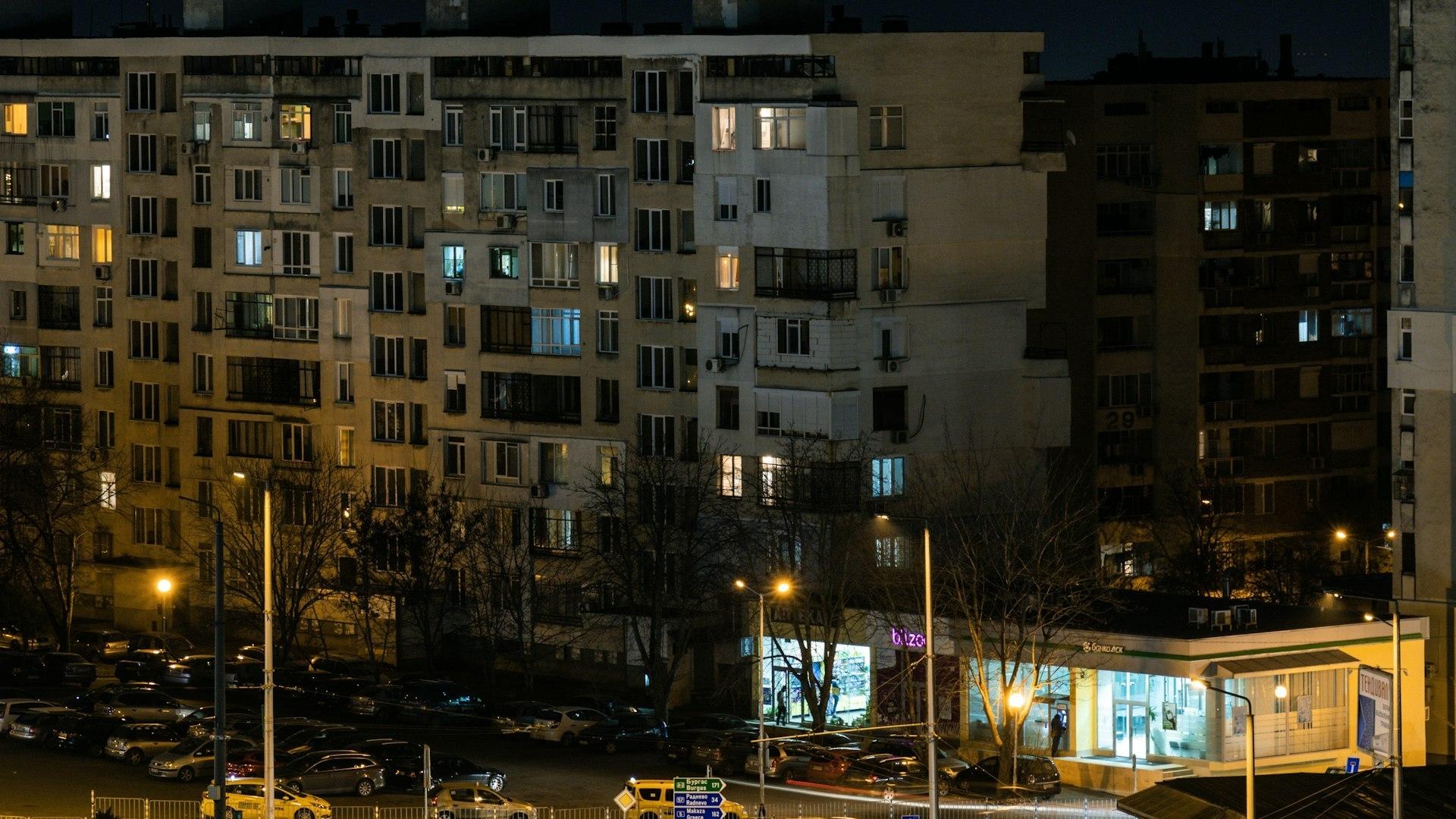
A large share of the city's residents live in the estates built in the second half of the 20th century, among them Tri Chuchura, Kazanski, Samara, Zora, Makedonski and Zheleznik. Housing there is mostly in panel, EPK and cast-in-place concrete blocks, with schools, kindergartens, shops and public transport close by. Stara Zagora has had a trolleybus network since 1987, plus bus routes linking the estates with the centre.
These districts usually offer the most floor space for the money and everything needed for daily life. The differences between individual blocks, however, are large. The construction method, the condition of the roof and façade, and whether the block has been renovated matter more than the address. What each construction method means is explained in our guide to buying a flat in an older block: panel, EPK, slip-form or brick.
Zheleznik, Bedechka and new construction
In property listings Zheleznik is split into "centre" and "east". The district mixes older blocks with a lot of recent new construction. Nearby is Bedechka park, with the river of the same name and Zagorka lake. A large part of the city's new-build supply is here.
For new builds in Stara Zagora we check the same things as anywhere else: the building permit, the stage reached (Acts 14, 15 and 16), encumbrances on the land, and the developer's real schedule. In the newer parts of the city we also check parking: if the building has too few spaces, the streets fill up quickly.
Studentski grad and the western side
Trakia University is in the western part of the city, with the Studentski grad district around it. Rental demand here is steadier thanks to students and staff, which matters if you are buying to let.
What the housing stock looks like
According to NSI data for Stara Zagora province as at 31 December 2025, in the province's towns 37.8% of homes have three rooms, 32.0% have two, and only 5.6% are one-room. In other words, the market is built mainly of family homes, and small flats for investment are in shorter supply. The figures cover the whole province, not just the city, and are indicative.
What to check with any purchase in Stara Zagora
- Seismic risk. The area is seismically active: the 1928 Chirpan earthquake struck the province hard. In an older building, ask about structural alterations in the flats (removed walls, widened openings). How to check natural hazards is explained in our guide to floods, landslides and earthquakes.
- Work and transport. The Maritsa Iztok energy complex is the largest employer in the area, and the city is a railway junction. If you work outside the city, check the route to your workplace, not just to the centre.
- The market moves differently from Sofia. Stara Zagora is a smaller market where the number of deals swings more sharply. How sales in the big cities looked over the summer is shown in our analysis of Registry Agency data for the third quarter.
- Financing. Work out your monthly payment with our mortgage calculator before you start viewing.
In short
- The centre is for living on foot, but the Roman city lies beneath it; ask about archaeology before building or converting.
- The districts below Ayazmoto offer greenery and quiet, but check the land and the infrastructure.
- The large estates give the most space for the money; the condition of the specific block is what decides.
- Zheleznik and the area around Bedechka hold much of the new construction.
- It is a market of family homes: three- and two-room flats are the majority.
If you are looking for a home in Stara Zagora and would like us to compare a few districts against your budget and lifestyle, call us or come into the office. We will show you current listings and what lies behind each one.

