Living in Ruse: neighbourhoods, housing stock and what to check before you buy
Ruse sits on the high right bank of the Danube and stretches for about 11 km along the river. That makes it a long, fairly flat city with a clear core, the old centre by the river, surrounded by large housing estates. The Danube Bridge links Ruse with Giurgiu in Romania, and Bucharest's Henri Coandă airport is about 70 km away. For some buyers that alone is a reason to choose the city.
The choice of home here is usually between a characterful old building in the centre, a flat in a large estate with everything nearby, and a house or new build on the outskirts. Below are the areas we are asked about most and what we check in each.
These descriptions are general and reflect our experience; every district has better and weaker streets. Verified as of November 2026.
The centre: architecture and life by the river
The old centre of Ruse is known for its late-19th and early-20th-century buildings: the Dohodno Zdanie (the former Profit House, now the theatre), Aleksandrovska Street, Svoboda Square and the riverside towards the Danube. Homes here are in old houses, blocks from the first half of the last century and newer buildings in between.
Who it suits: people who want to live on foot, with the opera, theatre, cafés and a walk along the embankment. Downsides: older buildings often need work on the roof, façade and services, and parking is difficult.
What we check: whether the building is a listed cultural monument or lies in a protected zone, in which case work on the façade and roof needs approval. We also check the condition of the common parts and whether the owners' association has a repair fund.
The wider centre
In listings, "Shirok tsentar" (the wider centre) covers the districts around the old centre, with brick blocks, apartment blocks from various decades and some new buildings. It is the compromise many families choose: walking distance to the centre, with more choice and a newer building.
The large estates: Zdravets, Druzhba, Rodina, Charodeyka
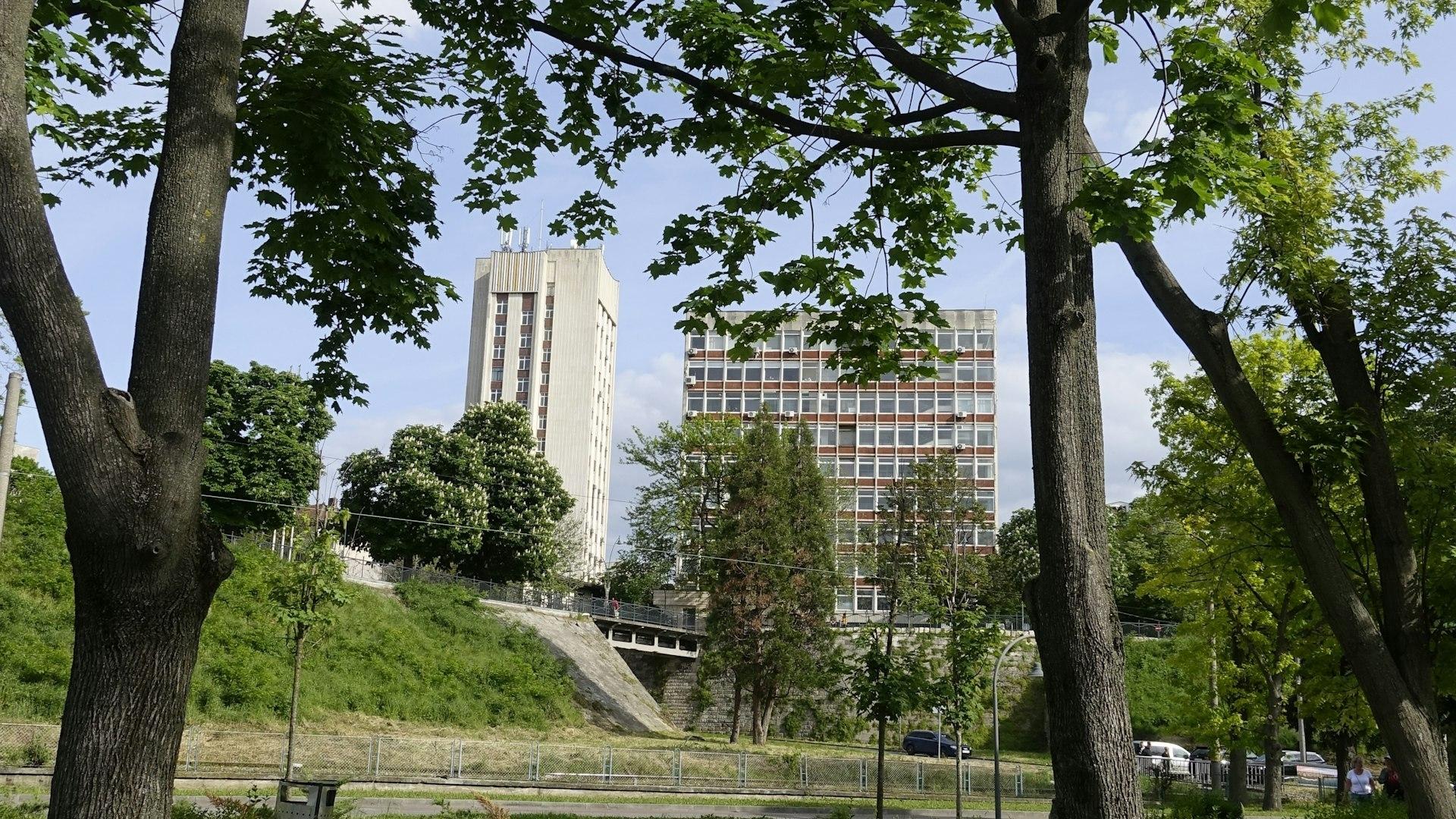
Many of the city's residents live in the estates built in the second half of the 20th century. Listings split them into smaller parts, for example Zdravets, Zdravets Iztok, Zdravets Sever 1, Druzhba 3 and Rodina 2. Housing is mostly in panel, EPK and cast-in-place concrete blocks, with schools, kindergartens, markets and public transport. Ruse has trolleybus and bus routes run by the municipal operator.
These districts offer the most floor space for the money. The differences between individual blocks, however, matter more than the name of the district: the construction method, whether the building has been renovated, and the condition of the roof and lift. What each construction method means is explained in our guide to buying a flat in an older block: panel, EPK, slip-form or brick.
Who it suits: families who want everything close by, and buyers on a tighter budget. Downsides: parking between the blocks, and maintenance that varies from one entrance to the next.
Schools
For many families, choosing a district in Ruse starts with the school. Selective secondary schools such as the "Geo Milev" English Language School, the "Baba Tonka" Mathematics High School and the "Friedrich Schiller" German-language school draw pupils from across the city, so living close to them is a matter of convenience rather than catchment. For primary school and kindergarten, however, your registered address matters, so check the municipality's admission rules before choosing a home.
The outskirts and new construction
The edges of Ruse, towards Saraybair hill with its TV tower, towards Prista park in the south-west and towards the villa zones, attract people looking for a house or a quieter new build. Here we check whether the street and utility networks are in place, whether the plot is within the regulation plan, and what may be built next door.
The river: an asset that needs checking
The high bank on which the city stands is generally not at risk of flooding. The exceptions are the low-lying parts: the floodplain terrace, the area around the mouth of the Rusenski Lom river (the Saraya district) and the port areas. If you are buying there, check the property's history during high water, the groundwater level and whether the basement is dry. How to check natural hazards is explained in our guide to floods, landslides and earthquakes.
What to check with any purchase in Ruse
- Seismic risk. Northern Bulgaria is within reach of the strong earthquakes from the Vrancea zone in Romania; the last major one was in 1977. In an older building, ask about structural alterations in the flats and look for cracks in load-bearing elements.
- Industry and traffic. Ruse is an industrial city, with industrial and logistics parks and river ports. Before you buy, look at what is around the property and how heavy lorry traffic to the bridge is routed.
- The university and rentals. The University of Ruse "Angel Kanchev" supports demand for smaller rental flats, which matters if you are buying to let.
- The market. Ruse is a smaller market than Sofia, Varna or Burgas, and its figures often move differently from the national average. How to read the NSI index and deal-count data is explained in our guide to property market statistics.
- Financing. Work out your monthly payment with our mortgage calculator before you start viewing.
In short
- The old centre is among the finest in northern Bulgaria, but its buildings often need repairs and approvals.
- The wider centre gives walking access to the centre with more choice.
- The large estates give the most space for the money; the specific block is what decides.
- The high bank is safe from floods, but the low-lying areas by the river and the Rusenski Lom need checking.
- Seismic risk from Vrancea is a reason to check the structure of older buildings.
If you are looking for a home in Ruse and would like us to compare a few districts against your budget and lifestyle, call us or come into the office. We will show you current listings and what lies behind each one.

