Living in Pernik: neighbourhoods, the commute to Sofia, the mining legacy and what to check before you buy
We are continuing our series on life in Bulgarian towns beyond the capital — this time with a city that many Sofia buyers consider without really knowing it. Pernik is just 28 km from the capital, yet it has its own history, its own pace and a housing stock shaped by a century of mining and steelmaking.
The figures below come from Bulgaria's National Statistical Institute (NSI) and standard reference sources, checked in November 2026.
Where it is and what defines it
Pernik is a regional centre in south-western Bulgaria, about 28 km south-west of Sofia. The city lies in the Pernik valley at 700–850 m above sea level, ringed by Vitosha, Lyulin and Golo Bardo, with the Struma river running through it. Drinking water comes from the Studena reservoir.
With 65,317 residents at 31 December 2025 (NSI), Pernik is the largest city in western Bulgaria after Sofia and the tenth largest in the country.
The valley has a climate of its own: the average annual temperature is around 9.5 °C, and winters bring temperature inversions and roughly 29 days of fog a year, almost all of them in the cold half of the year. For a buyer, that makes the heating system and winter air quality more than a detail.
A city built on coal
Modern Pernik begins in 1891 with the first state coal mine. The railway to Sofia followed in 1893, and in 1929 the settlement was declared a town. In 1953 the steelworks — today's Stomana — produced its first steel.
That history shows in the housing. The first miners' neighbourhoods — Monte Carlo, Tvardi Livadi and the Engineers' quarter — date from the early 20th century, and much of today's city was built in the industrial decades after 1950. So when viewing a flat, everything in our guide to older apartment blocks applies: construction method, joints, roof, common parts.
The city's districts
Pernik is divided into 5 district mayoralties with 10 main and 33 smaller neighbourhoods:
| District | Main neighbourhoods |
|---|---|
| Centre | Centre, Klepalo, Monte Carlo, Prouchvane, Tvardi Livadi, Teva, Hristo Botev, Hristo Smirnenski, Draganovets, Varosh and others |
| Iztok | Iztok, Moshino, Ladovitsa, Stomana, Metal, Industrial Zones 1 and 2 |
| Kalkas | Kalkas, Mogiliche, Vasil Levski, Kutsiyan, Kamenina |
| Tsarkva | Tsarkva and the surrounding quarters |
| Bela Voda | Bela Voda, Kristal, Sveti Panteleymon |
Two practical observations. First, in Iztok the residential areas sit next to the steelworks and the industrial zones — walk around the specific block at different times of day before deciding. Second, Bela Voda has its own mineral spring, and in the village of Rudartsi, in the same municipality, mineral water is used for baths and spa treatment.
Pernik and Sofia: the daily commute
Proximity to the capital is the main reason people look for homes here. Pernik is linked to Sofia by the Lyulin and Struma motorways and by rail, and buses, minibuses and trains run between the neighbourhoods.
Before you buy, do the journey yourself at rush hour — from the specific neighbourhood to where you work in Sofia. The gap between "half an hour on the motorway" and the real door-to-desk time is often large. If you are considering a house in the villages around the city, see also our guide to buying a village house near Sofia — the checks on zoning, water and road access are the same.
A shrinking population — what it means
Census figures point in one direction:
| Year | City population |
|---|---|
| 1985 | 94,155 |
| 2001 | 85,991 |
| 2011 | 80,191 |
| 2021 | 68,259 |
| 2025 (NSI, 31 Dec) | 65,317 |
In about four decades the city has lost almost a third of its residents. For a buyer that usually means more choice and more room to negotiate. For an investor it means resale and letting can take longer than in Sofia. Choosing Pernik over Sofia makes most sense when you are buying to live in the property, not as a pure short-term investment.
What to check before you buy
- The 2012 earthquake. On 22 May 2012 a strong earthquake with its epicentre about 5 km north-west of the centre shook the city. Ask whether the building was damaged and how it was repaired, and see our guide to natural hazards.
- Heating and air. In a valley with inversions, how you and your neighbours heat matters. Ask for actual winter bills.
- Proximity to industry. Check what is around the property — an active plant, warehouses, rail lines.
- The mining past. For a house or plot, ask the municipality and the neighbours whether there were underground mine workings in the area and how the ground has behaved.
- The standard checks. Title, encumbrances, cadastre, tax valuation — the same as in any city.
What the city offers
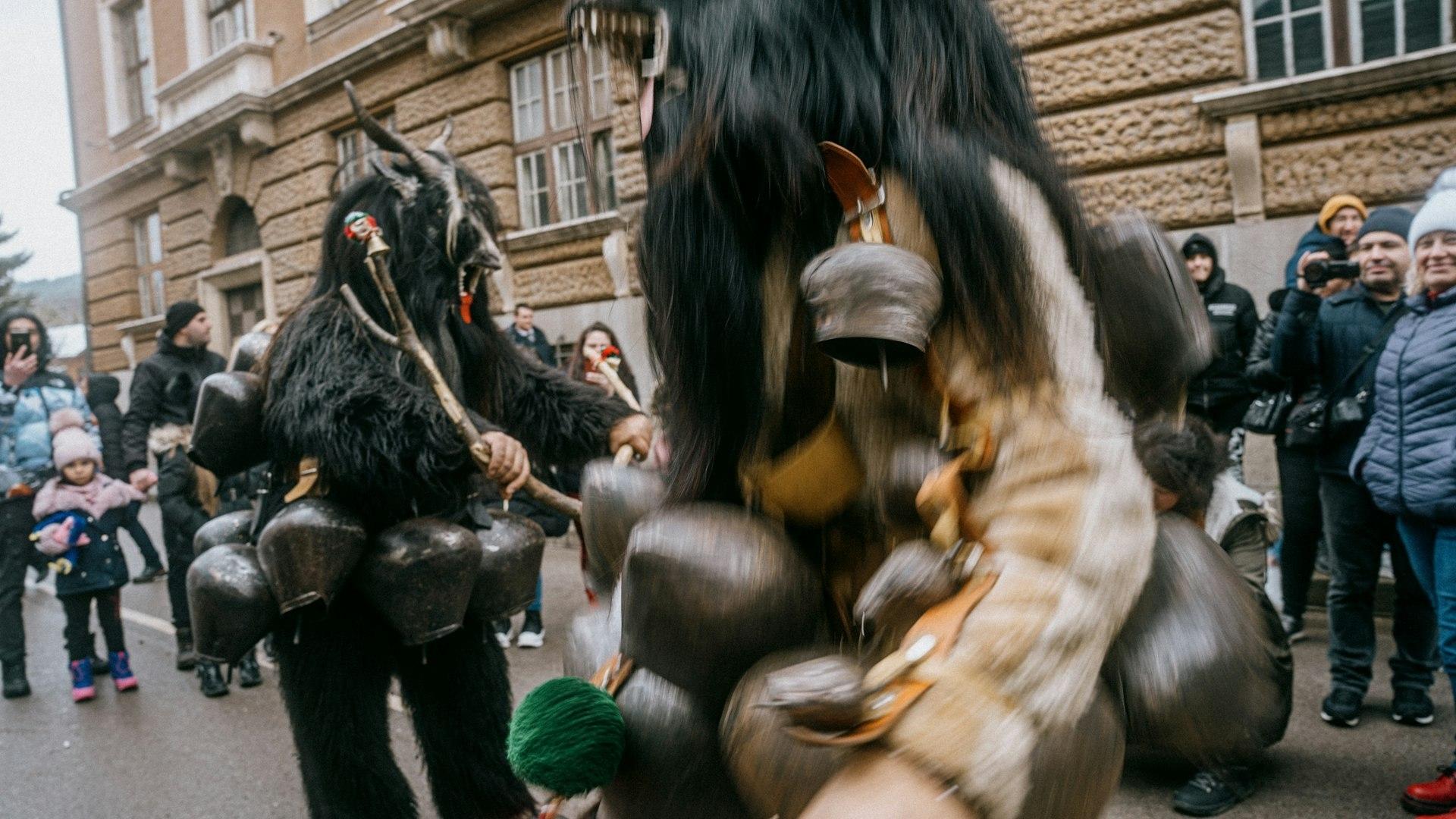
Pernik is not just a dormitory for Sofia. It has the Krakra fortress — the medieval stronghold of the governor Krakra of Pernik, who held out against the sieges of Basil II in the early 11th century. At the end of January the city hosts the Surva international masquerade festival, one of the largest in Europe; it earned Pernik the title of European carnival capital in 2009. Vitosha and Lyulin are, quite literally, above the city.
In short
- Pernik is 28 km from Sofia, with 65,317 residents (NSI, end of 2025) — the largest city in western Bulgaria after the capital.
- The housing stock was shaped by mining and steel — check the building and its surroundings carefully.
- The commute to Sofia is real, but test it yourself at rush hour.
- The population has been falling since 1985 — good for buyers, slower for resale.
If you are thinking of buying in Pernik or the villages around it and want to weigh the options against Sofia, call us or come into the office. We will help you see the property and the area up close before you decide.
Figures checked in November 2026. We do not quote prices or rents for Pernik — they change quickly and vary a lot by neighbourhood; you can see current offers in our listings.