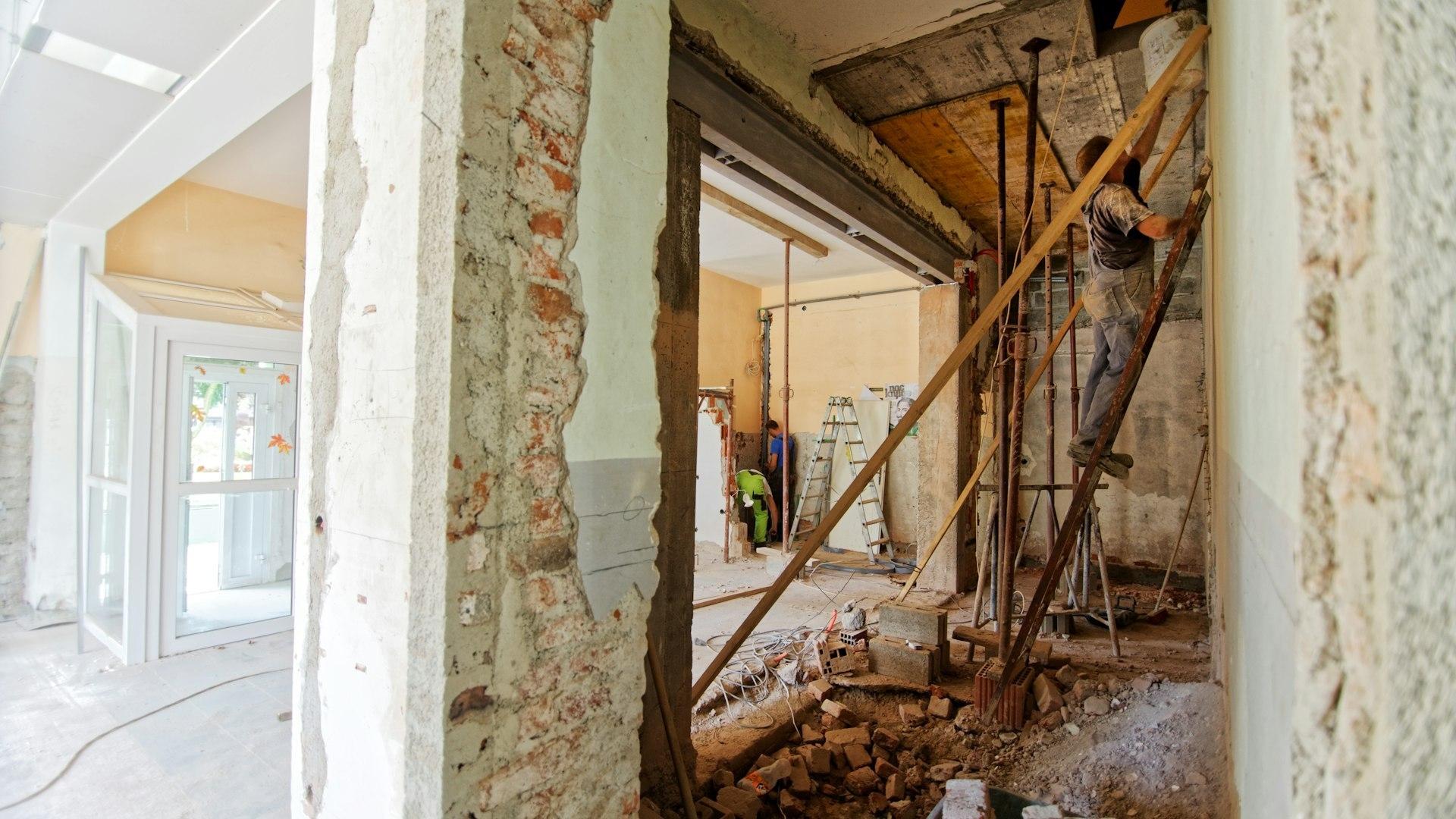
Illegal alterations in a flat: removed walls and a joined-on balcony — what the buyer risks and whether there is a way out
A living room opened up to the kitchen. A balcony that has become part of the bedroom. A hallway without its wall. At a viewing, these look like advantages: more light, more space. The paperwork, however, often shows a different layout, and there is neither a design nor a permit for the change.
Not every alteration is illegal. Some are perfectly allowed without any paperwork. Others can bring you a demolition order, a refused mortgage or a dispute with the neighbours. Here is how to tell them apart before you sign.
Which alterations are legal and which are not
One question decides it: was the building's structure affected?
- Without a permit you may carry out routine repair (Art. 151(1)(1) of the Spatial Development Act, ZUT). This includes internal alterations that do not affect the structure, do not remove or cut openings in load-bearing walls, and do not change the use of the rooms or the loads on them (§ 5(43) of the ZUT Supplementary Provisions). Removing a light partition wall that carries nothing is usually exactly that.
- A design and a building permit are needed for anything that touches a load-bearing wall, column, beam or floor slab (Art. 148(1) ZUT). Load-bearing walls and slabs are common parts of the building (Art. 38 of the Property Act). Such an alteration therefore also requires a decision of the general meeting and the written consent of the immediate neighbours (Art. 185(2) ZUT).
- Building without a permit is illegal construction (Art. 225(2)(2) ZUT). That applies even when it is "just one wall" inside a flat.
The balcony is a separate case. Glazing a balcony within its outline needs no permit (Art. 151(1)(6) ZUT). It is different when the balcony is joined to the room by removing the door, the window and the parapet wall below them. That often affects the structure and the external wall, which is also a common part. It is no longer glazing but an alteration that needs a design, a permit and the neighbours' consents.
In prefab panel and large-format (EPK) blocks, the walls between rooms and between flats are very often load-bearing. You cannot tell by eye whether a wall is load-bearing. Only a structural engineer can.
How to spot an alteration
At the viewing, look for:
- thresholds, level changes in the floor or a seam in the plaster where a wall used to be;
- a radiator or flooring that continues into the former balcony;
- a missing parapet wall or windows that differ from the neighbouring flats on the façade;
- a beam or steel frame over a wide opening, or cracks at its corners.
In the paperwork, compare:
- the title deed, which usually lists the rooms ("two rooms, kitchen, bathroom…");
- the cadastral diagram of the unit and the approved architectural design of the building, if it survives at the municipality or with the owner;
- the actual layout against all of these.
If you see a difference, ask the seller directly: when was the change made, by whom, and is there a design and a permit? Ask for the answer in writing. We describe the full document check in our guide to legal checks before buying.
What the buyer risks
- A demolition order. For illegal construction in categories four to six, the order is issued by the mayor (Art. 225a ZUT); for higher categories, by the National Construction Control Directorate (DNSK). A sale does not make an illegal change legal. The problem stays with the property and becomes yours. Our report on the occupied homes sealed in Varna shows how costly that can get.
- Safety. An unengineered opening in a load-bearing wall weakens not just your flat but the whole building. The effects may only show years later.
- The mortgage. The bank's valuer compares the documents with reality. If the difference is significant, the loan may be refused or the property valued as documented.
- Floor area. A joined-on balcony does not add to the area in the title deed. That only changes with approved documents. If you are paying for an "extra room", you are paying for something that is legally a balcony (more on floor areas).
- The neighbours. Every owner must avoid damaging the common parts and must not alter the building's appearance or load-bearing capacity (Art. 6(1) of the Condominium Management Act). An unhappy neighbour can report the alteration to the municipality at any time.
- Resale. When you come to sell, the next buyer will ask the same questions, and their bank will run the same check.
Is there a way out?
The options depend on what exactly was done and when.
- The structure was not affected. Then the change is routine repair and there is nothing to legalise. Ask for a written opinion from a structural engineer confirming the wall was not load-bearing and the loads did not change. Keep it with the title documents, because it answers the questions of the next buyer and the bank.
- The change predates 31 March 2001. If it was permissible under the rules then or now, it may be tolerated (§ 16 of the ZUT Transitional Provisions; § 127(1) of the 2012 ZUT amendment). Tolerance is certified by the municipality. It is not legalisation, but it means the construction is not demolished and can be transferred.
- More recent changes. In practice, there is no general legalisation procedure. Applications to legalise under § 127 of the 2012 amendment had to be filed by 26 November 2013.
- Restoring the original layout. The cleanest solution is often to rebuild the wall or the parapet following a structural engineer's instructions. Before you start, ask the municipality whether the restoration itself needs a design and a permit.
Which of these applies is for a structural engineer and a lawyer to judge for the specific property. Don't rely on reassurances like "everyone in the block has done it".
How to protect yourself when buying
- Before the deposit: compare the documents with what you saw, and bring in a structural engineer if in doubt.
- In the preliminary contract: include the seller's declaration that there are no unpermitted alterations affecting the structure. If there are, agree who will remedy them and by when, or by how much the price is reduced. Also agree that the deposit is returned if that condition is not met.
- If you find out after the purchase: when the seller concealed a defect that significantly reduces the property's value, you can ask for a price reduction or, if the defect is serious, have the contract set aside (Arts. 193–195 of the Obligations and Contracts Act). For real estate, the deadline is one year from handover (Art. 197). You lose this protection if you knew about the defect. That is why checking before the deal is safer than going to court after it.
If you are selling
Don't hide the alteration. It almost always comes out at the buyer's viewing or the bank's valuation. Before you list, get the structural engineer's opinion, a tolerance certificate if one applies, or restore the original layout. We describe how unrecorded changes derail deals at the last minute in our guide to the seller's document pack.
In short
- Removing a non-load-bearing wall is routine repair, not a violation. An opening in a load-bearing wall, or a balcony joined on without a permit, is illegal construction.
- Compare the title deed, the cadastral diagram and the design with what you see at the viewing.
- The risks are a demolition order, a refused mortgage, a gap in floor area and a dispute with the neighbours.
- The ways out are an engineer's opinion, tolerance for changes made before 2001, or restoration. In practice, there is no general legalisation today.
Found a flat you like but not sure that wall was always missing? Call us or visit the Scala Di office. We'll go through the documents with you and tell you what to check before you pay a deposit.
This information is general and indicative and does not replace professional advice.

