
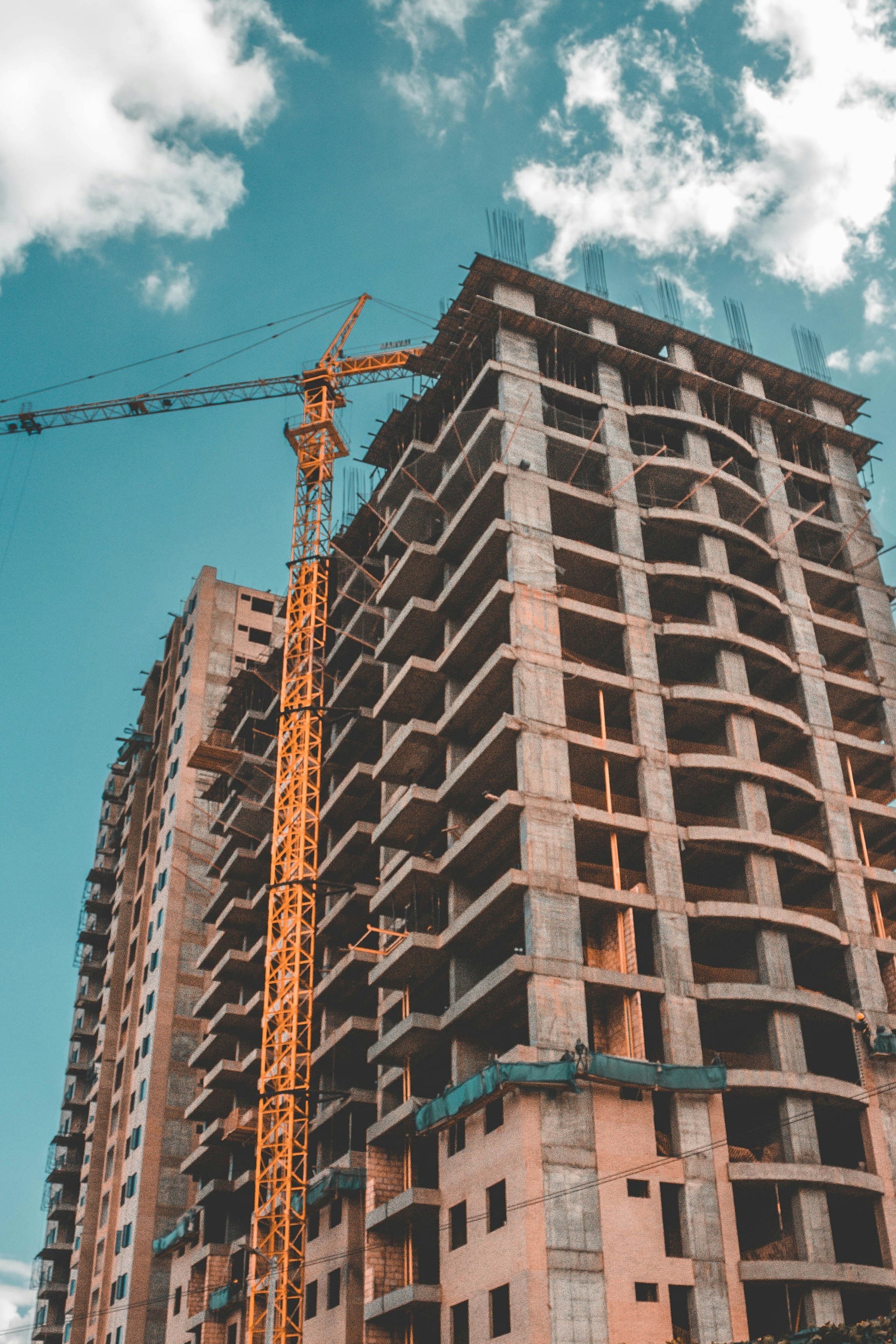
On 3 September 2026 Varna's deputy mayor Plamen Kitipov announced that access to part of the buildings in the "Baba Alino" complex outside the city would be restricted and the buildings themselves sealed. The measure covers "one property with around six buildings containing multiple individual units". The buildings are occupied. The water utility and Energo-Pro are cutting water and electricity supply, after which the buildings will be sealed. Demolition is expected at a later stage.
The owners hold notarial deeds. They have paid property tax and waste fees for years. Some of them held tolerance certificates issued by the municipality itself. "How can tolerance documents issued by the municipality suddenly turn out to be invalid?" one owner asked, quoted by bTV.
It is a fair question, and the answer is unwelcome because it is technical. Three separate legal regimes meet in a single property, and buyers usually check only one of them.
A notarial deed certifies who owns the property. It does not certify that the building was lawfully built.
The notary verifies the seller's power of disposal — whether they hold what they are selling and whether encumbrances are recorded against it. Verifying that a building is lawful is a procedure under the Spatial Planning Act, run by the municipality and by the National Construction Control Directorate (DNSK), not by the notary. The two tracks do not cross-check each other automatically.
Which is why it is entirely possible — and is exactly what happened in Varna — for a transaction to pass a notary without difficulty while the building itself is illegal.
The municipal tax file proves nothing further. A tax file is opened on the owner's own declaration under the Local Taxes and Fees Act. The municipal tax office taxes factual possession of a property; it does not verify compliance with the Spatial Planning Act and issues no certificate of legality. Ten years of paying property tax proves that the tax was paid, and nothing else.
Three documents, in this order:
The building permit (art. 148 of the Spatial Planning Act) — the act that authorised construction in the first place. Without it, everything downstream rests on nothing.
The permit for use, "Act 16", or a certificate of commissioning (art. 177) — the act that makes the building fit for occupation. A building without one cannot lawfully be used, however finished it looks and however many people live in it. What sits behind Act 14, Act 15 and Act 16 is set out in our guide to buying new-build property.
A tolerance certificate — for older buildings without construction paperwork. Under § 127 of the transitional provisions to the 2012 amending act (State Gazette no. 82/2012), buildings erected before 31 March 2001 that were permissible under the rules in force at the time, or under the Spatial Planning Act, are tolerated: they are not subject to removal or to a prohibition on use, and they may be the subject of a transfer once a certificate is produced by the authority competent to approve investment designs.
This is the trap that sprang in Varna.
A tolerance certificate is a declaratory act. It does not create legality; it records that the conditions for tolerance are met. If those conditions are not in fact met — the building went up after 31 March 2001, or was not permissible under the rules then in force — the certificate does not convert an illegal building into a tolerated one. It has simply been issued in error.
The practical consequence: a tolerance certificate produced by the seller is not enough. What matters is the basis on which it was issued — when the building actually went up, and whether it was permissible then. The construction date is checked against the available documents, not taken on trust.
Competence is split by building category. Under art. 225, removal orders for illegal buildings of the first, second and third category are issued by the head of DNSK. Under art. 225a, for buildings of the fourth to sixth category, the order is issued by the municipal mayor or an authorised official, on the basis of a formal report served on interested parties with a seven-day window for objections.
Ordinary residential buildings fall into the fourth or fifth category. That is why the municipality is acting here rather than DNSK — and why the order is an administrative act subject to appeal within a statutory deadline. That deadline runs, and it is not restored.
None of them is expensive, and together they take less than a week.
1. The construction file — from the municipality, not the seller. The building permit and Act 16 are verified against the construction file held by the municipal administration. A copy supplied by the seller shows what was once issued; it does not show whether that document was later revoked, appealed or amended.
2. The DNSK public register. DNSK maintains a public register of final removal orders for illegal buildings. The search is free and takes minutes. If the building appears there, the conversation is over.
3. The cadastral map — and what it does not tell you. The cadastre records plot boundaries, buildings including those in rough construction, and the individual units within them. It reflects the factual state of the site. A building's presence on the cadastral map therefore proves that the building exists — not that it is legal. That distinction costs people a great deal when they treat the cadastral sketch as absolution.
To these we add an enquiry with the municipal construction-control department for any acts or orders issued against the specific property, and a check on who the developer is and what they have completed. The full list of what we review before signing is in our guide to legal checks before buying.
The municipality was blunt about this: "the municipality generally has no direct obligation towards those harmed by this type of deal with dishonest traders", the deputy mayor said. What remains is a claim against the seller — and whether or when that produces compensation is anyone's guess. Some of the Varna owners are still servicing mortgages on homes they will not be able to enter.
If you are in that position, two things are urgent: the deadline for appealing the order, and a lawyer to review the entire documentary chain from construction through to your own purchase. Both are a matter of days, not months.
Verifying construction status is part of the file we assemble on every transaction — not an add-on service, and not something we leave to the client. Where a building has no Act 16, or only a tolerance certificate, we ask for the basis of that certificate and test it against the actual year of construction before a preliminary contract is drafted. When something does not add up, we say so before the deposit, not after the notary.
Fraud that attacks ownership rather than construction legality — forged wills, sweeping powers of attorney, adverse possession — we covered separately in our review of the Ministry of Justice package.
The Varna case is not exotic. It shows how easily a home passes through a notary, a tax office and a bank without any of the three checking whether the building is entitled to exist. A notarial deed proves ownership. A tax file proves payment. Construction legality is proved only by construction paperwork — and it is verified at the municipality and in the DNSK register, before anything is signed.
If you are looking at a property and something in its paperwork is unclear, call us or come by the office. We will go through the documents with you before you part with a deposit.
Information current as at 8 September 2026. This article is for information only and does not replace legal advice on a specific matter.