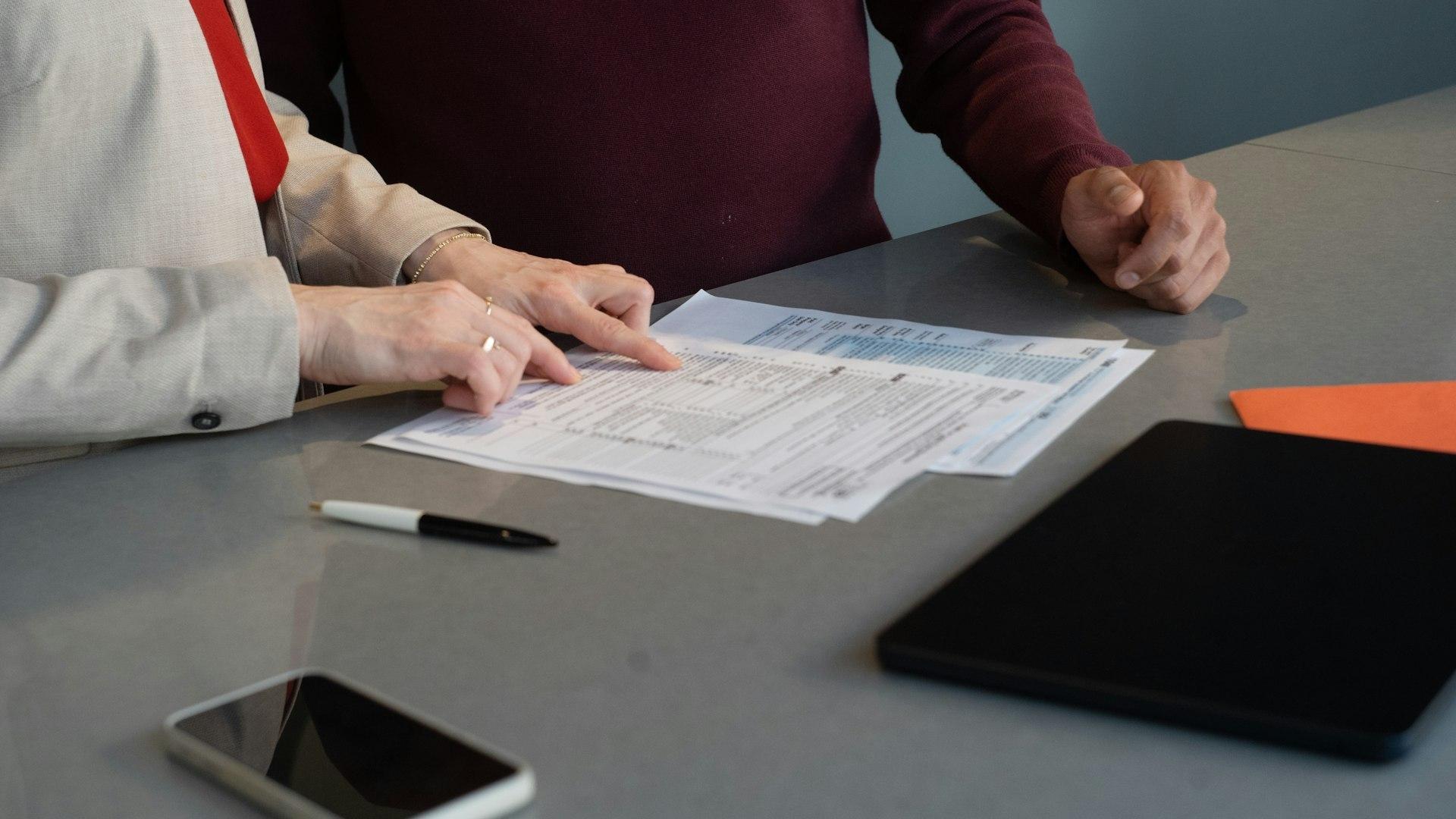
Completion day at the notary in Bulgaria: what happens step by step and what to bring
The notarial transaction is the moment ownership passes from seller to buyer. In Bulgaria, a contract transferring property must be made by notarial deed (Art. 18 of the Obligations and Contracts Act, ЗЗД). Without it there is no purchase, however much money has changed hands. The signing itself usually takes about an hour. If the preparation is done well, the day goes smoothly. If it is not, the deal can be postponed right there in the notary's office.
This guide describes what happens on the day. We have covered the documents the seller provides in detail in our guide to the seller's documents. The deposit and preliminary contract are covered in a separate guide.
Before the day: preparation
The draft deed. The draft is prepared by the notary or by a lawyer for one of the parties. It should be ready a few days before the deal and sent to both sides. Check the names, personal ID numbers, the description of the property, the price, how it will be paid and when possession will be handed over. Figures relating to the transaction are also written out in words (Art. 578(3) of the Civil Procedure Code, ГПК). Compare them.
The documents at the notary's office. The notary should receive the property documents in advance, so they can be checked before the parties arrive. If something is missing, it is better to find out three days early than on the day.
Buying with a mortgage. The bank approves the loan and the valuation. It usually also prepares or approves the draft of the contractual mortgage, which is also created by notarial deed (Art. 167 ЗЗД). The two deeds, for the purchase and for the mortgage, are usually signed on the same day, one after the other. The date has to be agreed with the bank as well.
Who must attend. If the seller is married and the property is marital joint property, both spouses are needed. For co-owned or inherited property, all owners must attend. If anyone will be represented, the power of attorney must have both signature and content notarised (Art. 37 ЗЗД). The notary should see it in advance.
Tax and fees: paid before signing
The local acquisition tax is paid on transfer to the municipality where the property is located (Art. 49 of the Local Taxes and Fees Act, ЗМДТ). The notary may complete the transaction only after confirming the tax has been paid (Art. 50(1) ЗМДТ). In practice it is paid on the day of the deal or the day before. How much it is in your municipality is explained in our guide to the local acquisition tax.
The notary fee and the registration fee are paid to the notary, usually before signing. By custom, the buyer covers these costs unless the parties agree otherwise. You can estimate the amount with the notary fee calculator.
What to bring
| Buyer | Seller |
|---|---|
| Valid ID card or passport | Valid ID card or passport |
| Proof the local tax has been paid | The title document (original) |
| Proof of payments to the notary | Tax valuation certificate |
| With a mortgage: the bank's documents | Cadastral sketch or scheme; encumbrance certificate if required |
| Power of attorney if someone represents you | Spouse's presence or consent where needed |
| Details of the account the money comes from | IBAN to receive the price |
Check the expiry date of your ID at least a week ahead. The notary will not proceed with an expired document.
At the notary's office: step by step
1. Identity. The notary checks the identity, legal capacity and authority of everyone who signs (Art. 578(4) ГПК). Identity is established from an identity document (Art. 578(5) ГПК).
2. Ownership. The notary checks that the seller owns the property and that any special requirements for the transaction are met (Art. 586(1) ГПК). This is why the documents need to reach the notary in advance.
3. Declarations. The parties sign declarations. The seller declares there are no unpaid public debts (Art. 264 of the Tax and Social Insurance Procedure Code, ДОПК) or presents a certificate. The buyer declares the origin of the funds (Art. 66(2) of the Anti-Money Laundering Measures Act, ЗМИП) and whether they are a politically exposed person. The parties also declare their citizenship and marital status. Read the declarations before you sign: you are signing them under legal liability.
4. Reading the deed. The notary reads the deed to the parties, and only then do they sign (Art. 579 ГПК). This is the time to ask about anything unclear. If an error needs correcting, waiting a few minutes is far better than correcting a registered deed later.
5. Signing. The parties sign, then the notary. With a mortgage, the mortgage deed is signed next.
Paying the price
The price is paid by bank transfer. The Limitation of Cash Payments Act allows cash only below a set threshold, and the price of a home is always above it. The contract should state when and how payment is made. One of three arrangements is usually used:
- Before signing. The buyer transfers the money and shows the payment order to the notary. This suits the seller, but the buyer carries a risk if the deal falls through.
- On the day. The transfer is ordered at the notary's office straight after signing. An interbank transfer can take time to arrive, and the seller should know this.
- With a mortgage. The bank usually pays the seller after the purchase deed and the mortgage are registered. The seller needs to know this in advance, and the timing should be written into the contract.
Choose the arrangement when you sign the preliminary contract, not at the notary's office.
After the signatures
Registration. The notary sends the deed for registration at the Registry Office. Registration matters: until the deed is registered, it cannot be relied on against third parties who acquired rights from the same seller and registered them first (Arts. 112–113 of the Property Act, ЗС). The registered copies usually come back within a few days. Your copy is an official document, so keep it safe.
The municipality. Within 7 days the notary notifies the municipality of the transfer and the tax paid (Art. 51(2) ЗМДТ).
The keys. Possession is handed over by the date stated in the deed. This may be the same day or later, for example once the seller has moved out. What comes after the purchase is also covered in our roadmap for first-time buyers.
What most often delays a deal
- an expired ID card;
- a spouse or co-owner who did not turn up;
- a power of attorney in the wrong form;
- unpaid local tax;
- an expired tax valuation certificate;
- the bank has not sent the loan documents.
All of this can be checked a day or two in advance.
In short
- Property is transferred only by notarial deed.
- The local tax and the fees are paid before signing.
- The notary checks identity, ownership and authority, reads the deed, and only then is it signed.
- The price is paid by bank transfer, as agreed in the preliminary contract.
- After signing, the deed is registered and the municipality is notified.
If your completion day is approaching, call us or visit our office. We will go through the draft deed, the documents and the payments with you, so there are no surprises at the notary's.
This information is general and indicative and does not replace professional advice.