
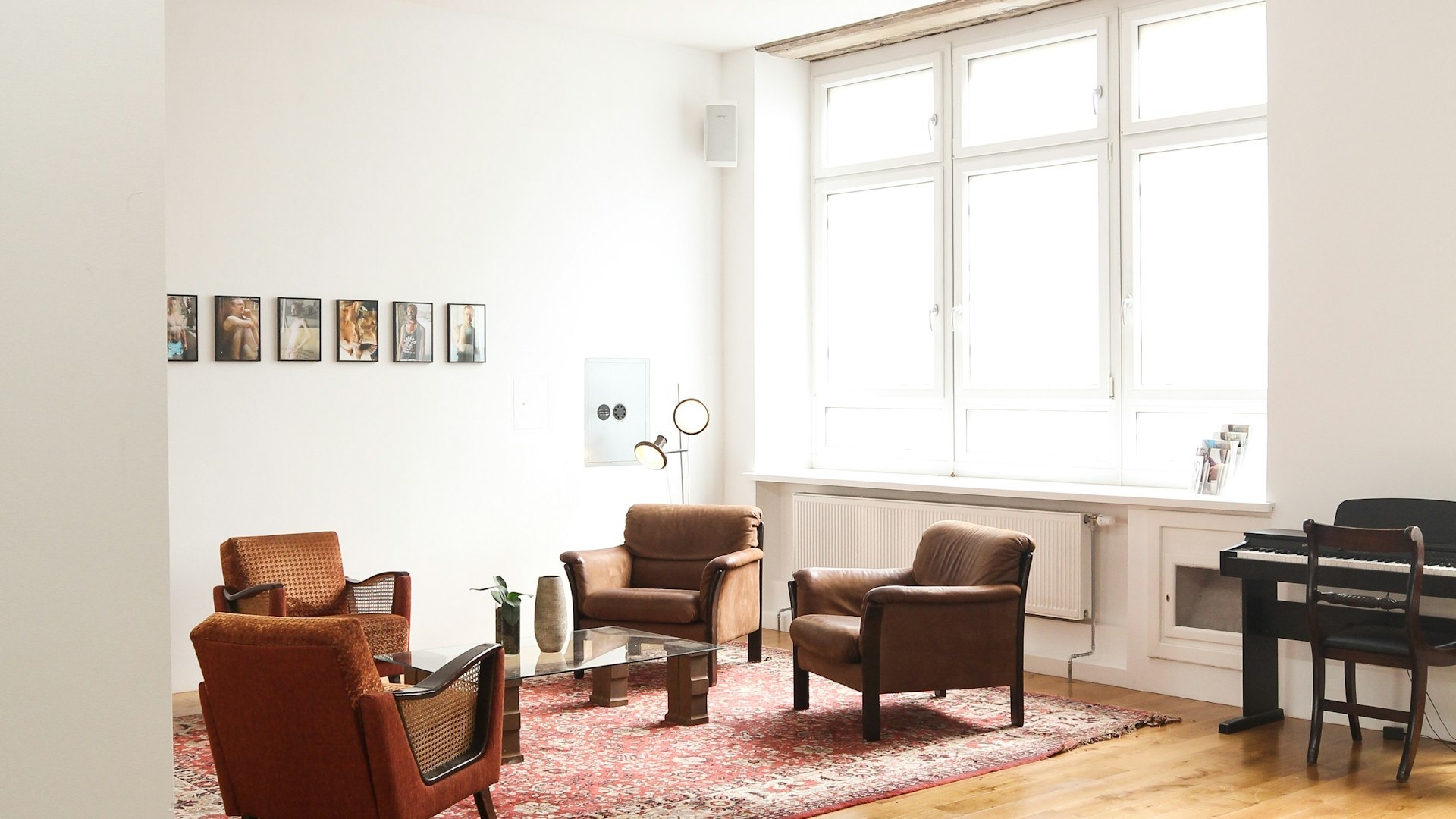
The floor is the largest surface in a home – larger than any wall – and buyers notice it in the very first photograph. Yet the choice is rarely just about looks. It decides how much noise the neighbour below hears, how the room behaves after a leak, whether underfloor heating works efficiently, and how much you will spend on upkeep ten years from now.
Solid parquet is natural wood all the way through. It can be sanded and re-lacquered many times – which is why well-kept parquet lasts for decades. Engineered (three-layer) parquet has a top layer of hardwood on a stable base; it moves less with changes in humidity and is usually better suited to underfloor heating.
Wood responds to the room climate. Manufacturers recommend around 20 °C and 40–60 % relative humidity all year. In winter, with central heating and dry air, gaps appear between boards – normal up to a point, and they close again when humidity returns.
Many flats in 1960s–70s brick blocks have old oak parquet under carpet or laminate. Sanding and lacquering often gives a better result than a new floor – and buyers appreciate it.
Laminate is a decorative layer (a photograph of wood or stone) on a fibreboard core. It is cheap, quick to lay and scratch-resistant. When choosing, look at the use class under EN 13329: a first digit 2 means domestic use and 3 commercial, while the second digit (1–3) indicates the load. The abrasion class of the surface layer is stated separately. Choose a higher class for the hallway and kitchen.
Vinyl planks and tiles are the fastest-growing category.
Both are water-resistant at the surface, which makes them a good choice for kitchens, hallways and rental flats. Repairing SPC sometimes means unlocking planks back to the nearest wall.
Porcelain stoneware is the most durable option for bathrooms, kitchens, hallways and terraces – water does not affect it and it conducts underfloor heating best. The downsides: cold underfoot without heating, and a dropped object is loud. Large formats with few joints look calmer and are easier to clean.
In a block, impact sound (footsteps, heels, chairs being moved) travels through the slab. Hard floating floors without a good underlay are the noisiest. What helps:
Floor work is noisy, and in a block there are restrictions on working hours – details in our guide to renovating a flat in a block.
Underfloor heating runs at a low surface temperature, so the floor covering has to let the heat through. EGGER, for example, specifies for its laminate a maximum surface temperature of 28 °C and a thermal resistance of the whole build-up of no more than 0.15 m²K/W. In practice:
From our viewings: a restored wooden floor and the same floor running through adjoining rooms make a home look larger and more coherent. Five different floor finishes in one flat look like five renovations. For a rental flat, durability matters more than prestige – there, vinyl and high-class laminate usually win, as we explain in our guide to furnishing a flat to let. If you are buying a new-build flat at screed stage, floors are a significant part of the second budget.
If you are wondering whether to renew the floors before selling, or which floor to choose for your new home, call us or come into the office.
This is general information; with underfloor heating and particular subfloors, follow the manufacturer's instructions. Verified as of October 2026.
