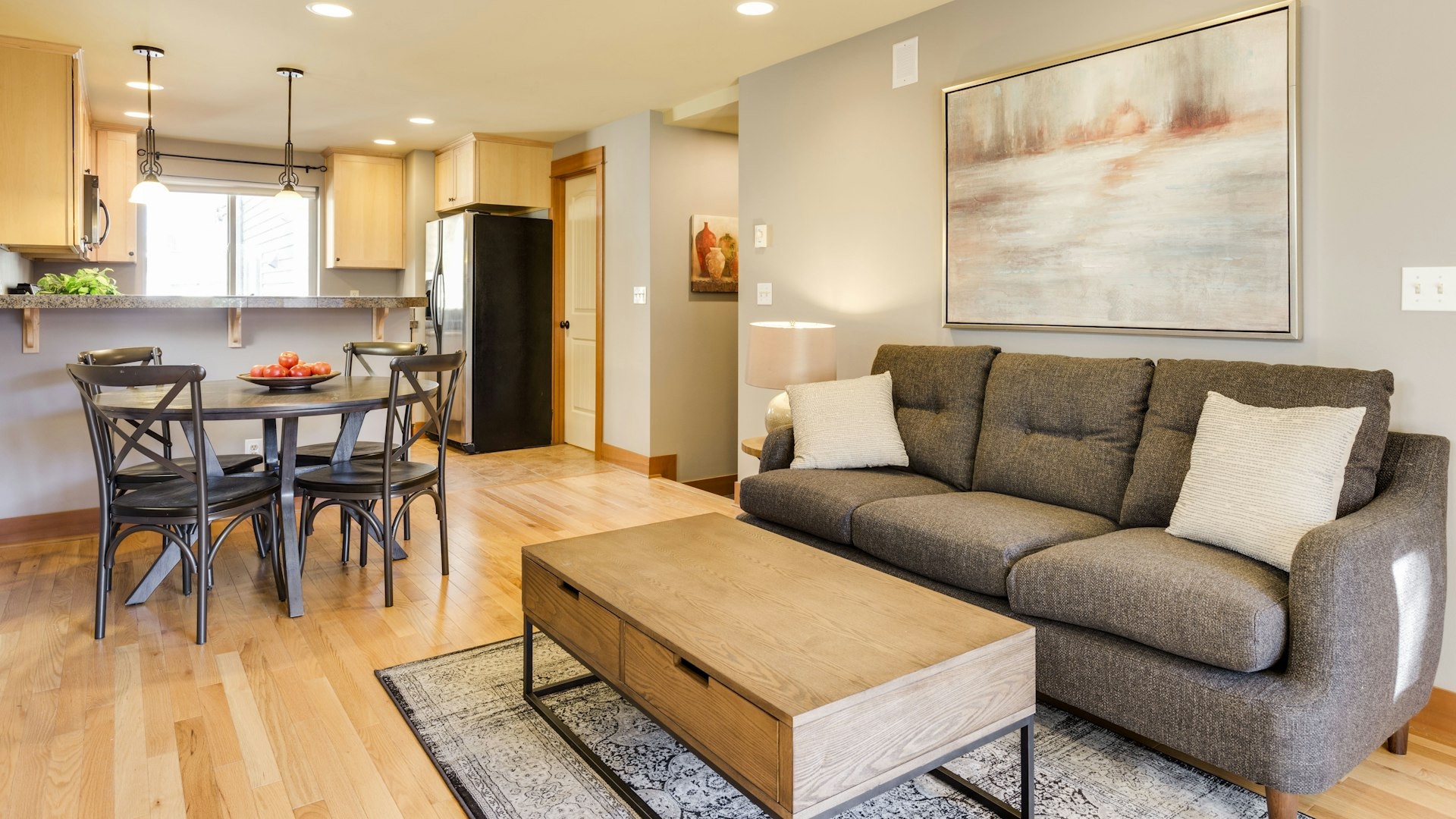
Furnishing a rental flat is an investment with a short life. A sofa you would keep for ten years at home may last half that with tenants. So the useful question is not "what does furnishing cost" but what does one month of use cost — and does the rent cover it. This is how we work it out when an owner asks us whether to furnish.
The choice is not only about money. It decides who answers the listing.
| Furnished | Unfurnished (or kitchen and appliances only) | |
|---|---|---|
| Who it attracts | students, young professionals, people relocated for work, foreigners | families and people with their own furniture who plan to stay longer |
| Length of tenancy | more often shorter | more often longer |
| Your upfront cost | higher | lower |
| Wear and replacement | your responsibility | mostly the tenant's |
| Risk of a move-out dispute | higher — more to list | lower |
These are observations from our practice, not statistics. The sensible middle ground is often a fitted kitchen, appliances, lighting and wardrobes, with the rest left to the tenant. The flat is liveable from day one, but you are not paying for a sofa the tenant may not want.
The most useful exercise: for each item, divide the price by its expected life with tenants (not with you) and by 12 months. That gives you what it "costs" you each month.
Illustrative example — the numbers are assumptions for the arithmetic, not market prices or official useful lives:
| Item | Assumed price | Assumed life | Per month |
|---|---|---|---|
| Mattress | €400 | 6 years | ≈ €5.60 |
| Washing machine | €500 | 8 years | ≈ €5.20 |
| Fridge | €600 | 10 years | €5.00 |
| Sofa | €800 | 5 years | ≈ €13.30 |
| Table and chairs | €400 | 8 years | ≈ €4.20 |
| Wardrobe | €600 | 10 years | €5.00 |
| Total | €3,300 | ≈ €38.30 |
How to read it:
Mattress. Tenants feel it every night and mention it first at a viewing. Buy a good mattress with a removable or washable cover, plus a protector — you replace the protector, not the mattress. Many owners also replace the mattress between tenants; build that into the sums.
Major appliances. Washing machine, fridge, oven/hob, water heater. A breakdown means an urgent call, a repair visit and an unhappy tenant. Choose a mainstream brand with easy servicing and spare parts, check the EU energy label (the tenant pays the electricity bill, but also notices it when choosing a flat), and keep the warranty cards in one folder.
Lighting. Tenants rarely bring their own lamps. Fit a light in every room, enough light in the kitchen and bathroom, and LED bulbs. A dark flat looks smaller and older in listing photos.
Locks and keys. Change the front-door cylinder between tenants — it is cheap and settles the question of who else has a key. Record in the handover how many keys you hand over.
For the aesthetics of your own home — proportions, colours, textiles — see our guide to decorating your own home. The same principles apply to a rental, with a stricter eye on durability.
Bulgarian law leans towards the owner, but only if you have evidence. Under Art. 233 of the Obligations and Contracts Act (ЗЗД) the tenant must return the property and is liable for damage caused during the tenancy unless they prove they are not responsible; until proven otherwise, the property is presumed to have been received in good condition. Under Art. 231 ЗЗД, minor repairs due to ordinary use are for the tenant's account, while other damage not caused by the tenant's fault is for the landlord's.
In practice the dispute is almost always "that was already there". The answer is a handover record with an inventory (приемо-предавателен протокол), signed by both sides as an annex to the lease:
At move-out you go through the same list. Normal wear (faded paint, a slightly worn floor) is not damage; a broken cabinet door is. The more detailed the inventory at the start, the shorter the conversation at the end. What else belongs in the lease and how rental income is taxed is covered in our guide to letting out property and the tax you owe.
Short-term guests expect something close to hotel standard: several sets of bed linen and towels, a fully equipped kitchen, hairdryer, iron, fast internet, clear instructions. Wear is heavier and the standard higher, so the sums above change: shorter item lives and more textiles to replace. Short-term letting also has its own registration requirements — what is needed from 2026 is set out in our article on short-term letting after 20 May 2026.
Long-term letting is the reverse: fewer items, but sturdier ones, and more freedom for the tenant to add their own.
If you are weighing up whether and how to furnish a flat to let, call us or visit our office — we will look at the property with you and tell you what tenants in your area are looking for.