
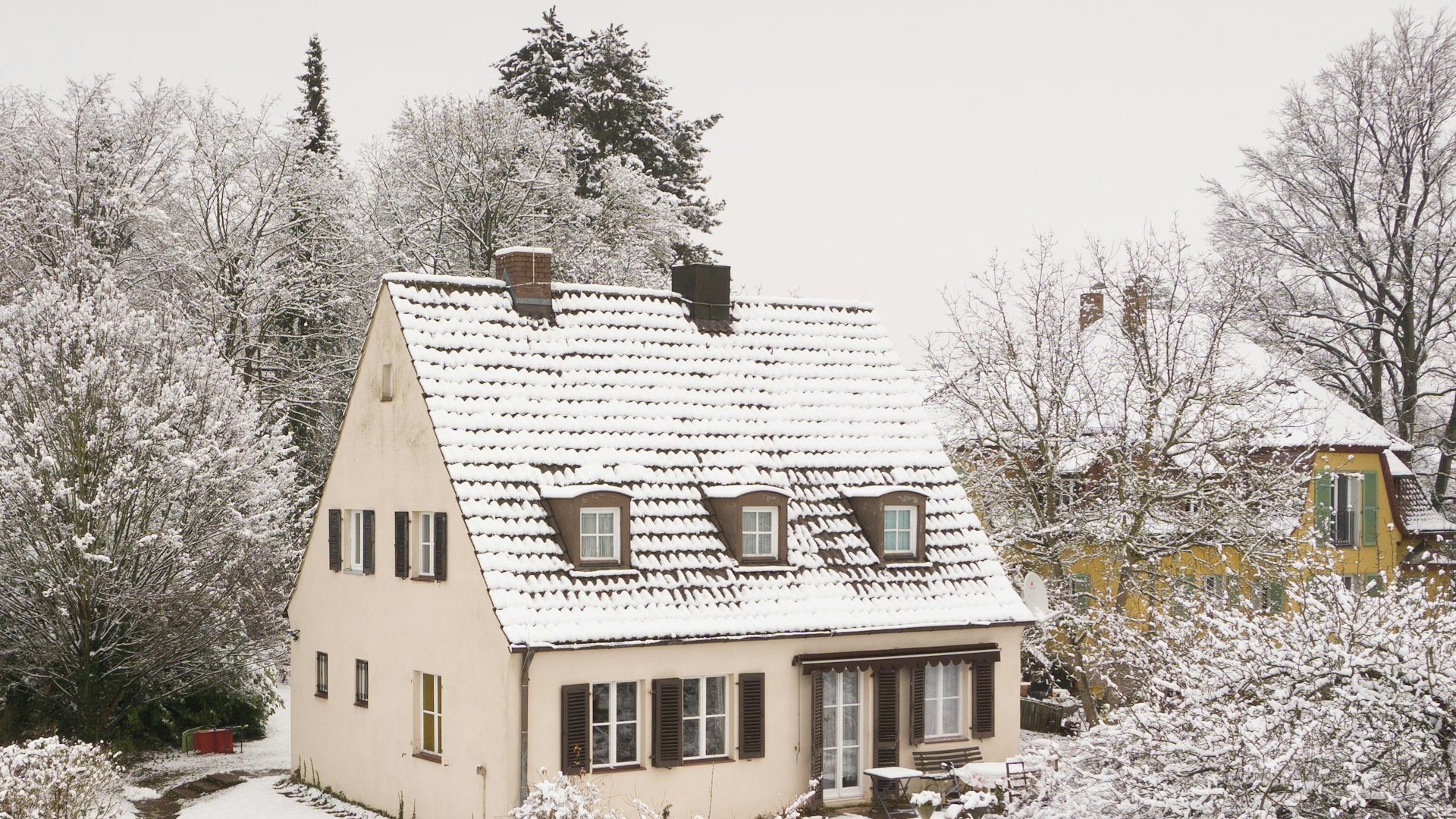
The end of October is when many owners lock up the cottage outside Sofia, the village house or the flat on the coast and don't come back until spring. The most expensive winter risk for a property like that is usually not burglary but water: a pipe freezes and splits, and when the weather warms up the water runs for days with no one there to see it. The damage reaches floors, walls, plaster and wiring — and, in a building with several owners, the neighbours.
Here is how to prepare an empty property for winter, what your insurance expects of you, and what to bear in mind if you are selling it during the winter months.
When water freezes it expands by about 9%. The pipe cannot take the pressure, but the crack often stays invisible until the ice melts. The most vulnerable points are:
There are two approaches that work. Pick one and do it properly.
Option 1: drain the system. Best if nobody will visit for weeks at a time.
The traps stay full of water. For those, and for a wet heating system with a boiler and radiators, ask a plumber or the company that services the boiler — draining it or filling it with antifreeze is a job for a specialist.
Option 2: keep background heating on. Suitable if the property has reliable heating and someone will check on it regularly. Set the thermostat to frost-protection mode if it has one, and leave interior doors open so warm air can circulate. Think about what happens in a power cut — outages are more frequent in many villages in winter, and without power the air conditioner, the heat pump and the boiler pump all stop.
This is where most money is lost. Property policies often require specific steps when a home is left empty, and will not pay if they were not taken. Two examples from conditions in use on the Bulgarian market:
The point is not that one policy is better than the other, but that you need to read yours: the "obligations of the insured" and "exclusions" sections. If the property will stand empty, ask your insurer in writing what is required and keep the reply. If the property is in a block or a complex, check whether the policy also includes third-party liability — if water leaks into the flat below, it is you, as owner, who will be asked to pay. For more on what a home policy covers and what a lender can require, see our guide to home insurance.
A cold, empty house shows badly: it feels damp, smells shut-up, and the buyer starts thinking about the bills. If you have viewings, turn the heating on a day or two beforehand and air the rooms. Have last winter's electricity, water and heating bills ready — buyers ask for them. More practical advice is in our guide to preparing a house and garden for sale.
For a buyer, a winter viewing is an advantage: you see how the house copes with the cold, whether there is damp or condensation, and whether the access road gets cleared. What else to check on a cottage or village house is set out in our guide to buying a village house near Sofia, and for a holiday flat on the coast, in our guide to seaside property.
In winter an empty property loses money mainly through water. Either drain it, or keep it heated and checked — and find out what your insurance requires, because some policies set conditions after just a few days' absence. Half a day's preparation in October costs far less than a repair in March.
We work with cottages, village houses and holiday properties around Sofia and on the coast. If you are thinking of selling or buying one, call us or come into the office — we will tell you when is the best time for viewings and what to prepare.
The insurance examples were checked in October 2026 and are illustrative — conditions differ between products and change over time, so always check your own policy.
