
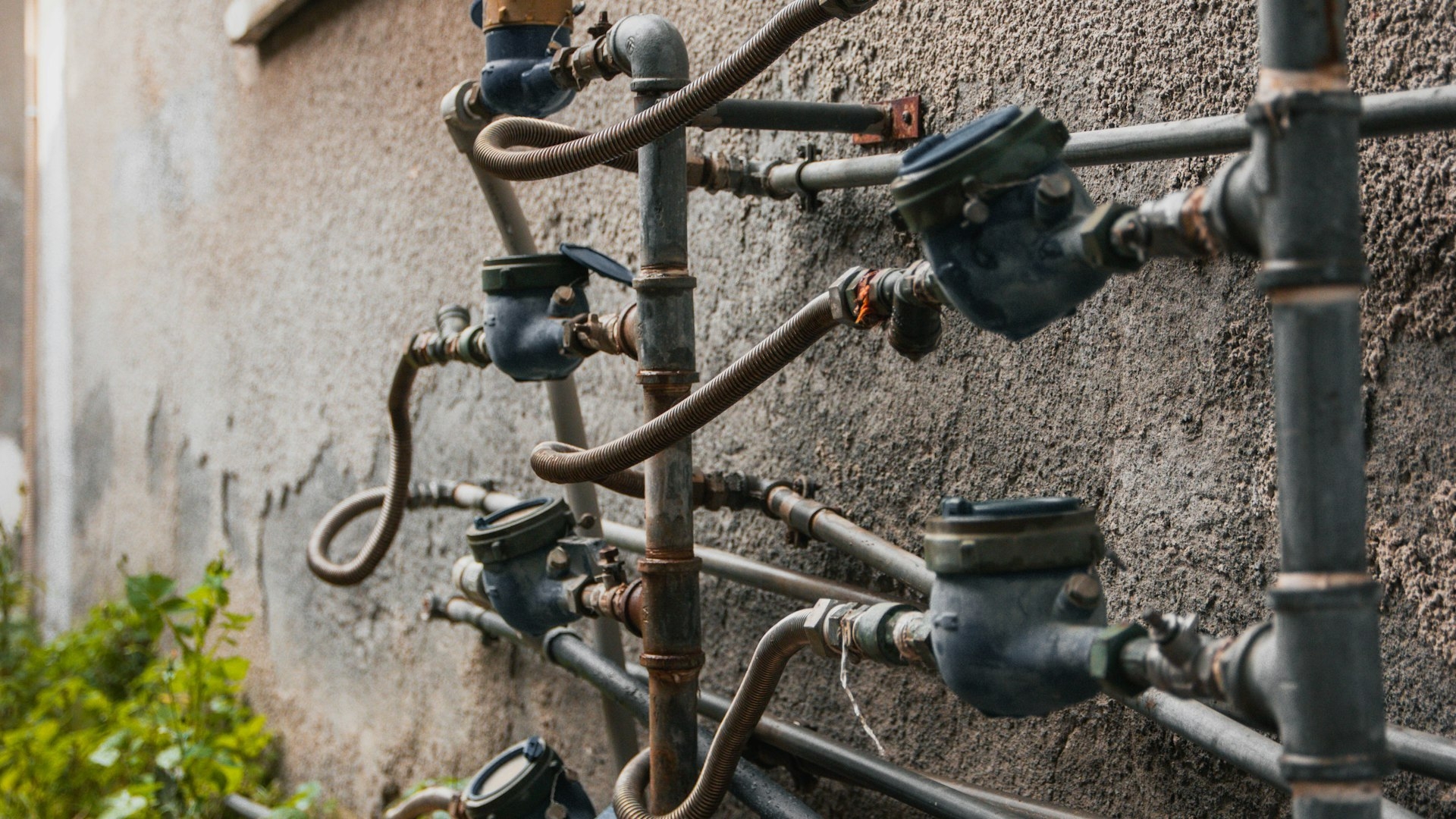
A water bill in an apartment block looks simple — cubic metres times price. But it often carries a "common consumption" line that is sometimes larger than expected and sometimes negative. It is not an error; it is how water is measured in a building with many flats. Here is how the system works and what you can check.
The examples and deadlines below come from the general terms of Sofiyska Voda, the Sofia water operator, approved by the energy and water regulator (КЕВР) in 2026. They follow Ordinance No. 4 of 2004 on the use of water and sewerage systems. Other operators apply similar rules, but details can differ — check your own operator's general terms.
Every drop that enters the building passes through the building meter. Not every drop passes through an individual meter.
The gap between the building meter and the sum of the individual meters is called "common consumption". It includes water for the common areas, leaks in the building's pipework, inaccuracy of old meters and — yes — illegal connections before a meter.
The difference is shared among all consumers in proportion to their own consumption and appears as a separate line on the bill. If it is negative, the amount is deducted. So your bill also depends on the condition of the whole building.
When the difference exceeds 20% of the building meter reading:
If the cause is a fault in the building installation, it is fixed at the owners' expense. Importantly, a large difference is not a reason to withhold payment. Below 20%, the condominium can still request an inspection, but pays for it.
A flat without a meter is not billed by guesswork. Without individual meters, monthly consumption is set at 6 m³ per occupant in a district-heated flat and 5 m³ in one without district heating. Until meters are fitted, the amount rises by 1 m³ per occupant every quarter. If fitting meters is technically impossible, water is shared by number of occupants on the basis of a signed record.
At the manager's request, the operator issues a free summary of each flat's consumption and allocated difference for a period of up to 3 years. It is the strongest tool if you suspect someone is not paying their fair share.
If you fail to provide access for more than a year, the operator may bill estimated quantities.
Individual meters must be of an approved type and be checked every 10 years at the consumer's expense. A meter with an expired check, a broken seal or an unreadable dial may be rejected, requiring a lab test or replacement. The year of the check is usually stamped on the lead seal.
The operator accepts remotely read meters if it has the equipment and software for them. Even then, a physical check is made at least once a year. Remote meters save entering the flat, but they need a building decision and compatibility with the operator — clarify this before buying.
Water used to clean the entrance is an upkeep cost of the common parts and is paid to the condominium under the Condominium Act — by default equally per resident, unless the general assembly has decided otherwise.
When buying, readings go into the handover report — more in our guide to transferring utility accounts. If you rent, see also tenant rights and obligations, and for viewings our viewing checklist.
Water bills often reveal a building's problems before a viewing does. If you are buying or renting and want us to go through the documents and bills with you, call us or come into the office.
This is general information. The detailed rules are in your water operator's general terms. Verified as of October 2026.
