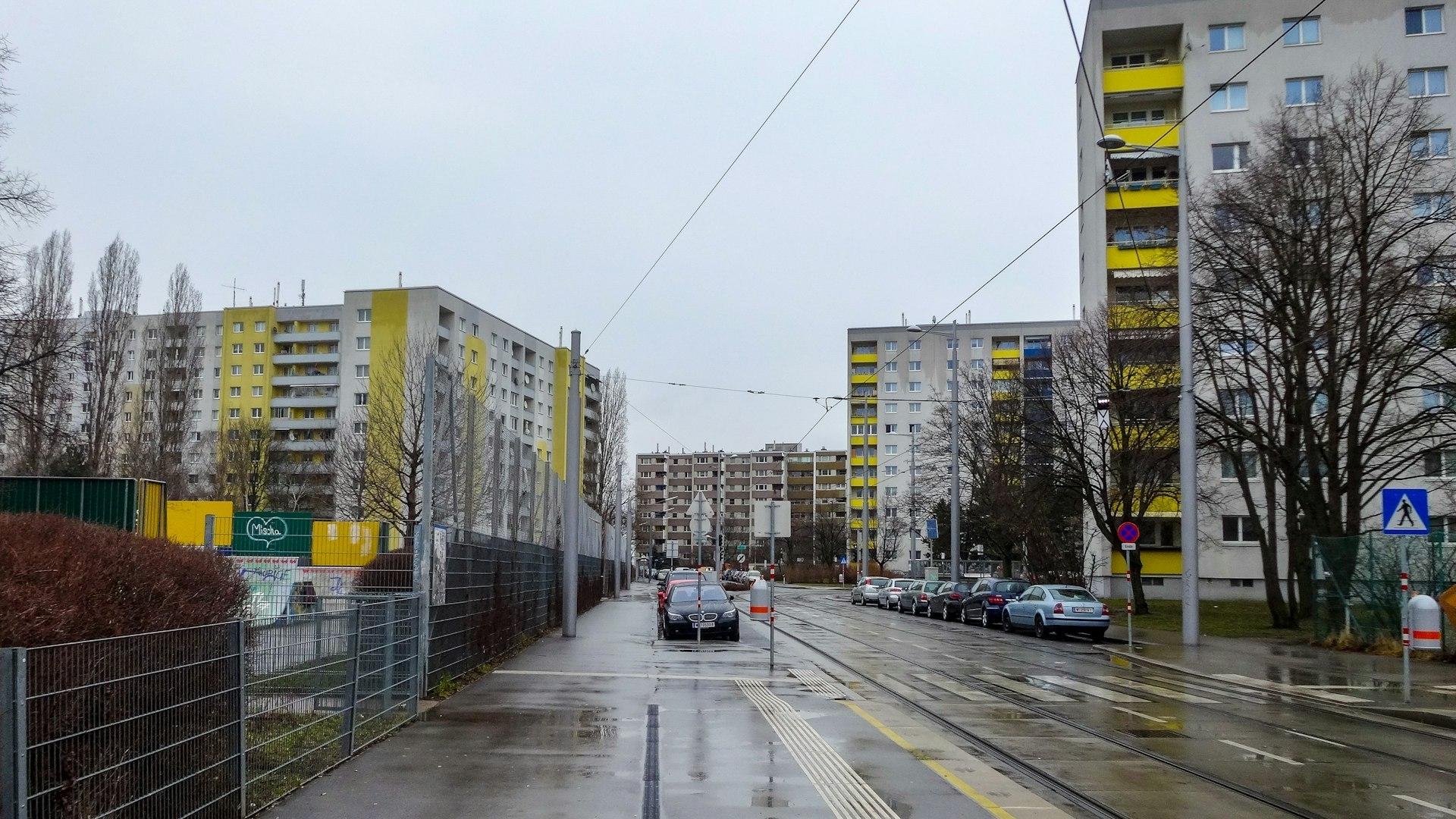
Traffic, tram and aircraft noise: how to check a home before you buy in Bulgaria — the noise maps, the legal limits and viewing at the right time
Most of a home's flaws are visible at the viewing or can be fixed with a renovation. Street noise is the exception. Viewings tend to happen on a Saturday afternoon, when the boulevard is calm and the tram comes by now and then. The real picture is a weekday at 8 a.m. — and 1 a.m.
So alongside the checks on the paperwork and the building, we add one more: how noisy the location is, and when. This is not about neighbours — we have a separate guide to noisy neighbours and renovations. It is about noise from roads, tram and rail lines and aircraft — noise nobody in the building can switch off.
First: the strategic noise maps are public
Bulgaria's Environmental Noise Protection Act requires municipalities to produce strategic noise maps for agglomerations — settlements with more than 100,000 residents (supplementary provisions, § 1, item 7). Separate maps are produced for major roads, railways and airports. Each agglomeration gets a separate map for each source — road, rail, air traffic and industry (Article 4).
The maps must be reviewed at least once every five years, and by law information on environmental noise is public (Article 10).
According to the Executive Environment Agency, strategic maps and action plans exist for the agglomerations of Sofia, Plovdiv, Varna, Burgas, Ruse and Pleven, as well as for the country's major road sections.
For Sofia, the updated strategic noise map is published as a layer in iSofMap, the municipal mapping platform run by GIS-Sofia. You can look up the address and see which noise band the street-facing façade falls into — separately for road traffic, rail and aircraft.
Two caveats worth keeping in mind:
- The map is a model, not a measurement outside your window. It is calculated across the territory and shows bands. Use it to compare two homes and to see which side of a building is exposed — not as a precise answer for a particular floor.
- The map shows today's situation. A new boulevard, a tram-line extension or a new stop will change the picture. That is why we also ask what is planned for the area.
What the rules say: limits by type of area
Ordinance No. 6 of 2006 divides the 24 hours into day (7:00–19:00), evening (19:00–23:00) and night (23:00–7:00) and sets outdoor noise limits by type of area (Annex 2, Table 2):
| Area | Day | Evening | Night |
|---|---|---|---|
| Residential zones and areas | 55 | 50 | 45 |
| Mixed central urban areas | 60 | 55 | 50 |
| Areas exposed to heavy road traffic | 60 | 55 | 50 |
| Areas exposed to rail (railway and tram) traffic | 65 | 60 | 55 |
| Areas exposed to aircraft noise | 65 | 65 | 55 |
Equivalent noise level in dB(A). For an aircraft flying over an area, the maximum level is 85 dB(A).
How to read it: if the map shows a level on the façade above the residential limit, the street is noisy by the ordinance's own standard. Decibels do not add up linearly — as a rule of thumb, a difference of about 10 dB is perceived as roughly twice as loud. So the gap between "55" and "65" is large, not small.
The limits for noise inside living rooms are different and stricter — we covered them in our guide to soundproofing a flat.
The viewing: when to go and what to listen for
The map points you in a direction. The decision is made on site. We recommend:
- A second viewing on a weekday at rush hour — morning or late afternoon, when traffic is heaviest.
- A short visit after 11 p.m. — stand outside the entrance for ten minutes. Night has the lowest limit and matters most for sleep.
- Listen with the windows open and closed. Good windows cut noise substantially, but in summer they stay open.
- Check which way the bedrooms face. A flat with the living room on the boulevard and the bedrooms on the courtyard is a very different product from one laid out the other way round. More on floors and orientation in our guide on which floor to choose.
- Watch for point sources — traffic lights or a bus stop right under the windows (braking and pulling away), a tram curve, points on the track, a car-park entrance, waste bins, bars with outdoor seating.
- Near airports — check the air-traffic layer and ask the neighbours when and how often aircraft pass.
The full list of what to check at a viewing — damp, wiring and plumbing, common areas — is in our viewing checklist.
What to ask the seller and the neighbours
- Have the windows been replaced, and when? Is there paperwork?
- Which rooms do they use as bedrooms, and why?
- Has anything changed recently in the area, or is anything planned — a new line, a road widening, a construction site?
- What is it like at night and at weekends?
The answers are not proof, but any gap between them and what you heard yourself tells you a lot.
Noise and price
Noise is one of the few flaws money cannot remove. Good windows and insulation help indoors, but not on the balcony. That is why it shows up in how long a property takes to sell or let. If you are buying to let, think about the next buyer too: a home with a quiet bedroom is easier to resell.
The reverse is also true: the noisy side of a well-connected boulevard is often why a flat is priced lower. If you know what you are buying and are ready to invest in insulation, that can be a good deal.
How we work with this
When we shortlist properties for clients, we check the address on the noise map before the first viewing. Once a client has picked a home, we arrange a second viewing at the hour when the noise is at its worst. That way the decision is made with a clear picture — not after the first sleepless night.
If you are considering a purchase and want to compare two or three homes on this point as well — call us or come into the office.
General information, verified as of November 2026. Limit values are those of Ordinance No. 6 of 2006. Strategic noise maps are updated periodically — always check the latest published version.