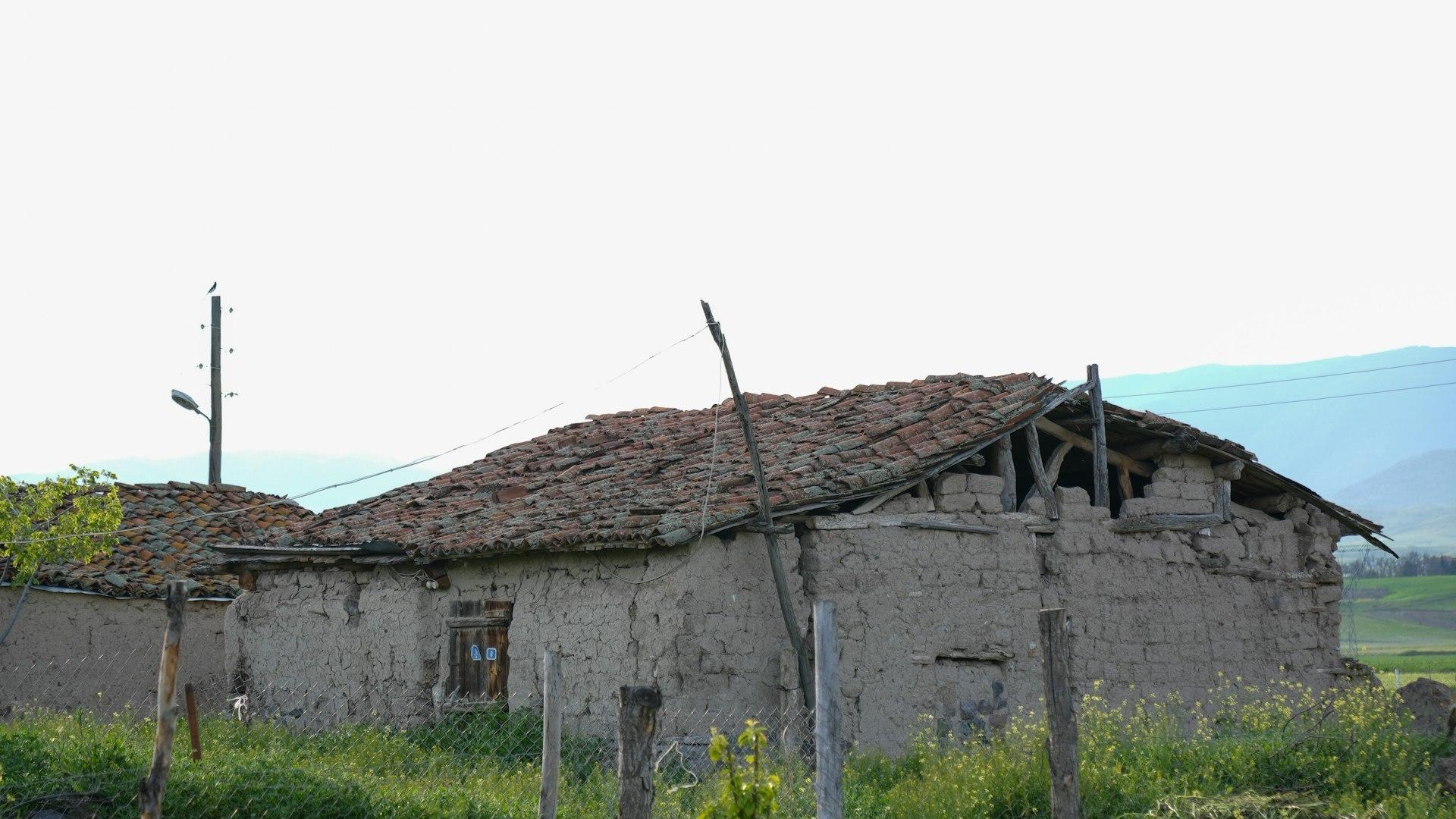
Tolerance certificates in Bulgaria: when an old building without permits can be sold, how to prove when it was built and what you can do with it
A summer kitchen in a village yard, a garage beside the house, a room added on, a holiday cottage put up by hand in the 1980s. Plenty of Bulgarian properties include buildings that never had a building permit. When the time comes to sell, inherit or borrow, the question is always the same: is this building lawful, and how do you prove it? For older buildings the answer often runs through a tolerance certificate (удостоверение за търпимост). Here is when one is possible, what you have to prove, and what it does not solve.
What a "tolerated building" is
Bulgarian law lets certain old buildings without construction paperwork stay standing and stay in use. They are not legalised, but they are not demolished either. There are three regimes, depending on when the building went up:
| When it was built | Condition | Legal basis |
|---|---|---|
| by 7 April 1987 | permissible under the plans and rules at the time, or under the current Spatial Development Act (ZUT) | § 16(1) of the ZUT transitional provisions |
| 8 April 1987 – 30 June 1998 | the same, plus declared by the owner by 31 December 1998 | § 16(2) of the ZUT transitional provisions |
| by 31 March 2001 | no construction paperwork, but permissible under the rules at the time or under the current ZUT | § 127(1) of the transitional and final provisions of the 2012 ZUT amendment (State Gazette no. 82/2012) |
Buildings started after 30 June 1998 also had a third, narrower regime (§ 16(3)), which required a declaration within six months of ZUT's promulgation. In practice, most cases today are handled under § 127(1), which covers anything built by 31 March 2001.
Under both main regimes the law says the same thing. Tolerated buildings are not subject to demolition or to a ban on use. They may be transferred once a certificate is produced from the authority that approves the relevant investment designs, confirming that the building is tolerated. A building can therefore be tolerated by law without a certificate, but to sell it you need the certificate.
Tolerance is not legalisation
This is the most common misunderstanding.
- The certificate does not make the building lawful. It only records that the legal conditions for tolerance are met. If they are not met, for example because the building actually dates from 2004, the certificate does not save it. That is what happened to the homes in "Baba Alino" near Varna, which we covered in our article on the sealed buildings.
- Legalisation is a different procedure, and today it is effectively closed in most cases. Under § 127 of the 2012 ZUT amendment, applications for legalisation could be filed until 26 November 2013.
- A building put up without a permit after 31 March 2001 cannot be tolerated. The general rules apply to it, including a demolition order under Art. 225a ZUT. For buildings of the fourth to sixth category, the mayor issues that order.
What has to be proved
There are two facts to prove, and the owner must prove both.
1. When the building was built. The law does not restrict the type of evidence. The Supreme Administrative Court accepts that the construction date may be proved by any means of evidence admissible under the Civil Procedure Code (see, for example, Decision No. 3403 of 12.03.2013 in administrative case No. 753/2013). Useful evidence includes:
- old cadastral or regulation plans that show the building;
- old aerial photographs;
- tax declarations and municipal tax records from the period when the property was declared;
- notarial deeds, partition agreements or inheritance documents that describe the building;
- electricity and water contracts linked to the building;
- witness declarations. These are accepted, but on their own they usually carry less weight than a dated document.
2. That the building was permissible. The building must have complied with the planning rules at the time, or must comply with the current ZUT. That covers its position on the plot, its distance from neighbours and from the regulation lines, its height, and whether its use suits the zone. A geodetic survey (exactly where the building sits relative to the boundaries) and an architectural survey (dimensions, heights, number of storeys) usually help here.
How the procedure works
The certificate is issued by the authority that approves investment designs for the building in question. As a rule this is the municipal chief architect. In large cities divided into districts, the district chief architect handles some categories of building. You file an application with your ownership documents and the evidence listed above.
Each municipality sets its own list of attachments, fees and processing times. Check the administrative service on your municipality's website before you commission any surveys.
Bear in mind what may be coming. In September the Ministry of Regional Development published draft ZUT amendments for public consultation. The draft would tighten scrutiny of tolerance certificates, including a requirement to attach a structural opinion, and would apply this to applications that are already pending. Until any changes are adopted the current rules apply, but if you plan to apply for a certificate there is no reason to wait.
What you can do with a tolerated building
Tolerance does not freeze a building completely, but it does not give you a free hand either. Under § 53 of the transitional and final provisions of the 2015 ZUT amendment (State Gazette no. 101/2015):
- if the tolerated building has permanent planning status under the detailed development plan in force, it may be extended, have storeys added, undergo major repair, reconstruction and conversion, and change use, all in line with the plan;
- if it has no such status, only internal alterations, change of use and repairs are allowed. The external outline must not change, and no new or reinforced load-bearing structures may be added;
- in both cases the work is authorised under the general rules: a measured survey of the existing building, an approved design and a building permit.
There are limits as well. If new construction starts on the plot, any tolerated buildings that are not part of the development scheme in the plan must be removed by the time the new building is completed. Otherwise the new building cannot be put into service (Art. 53a ZUT). The mayor can also order owners of tolerated buildings to remove or repair unsuitable fences, garages, outbuildings and similar structures (Art. 195(5) ZUT). On expropriation, tolerated buildings under § 16(1) are valued and compensated under the general rules (§ 16(4)).
If you are buying
- Ask for the certificate and the documents it was issued on. A certificate with nothing behind it is just a piece of paper.
- Compare the stated construction year with everything else you have: old plans, photographs, the property's tax history.
- Check that the building appears in the cadastre and in the title deed as it actually stands. Fix any discrepancies before the deal, not after it.
- If you are buying with a mortgage, ask the bank early how the valuation will treat the building.
For more on the checks we run on village properties, see our guide to buying a village house or holiday cottage near Sofia. If you are thinking of adding a new structure to the yard, entirely different rules apply. See what ZUT allows without a building permit.
If you are selling
Get the certificate before the preliminary contract. The notary will require it to transfer the tolerated building, and the buyer and the bank will ask for it even earlier. If it turns out that the building does not meet the conditions, it is better that you find out than that the buyer finds out after paying the deposit.
In short
- Only buildings built by 31 March 2001 that were permissible under the rules then or now can be tolerated.
- The certificate does not legalise anything. It only confirms the legal position, and if the conditions are not met it protects no one.
- Two facts must be proved: the construction date and permissibility.
- You need the certificate to sell the building.
- A tolerated building can be repaired and converted within the limits of § 53, but only with a building permit under the general rules.
If you have a building without paperwork and are unsure whether it can be tolerated, or you are buying a property that includes one, call us or visit our office. We will go through the documents and tell you where to start.
This information is general and indicative and does not replace professional advice.