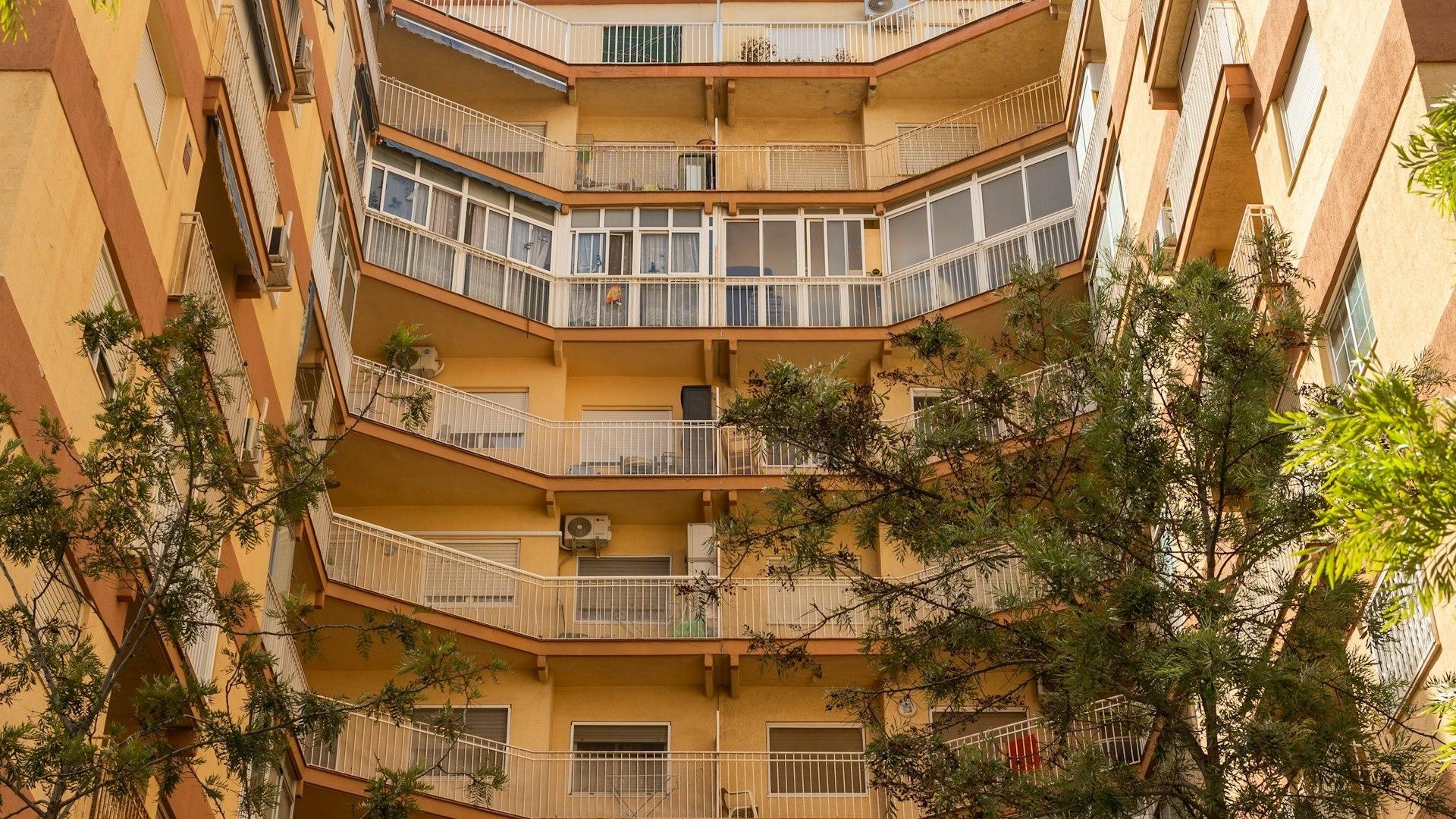
The yard of a Bulgarian apartment block: who owns the land, who decides how it is used and what your “undivided share of the plot” really buys
“Apartment with an undivided share of the plot” appears in a great many listings, but few explain what it means for the yard. Can the ground-floor neighbour fence off “their” bit of garden? Who decides where people park? Can you buy a spot in the yard separately from the flat? The answers depend on who owns the land under and around the building.
1. Whose yard is it? Three different situations
The land belongs to the flat owners. This is the most common case in newer buildings and in blocks built by the owners of the plot themselves. The Property Act (ЗС) states expressly that the land on which the building stands and the yard are common to all owners (art. 38), and common parts cannot be divided. Each owner's share in them is proportional to the value of their unit relative to the whole building at the time the condominium was set up (art. 40). Your “share of the plot” therefore goes together with the flat.
The building stands on someone else's land. If the landowner granted only a right to build, they keep the land and the flat owners own the building. The deed then refers to an undivided share of the right to build, not of the land plot. The difference matters – see our article on how to read a notarial deed. In that case you may use the land the building needs, but the yard is not your property and you cannot dispose of it.
The block is in a large estate with no plot of its own. Many panel and similar blocks in the big housing estates have no separate regulated plot. For them, the mayor sets an adjacent area by an order with a sketch showing its boundaries and purpose (Condominium Management Act (ЗУЕС), art. 4, under a regional-development ministry ordinance – Ordinance No. 6 of 2009). The condominium maintains and uses that area on terms set by the municipal council, but does not own it.
2. How to find out what you are buying
Before you sign, check:
- The seller's notarial deed – does the flat come with an undivided share of the land plot (with its cadastral identifier and area), or only of the right to build?
- The cadastre – the sketch of the land plot and the diagram of the unit.
- The original construction document – the grant of a right to build, a land-for-apartments contract, or the municipality's title deed. It shows whether anyone (the landowner, the municipality, a developer) kept the land.
- The general assembly minutes – are there decisions on using the yard: parking spaces, a garden, a playground, bin areas? Ask the building manager for them.
If the land is co-owned but not all co-owners have flats in the building – heirs of the original plot owner, for example – different rules apply (see section 3).
3. Who decides how the yard is used
The basic rule. Every co-owner may use the common property according to its purpose, without preventing the others from using it according to their rights (Property Act, art. 31(1)). The Condominium Management Act adds that owners must not obstruct others' use of the common parts and must not take them over (ЗУЕС art. 6(1)).
In a condominium, the general assembly decides. It adopts decisions on the use of the common parts and the adjacent area when disputes arise (ЗУЕС art. 11(1)(10)(i)). Such a decision needs more than 50% of the represented undivided shares (ЗУЕС art. 17(3)). If the assembly has decided so by more than 50% of the shares, the matter can instead be voted by a majority of the number of units (ЗУЕС art. 17(7)(6)).
Changing the use needs unanimity. If part of the yard is to become something else – a fenced garden for one owner, say, or a site for a structure – that is a change of purpose of a common part or the grant of a right of use. The law requires 100% of the undivided shares in the common parts for these (ЗУЕС art. 17(2)(1)). A simple majority vote is not enough.
When the land is simply co-owned. If some of the landowners are not owners in the building, use is governed by the general co-ownership rules: decisions are taken by co-owners holding more than half of the property, and if no such majority can be formed or the decision harms the property, the district court decides at a co-owner's request (Property Act, art. 32). If one person uses the yard alone and keeps the others out, they can claim compensation for the lost use – from the date of a written demand (Property Act, art. 31(2)).
4. Allocated use is not ownership
A decision on who uses which part – “the space by the entrance goes to flat 3”, “the ground floor looks after the front garden” – is an allocation of use, not a division. It does not make you the owner of a specific part of the yard, and that part cannot be sold separately from the undivided share. By its nature it is a decision of the majority or of a court, and a new decision can change it.
So be careful with listings that say “ground-floor flat with its own garden” or “parking space in the yard”. Ask what it is based on: general assembly minutes, an agreement between the co-owners or a court ruling. If there is no basis, it is de facto use that the neighbours can challenge. For the difference between a garage, a parking space and a spot in the yard, see our guide to garages and parking spaces.
5. Common situations and how to approach them
- The ground-floor owner fences off part of the yard. Without a unanimous decision (for a change of purpose) or at least a decision allocating use, this is taking over a common part. The first step is to put the matter to the general assembly.
- Someone always parks in the same spot. If there is no allocation decision, the space is common. A general assembly decision on parking beats a running dispute on the stairs.
- You want to put up a canopy, a pergola or a playground. Besides the permit rules under the Spatial Development Act (see garden structures without a building permit), you need the other owners' consent because the yard is common.
- You are selling a share of the land only – as an heir of the original plot owner, for example. The rules on selling a share of co-owned property apply, including the other co-owners' right of pre-emption – details in our guide to co-owned property.
In brief
- An undivided share “of the plot” means the yard is common and you are one of its co-owners; a share “of the right to build” means the land is someone else's and you only use it.
- For blocks in estates without their own plot, the yard is an adjacent area – used, not owned.
- Routine decisions on use are taken by the general assembly by majority, but changing the yard's purpose requires 100%.
- Allocated use is not ownership and cannot be sold separately.
If you are buying a flat and want to be sure what the deed actually includes – land, a right to build or only use – call us or drop by our office. We will go through the documents with you before you sign.
This information is general and indicative and does not replace professional advice.