
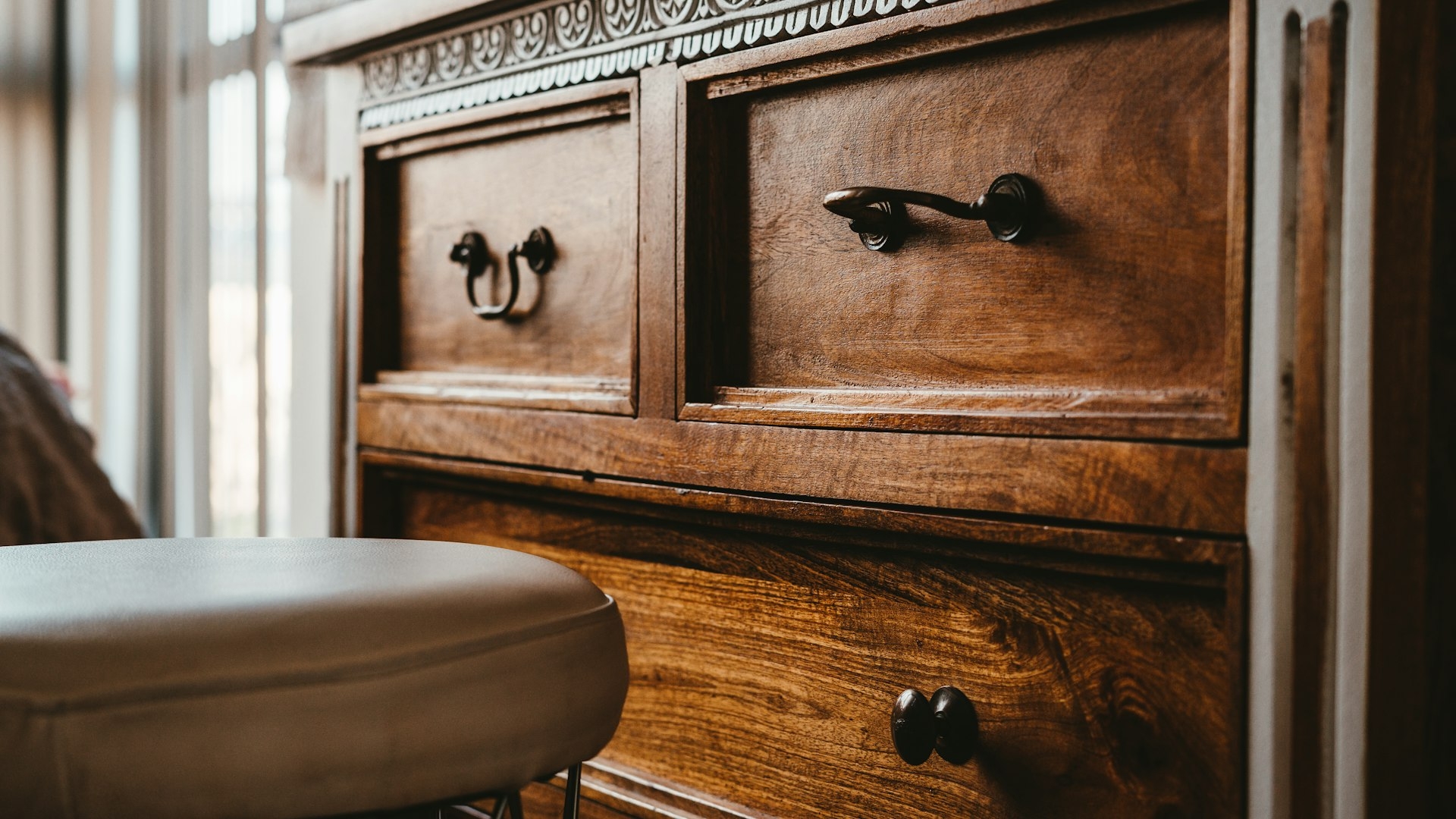
A well-made old piece of solid-wood furniture can last for decades more, and bought second-hand it often costs less than a new one made of board. The benefit is twofold: you save money and you keep something usable out of the skip. The risks are real too: woodworm, bed bugs, loose joints. Here is how to approach it sensibly – and what it means when you buy or sell a home.
We give no prices: the gap between a neglected and a restored piece of the same period is huge, and the market is entirely negotiated.
| Worth it | Think twice | Avoid |
|---|---|---|
| solid chests, wardrobes, sideboards, tables, chairs with wooden seats | veneered pieces with swollen or lifting areas; painted furniture (see lead, below) | mattresses and upholstered beds without professional cleaning |
| pieces with sound joints (mortise and tenon, dovetails) | huge wardrobes that will not fit through the door or up the block's staircase | upholstered pieces with tears, stains or a musty smell |
| metal frames and coat stands | anything with active woodworm | furniture made of swollen board |
The reason mattresses and upholstery carry the most risk is simple: according to New York City's health department, mattresses and box springs are where most bed bugs are found in an infested home, and torn upholstery gives them places to hide. If you do take an upholstered piece, plan for new upholstery.
Stability. Push it diagonally – it should not rack. Open every drawer and door: do they slide, do they close? Turn a chair over and look at the joints.
Woodworm. The British Pest Control Association (BPCA) describes the signs of common furniture beetle: round holes of 1–2 mm with fine, sand-like dust around them. Old holes without dust may be from a past infestation; fresh holes with dust point to active woodworm. Adult beetles emerge in spring and summer. If in doubt, keep the piece away from your other furniture and ask a specialist.
Bed bugs. With a torch, check seams, drawer corners, joints and screw holes for dark spots, shed skins or stains. Health guidance is clear: inspect before you bring the piece home and keep it separate until you are sure.
Smell. Mould and damp are obvious at once, especially in wardrobes from cellars and attics. A faint old-wood smell fades with airing; a mouldy one usually does not.
Careful with old paint. Older painted furniture may contain lead in the paint. Health authorities warn that dry sanding raises lead dust, which is especially dangerous for children. If you do not know what the paint is, use a lead test kit, work wet, wear a mask and work outside the home – or leave it to a workshop.
Leave restoration of valuable antiques (marquetry, gilding, shellac) to a professional – the wrong intervention reduces their value.
This is common with family homes and village houses in Bulgaria. The notary deed transfers the property, not its contents. Under Art. 98 of the Property Act (Закон за собствеността), an accessory follows the main item unless agreed otherwise – and that is exactly where disputes arise: does the built-in wardrobe, the sideboard or the old stove stay?
So in the preliminary contract (предварителен договор), agree clearly:
At handover, record the condition in the handover record (приемо-предавателен протокол). If you are buying with a view to restoring the old furniture, say so at the viewing – sellers are often glad not to have to pay for clearance.
To get rid of what you do not need: in Sofia, bulky-waste collection schedules are published by district by the Sofia City Inspectorate and on the NoWaste map; elsewhere, check with your district administration.
Buyers want to picture their own furniture in the home. Heavy old wardrobes and crowded rooms make a home look smaller. Before viewings, free up the space – sell or donate what you do not need and keep one or two good solid pieces. More on preparing for viewings is in our guide to selling in autumn, and on mixing old and new in our article on decorating your own home.
This is general information, not legal advice for a specific case.
Give us a call or drop by our office – we will help you agree on what stays and what goes before you sign.
