When buyers ask about security, they think of cameras. Experience shows that most break-ins are stopped or slowed by the door and the lock cylinder, while a camera mainly helps you find out what happened. Here is how to organise your home's protection sensibly — and where data-protection rules draw the line.
A door is only as strong as its weakest link. Look at:
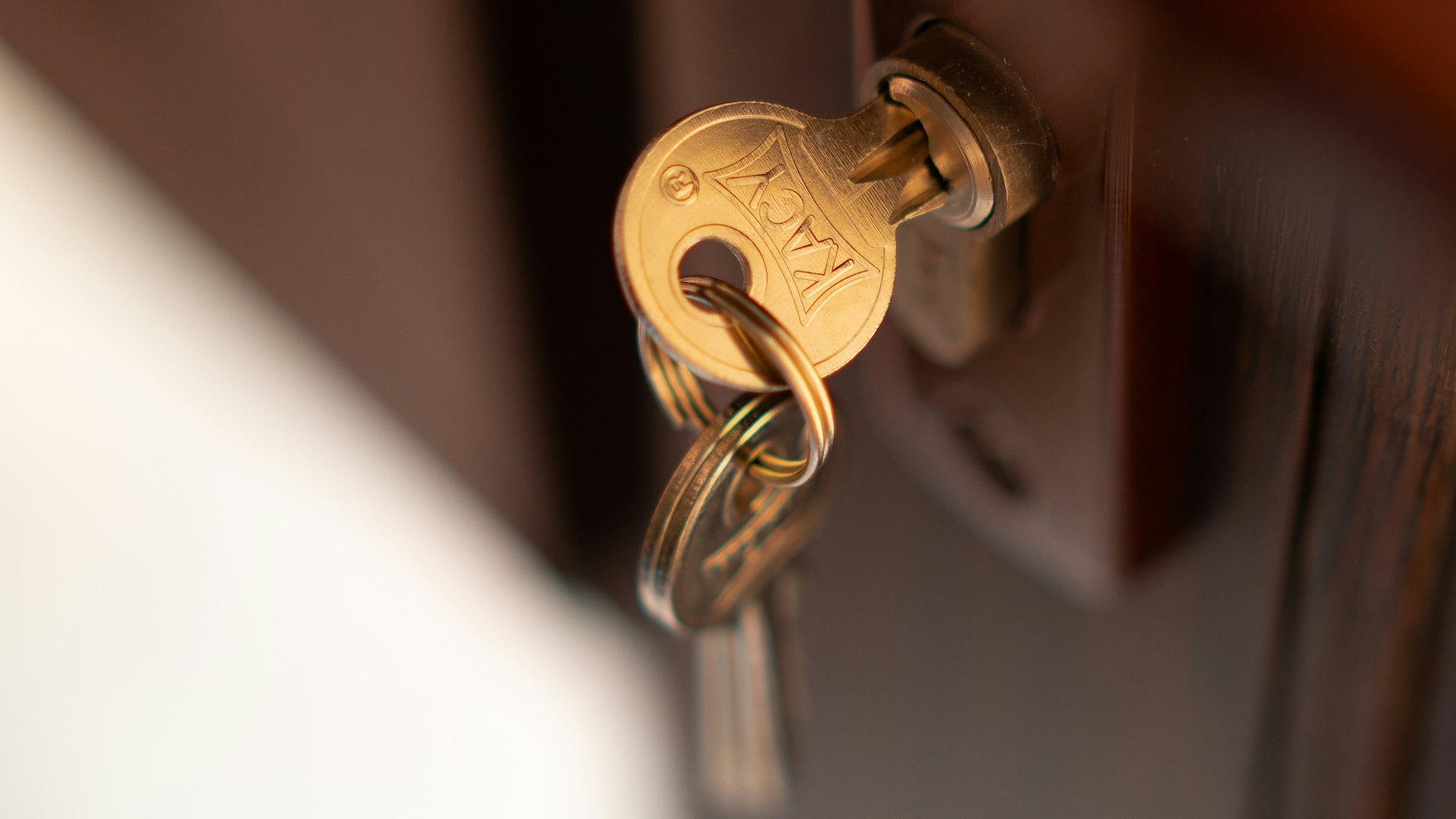
The cylinder is the part the key goes into, and it is the usual target. Look for one protected against snapping, drilling and pulling, with an outer security escutcheon so the cylinder doesn't protrude. Keys that come with a copy card (copies are cut only against the card) limit uncontrolled duplication.
Change the cylinder as soon as you buy or rent a home. You don't know how many copies exist — with former tenants, tradespeople or relatives. It is among the first steps after the notary in Handing over the home and transferring utility accounts.
On the ground, first and top floors (and with a terrace reachable from a roof or a neighbouring balcony), windows matter just as much. Options include locking handles, upgraded hardware, roller shutters and, where needed, grilles. Grilles on the façade of a block may need the condominium's agreement and change the building's appearance — ask before fitting them.
A monitored alarm — sensors, a control panel and a contract with a security company that responds — makes sense for a house, a low-floor flat or if you are often away. Before signing, check:
Some insurers take an alarm into account when assessing risk — ask yours. More on policies in Home insurance in Bulgaria.
A video doorbell lets you see who is calling and talk to them without opening the door. Cameras inside your home are your own business as long as they cover only your property. Tips:
This is where many owners go wrong. In a block, the stairwell, the landing outside your door, the lift, the entrance and the garage ramp are common areas. CCTV there processes the personal data of all neighbours and visitors — it is not a "private" camera.
The Commission for Personal Data Protection (CPDP, КЗЛД) is the supervisory authority. According to guidance published by the CPDP and by Sofia district administrations:
A video doorbell or camera that an owner installs alone and that covers the landing, neighbours' doors or the entrance can be the subject of a complaint. In such cases the CPDP typically orders the camera to be redirected to the owner's own property only, or removed. If you want a video doorbell in a block, choose a model whose view can be masked to your own door — and if in doubt, raise it with the building manager and at the general assembly. Who manages your building and how to check is covered in Your building manager is now in a public register.
If you are buying and want to assess the security of the building and entrance, or selling and unsure what to leave behind — call us or come into the office.
This is general information, not legal advice. Verified as of October 2026.