Eternit and asbestos in an older house or block in Bulgaria: when it is dangerous, who may remove it and what to check before you buy
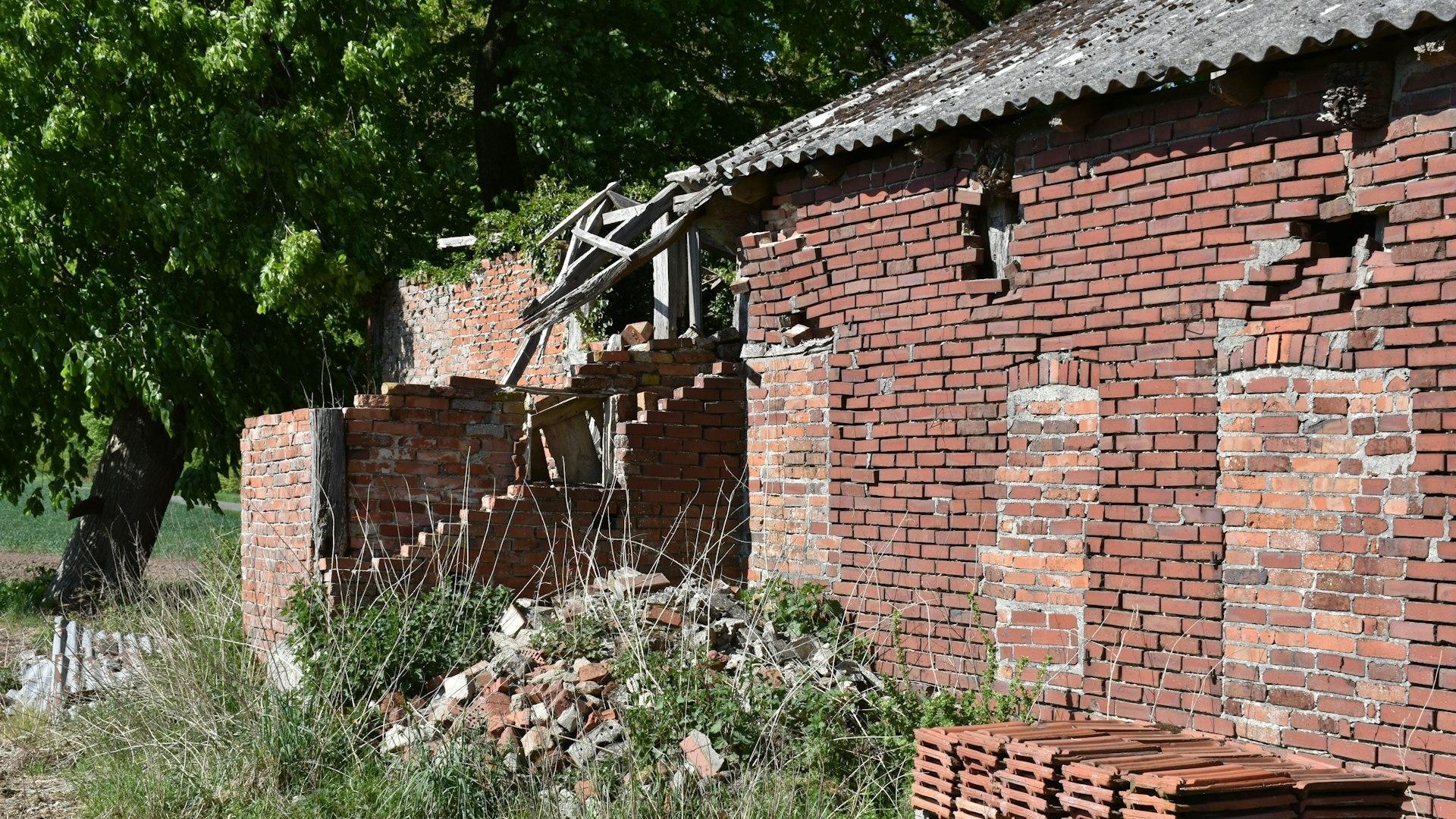
When viewing an older house, buyers look at the roof, the damp and the services. Few ask what the roof of the summer kitchen or the garage in the yard is made of. Often it is grey corrugated sheeting — what Bulgarians call "eternit". Much of it is asbestos cement.
That is no reason to walk away from the property. It is a reason to know what you are buying, and what it will cost to get rid of it lawfully.
Information verified as of November 2026. This is not medical or legal advice on a specific case.
Asbestos is banned, but what was installed stays
The European Union banned all types of asbestos fibre under Directive 1999/77/EC, with the ban taking effect on 1 January 2005. From the same date Bulgaria has banned the import, production and use of asbestos and asbestos-containing products.
The ban does not require owners to remove what is already in place. The EU REACH Regulation expressly allows products installed before 1 January 2005 to remain until they are disposed of or reach the end of their service life.
In other words: the eternit on your roof is lawful. Taking it down and dumping it however you like is not.
Where asbestos may be found in a property
Asbestos cement most commonly turns up as:
- corrugated roof sheets — on houses, garages, carports, farm buildings and holiday cottages;
- flat sheets used for cladding, partitions and linings — an inspection by Sofia Municipality, made public in early 2025, found asbestos materials, including eternit partition panels, in 8 kindergartens and one school;
- pipes — for water, sewage, vents and flues.
You cannot be certain by eye. Sheets made and sold after the ban should not contain asbestos, but the year of installation is rarely documented. The only reliable answer is a laboratory analysis of a sample taken by a specialist.
When it is dangerous — and when it is not
The World Health Organization classifies all forms of asbestos as carcinogenic to humans. The risk comes from fibres in the air — when the material degrades with age, or when it is cut, drilled or broken during maintenance and demolition.
Bulgaria's National Centre of Public Health and Analyses (NCPHA) states in its public guidance that intact, undamaged asbestos-cement materials — including eternit pipes and corrugated sheets — do not pose a risk to health. The same guidance is blunt: do not drill, do not break, do not throw away such materials with household or non-hazardous construction waste.
The practical conclusion: whole, undamaged eternit that nobody disturbs can stay. A cracked, crumbling or moss-covered roof that is due for replacement anyway is another matter.
Who is allowed to remove it
This is where many owners go wrong with the best intentions — stripping the shed roof themselves over a weekend.
Work with asbestos is governed by Ordinance No. 9 of 4 August 2006 on protecting workers from the risks of exposure to asbestos at work. Under it:
- demolition and removal of asbestos and asbestos-containing materials may be carried out only by firms or persons holding a permit under the Health Act; the regional health inspectorates (RHIs) keep a list of these sites;
- before work starts, the contractor must notify the Labour Inspectorate and the RHI — giving the site, the type and quantity of asbestos, the workers, the start date and duration, and the protective measures;
- since 21 December 2025 the exposure limit for workers is 0.01 fibres per cm³ (8-hour average), with a stricter rule measured by electron microscopy from 21 December 2029. This is how Bulgaria transposed Directive (EU) 2023/2668.
If you hire a firm, ask to see its permit and whether it will notify the inspectorates. If the answer is "no need, we'll have it off in an hour", find another firm.
Whether replacing the roof itself needs a building permit or a notification under the Spatial Development Act depends on the scope of the works. Ask the municipality (the chief architect's office) before you start.
Where the old sheets go
Construction materials containing asbestos are hazardous waste — code 17 06 05* in the European List of Waste.
Bulgaria's Waste Management Act allows construction and hazardous waste to be handed over only to an operator with a permit or registration for the activity, and only under a written contract. Hazardous waste must not be mixed with other waste.
NCPHA guidance says asbestos-containing materials go to designated landfills, wrapped and labelled. Leaving eternit next to the bins, in a ravine or on the pile of rubble is a breach — and the dust from broken sheets is exactly what you want to avoid.
When commissioning the work, ask for removal and waste handover to be in a single contract, and for a document at the end confirming the waste went to a licensed operator.
What to check when you buy
- Look at the outbuildings, not just the house: roofs of garages, carports, sheds, the summer kitchen, the barn.
- Ask the seller what the roof is made of and when it went on. "In the seventies" is a reason for attention, not panic.
- Note the condition: are the sheets whole, or cracked, broken, covered in moss and lichen?
- Commission a building survey and ask the surveyor to flag suspected asbestos materials explicitly. What else the survey should cover is in our guide to a building survey before buying a house.
- Budget for replacement if you will be redoing the roof or demolishing an outbuilding anyway. Removal by a licensed firm plus proper disposal costs more than ordinary demolition — get a quote before you agree the price.
- If you are buying a plot with an old building to demolish, asbestos is part of the demolition cost — do not leave it out of the sums.
The issue comes up most with cottages and village houses — see also our checklist for buying a village house or holiday cottage.
What to do when you sell
Do not hide the eternit — an experienced buyer will spot it, and a surprise at the viewing only costs you trust. Better to:
- say what the roof is made of and what condition it is in;
- if you have already replaced it, keep the contract with the firm and the waste handover document — they are arguments in the negotiation;
- do not start a "cosmetic" removal before the sale without a licensed firm — you risk your health and a breach of the rules.
Renovating a flat in an older block
In apartment blocks, asbestos cement may be present in pipes, vents and linings. If you come across a suspicious material during works, stop cutting and drilling and get a specialist's opinion. Commission such work under a clear contract that also covers the waste — see what a renovation contract should say. For the other invisible risks at home — from adhesives and paints to damp and radon — see our guide to healthy indoor air.
What is coming at EU level
In 2022 the European Commission announced it would propose mandatory screening and registration of asbestos in buildings. As of November 2026 no such proposal has been tabled — the European Parliament lists it as postponed. The recast Energy Performance of Buildings Directive (EU) 2024/1275 already requires Member States to address the removal of hazardous substances, including asbestos, in buildings undergoing major renovation.
For now, Bulgarian sellers have no duty to declare asbestos. But the direction is clear — and buyers will ask about it more and more.
In short
- Asbestos has been banned since 1 January 2005, but eternit installed before then may lawfully stay until the end of its life.
- Whole and undisturbed, it is not an immediate hazard; cut, drilled or broken, it is.
- It may be removed only by a permitted firm, after notifying the Labour Inspectorate and the regional health inspectorate.
- It is disposed of as hazardous waste — wrapped, under a written contract with a licensed operator.
- When buying, inspect the outbuildings too and price replacement into the deal.
If you are looking at an older house or a plot with outbuildings and want to know what will need doing and what it will cost — call us or come into the office. We will look at the property with you and put you in touch with the right specialists.