
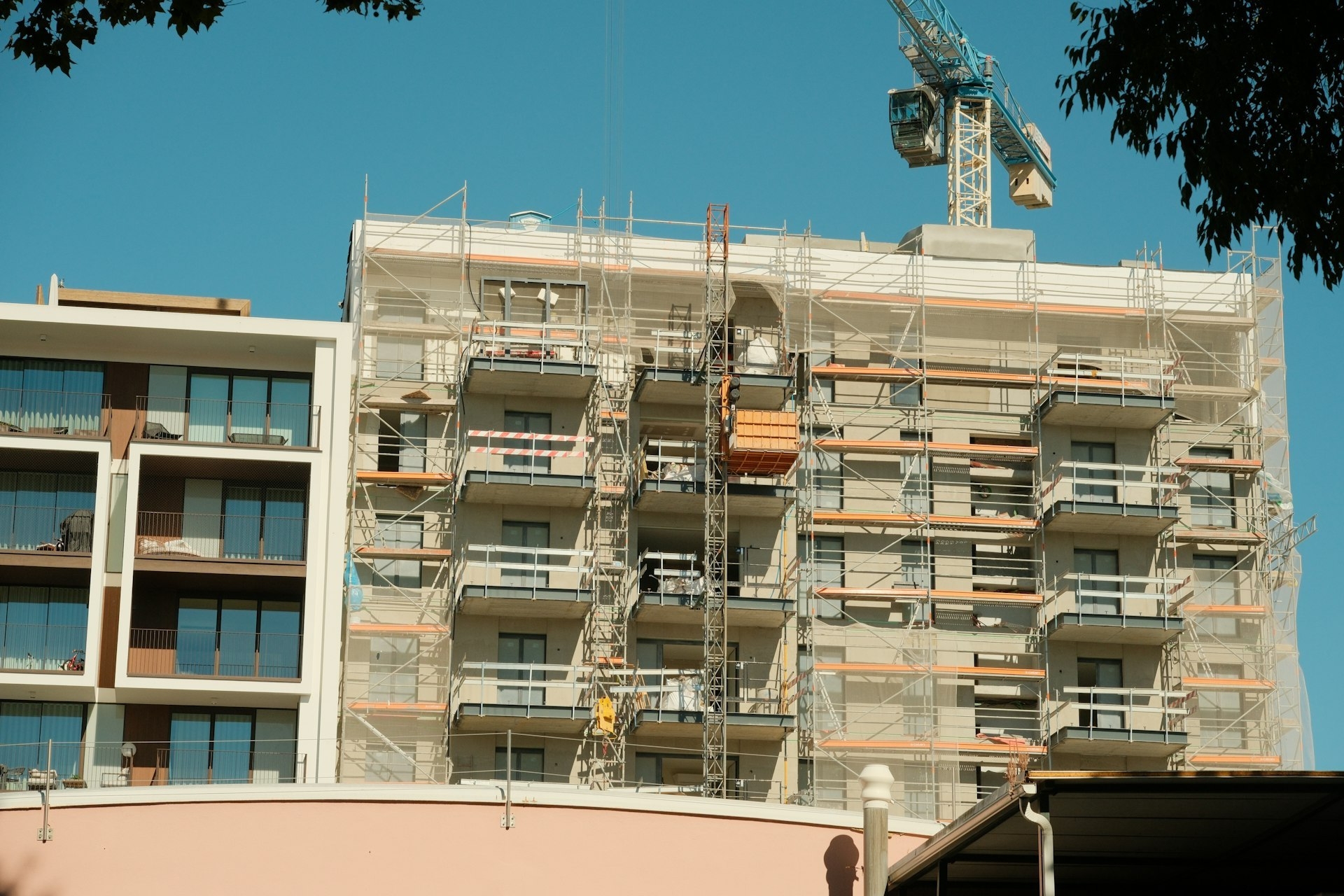
On 3 November 2026 Bulgaria's National Statistical Institute (NSI) published its data on building permits issued and construction started in the third quarter (July–September). This report follows on from our look at the second-quarter data — and shows that the trend we described then, projects getting smaller, is now unmistakable.
All figures below are NSI data as reported on 3 November. The averages are our own calculations.
In the third quarter, local authorities issued building permits for:
| Residential buildings (permits) | vs Q2 2026 | vs Q3 2025 |
|---|---|---|
| Buildings | +0.4% | −3.0% |
| Homes in them | −25.0% | −36.3% |
| Floor area | −15.6% | −22.7% |
The number of permits held steady — but after annual growth of 10.5% in the first quarter and 8.2% in the second, it has now slipped below the level of a year earlier. The much bigger move is in the number of homes: down by more than a third year on year.
The explanation is project size. The average permitted building in Q3 contains about 3.9 homes, against about 5.2 in Q2. Floor area per home is rising — around 132 m² of gross area against around 118 m² a quarter earlier. This is a market permitting more houses and small buildings, and fewer large blocks.
Construction began on 1,573 residential buildings with 7,296 homes and 917,800 m² of floor area.
| Residential buildings (started) | vs Q2 2026 | vs Q3 2025 |
|---|---|---|
| Buildings | −11.3% | −12.5% |
| Homes in them | −18.1% | +13.2% |
| Floor area | −12.4% | +4.2% |
Here the direction is reversed: fewer buildings were started than a year ago, but they contain more homes. These are projects permitted in earlier quarters, when permits were still rising. In other words, what is being built now reflects the stronger 2025; the Q3 permits show what comes after it.
Permits for residential buildings:
By number of homes permitted, the order changes: Sofia 2,196, Plovdiv 1,303, Burgas 1,013, Varna 960, Pernik 351. All five regions permitted fewer homes than in Q2 — in the capital, down from 2,878 to 2,196.
Varna and Burgas are the only leading regions where permitted buildings rose, and in Varna the average building is small — under four homes. For housing starts, Plovdiv (241 buildings), Sofia city (238) and Sofia province (177) lead.
Permits for office buildings fell to 12, down 25% year on year, with floor area 65.9% lower. Sixteen office buildings with 9,873 m² were started — more than a year earlier, but small in absolute terms. The Q2 pattern of fewer, more compact office projects continues.
Over the next year or two, the homes started in the stronger period will be completed. With housing starts up 13.2% in homes year on year, the supply of finished new builds in 2027 will not dry up.
After that, the pipeline thins. Permitted homes are down by more than a third. A permit is not a building site — months pass between the two, and some projects never start. But if the decline persists, choice in the big cities will narrow from 2028 onwards.
Prices will not be set by supply alone. Demand is cooling — Registry Agency data show Q3 sales down 22% year on year — while construction costs keep rising. Less new supply and more expensive construction argue against expecting a marked fall in new-build prices, even with weaker demand.
In practice:
NSI data for Q3 2026 (published 3 Nov 2026); averages calculated by Scala Di. Figures indicative, verified November 2026.
If you are considering a new build and want a second opinion on a specific project, call us or visit our office — we will go through the documents and the construction stage with you.
