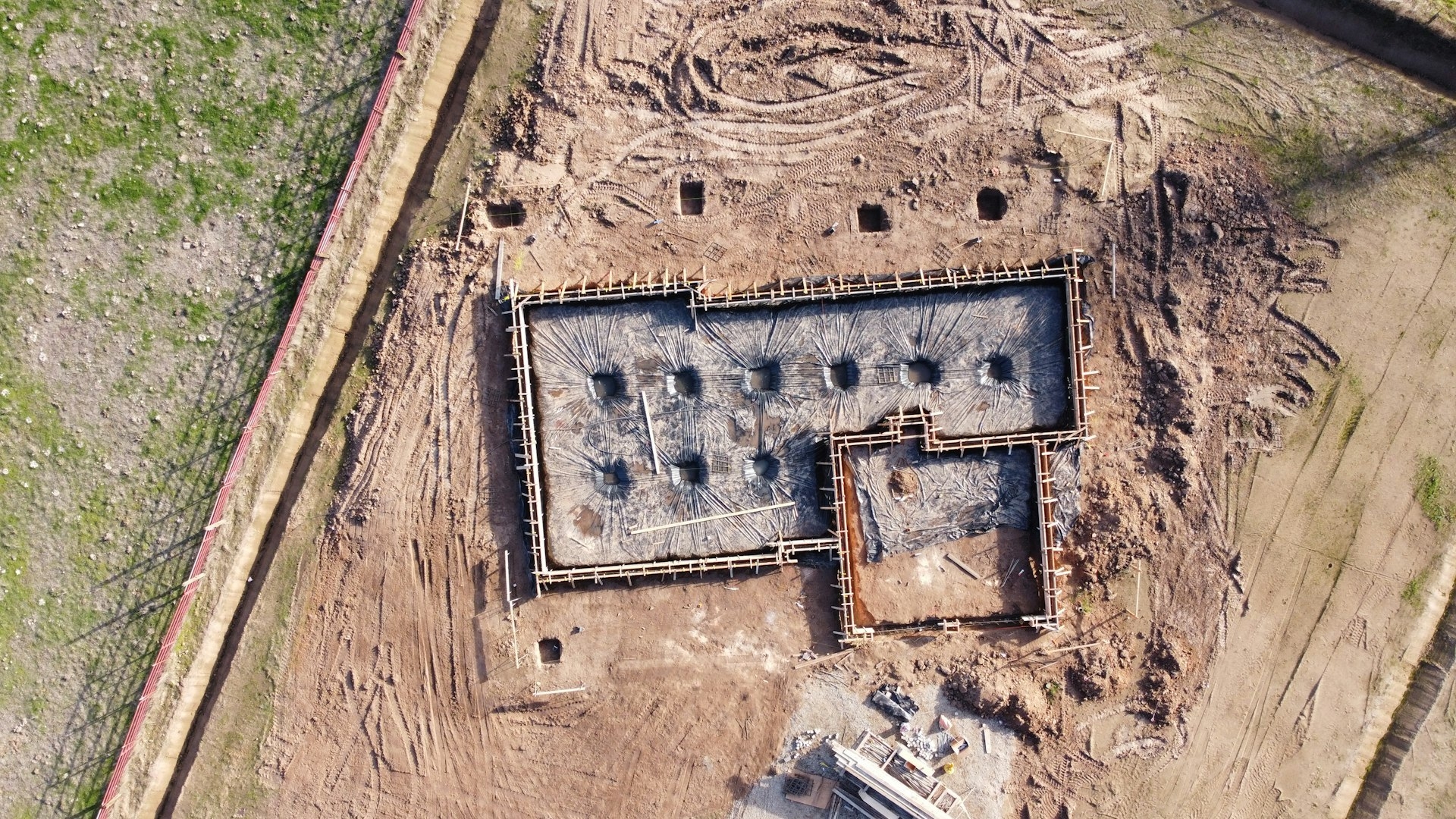
A loan to build a house is not the same as an ordinary mortgage. When you buy a finished home, the bank pays the whole amount to the seller in one go. When you build, there is no finished property to pledge — so the bank releases the money in instalments, against work actually done, checks every stage and puts its mortgage in place step by step. Here is how it works, what the bank finances and which documents you need at each stage.
Terms differ from bank to bank. Below we describe the general logic, with examples from the published general terms of a large Bulgarian bank — always check against your own bank's contract and tariff.
What the bank finances
Banks usually lend for:
- building a house on a plot you own — the most common case;
- buying a plot and building on it — in one loan or two separate ones;
- completing a build already started — for example, from the shell stage to completion.
Everything rests on the bill of quantities (КСС) — the breakdown of the construction work by type, quantity and price. It sets how much the bank will lend and in which stages. The bank does not finance 100%: you need your own contribution, which usually has to be put in before the first tranche. In the general terms of one of the large banks, for example, the own contribution is at least 20% of the bill-of-quantities value, in the form of purchased materials or work already done and paid for.
Before signing: the documents
The bank will assess both you and the project. Prepare:
- proof of ownership of the plot (notarial deed) and an up-to-date cadastral sketch;
- an approved investment design and a building permit — without them there is nothing for the bank to finance;
- the bill of quantities, ideally signed by the designer or builder;
- a contract with the builder, if you are using a firm;
- a valuation by a bank-approved valuer — of the plot and of the future building;
- proof of income, as for any mortgage.
How you get to the building permit and what comes after it is covered in detail in our guide to building a house on your own plot.
The mortgage: first the plot, then the building
At the start the collateral is the plot itself — a first-ranking mortgage is registered on it in the bank's favour before any tranche is paid out. As the build progresses, the bank wants the mortgage to cover the building too. Typically this happens at the shell ("rough construction") stage — you then provide the construction documents and, if asked, create or confirm the mortgage over the structure.
Important: if you mortgage a plot that has no approved design and building permit yet, banks typically prohibit you from starting construction until a new mortgage is registered on the basis of the approved design.
Staged drawdown: how the tranches work
- First tranche — once the mortgage is registered, insurance is in place and your own contribution has been made. Many banks set a deadline for the first drawdown — in the general terms we reviewed it is within 90 days of signing the contract.
- Each further tranche — on a written request on the bank's form. Before paying, the bank carries out financial and technical control: a valuer visits the site and confirms that the previous stage is complete and the money was spent as intended.
- Revaluation of the collateral — before each stage the bank may revalue the property. If the value falls short, it may ask for extra security or refuse the next tranche.
- Final tranche — once the building, or the stage set in the contract, is complete.
The typical stages follow the build: excavation and foundations, shell (structure, walls, roof), services and windows, finishing works. The exact breakdown goes into an annex to the contract.
What you pay while building
Interest is charged only on the amount drawn, not on the full approved loan. Many banks offer a grace period during construction — you pay interest only, and principal repayments start afterwards. After each new tranche the repayment schedule is recalculated. Also look out for a commitment or undrawn-balance fee, if your bank charges one — check the tariff.
Your obligations during the build
- Insurance against fire, natural disasters and earthquake, with the bank as beneficiary. For construction loans, banks usually require the property to be insured soon after the shell stage — in the general terms we reviewed, within 30 days of drawing the relevant tranche.
- Documents on time — for example, a document confirming the shell stage within a set period after it is reached (two months in the terms we reviewed).
- Use for the stated purpose — the money may be used only for the build under the bill of quantities. Any other use is grounds for the bank to call in the loan.
- The final document — for a single-family house this is the certificate of entry into use. The bank will ask you to present it within a deadline after completion.
The most common problems
- Going over budget. If the bill of quantities is underestimated, the bank will not automatically cover the difference. Keep a reserve of your own money.
- Delays. Drawdown deadlines in the contract are real — if the build stalls, you may lose the right to the undrawn part.
- A lower-than-expected valuation. The valuer assesses market value, not the money spent. If the valuation lags, a tranche may be reduced.
- A builder without a contract. The bank and the valuer will want invoices and handover records. Cash-in-hand work without paperwork is hard to prove as your own contribution.
In short
- The bank pays in tranches against completed stages of the bill of quantities, after a site inspection.
- Your own contribution goes in first — often around a fifth of the build cost.
- The mortgage starts on the plot and is extended to the building at the shell stage.
- You pay interest only on what you have drawn; the schedule changes after every tranche.
- Keep the permit, the bill of quantities, invoices and construction certificates — without them there is no next tranche.
You can estimate the instalment for different amounts and terms with our mortgage calculator, and the general rules on home loans are in our mortgage guide. If you are planning a build or looking for the right plot, call us or come into the office — we will help you with the bank, the paperwork and choosing the property.
This information is general; terms differ between banks and are set by the individual contract. Verified as of October 2026.