
Summers on the Sofia plain are hot and often dry, and winters are cold. For a house or holiday cottage with a garden, that means one thing: from June to September the garden drinks a lot of water, and tap water is not cheap. The good news is that much of the cost can be cut with simple measures — and that a well-sorted water supply is something buyers of houses notice.
The arithmetic is simple: 1 mm of rain on 1 sq m of roof gives about 1 litre of water. A roof with a 100 sq m footprint collects up to roughly 1,000 litres from a single 10 mm shower — minus losses to evaporation, splash and the dirty first flush.
Types of tank:
| Type | Volume | Pros | Cons |
|---|---|---|---|
| Barrel under a downpipe | usually a few hundred litres | cheap, fitted in an hour | fills in minutes in a downpour |
| IBC tote (cube in a metal cage) | about 1,000 l | large volume on a small footprint | needs shading — water turns green in light |
| Underground tank | several cubic metres or more | takes no space, water stays cool | excavation, a pump, higher cost |
Practical rules:
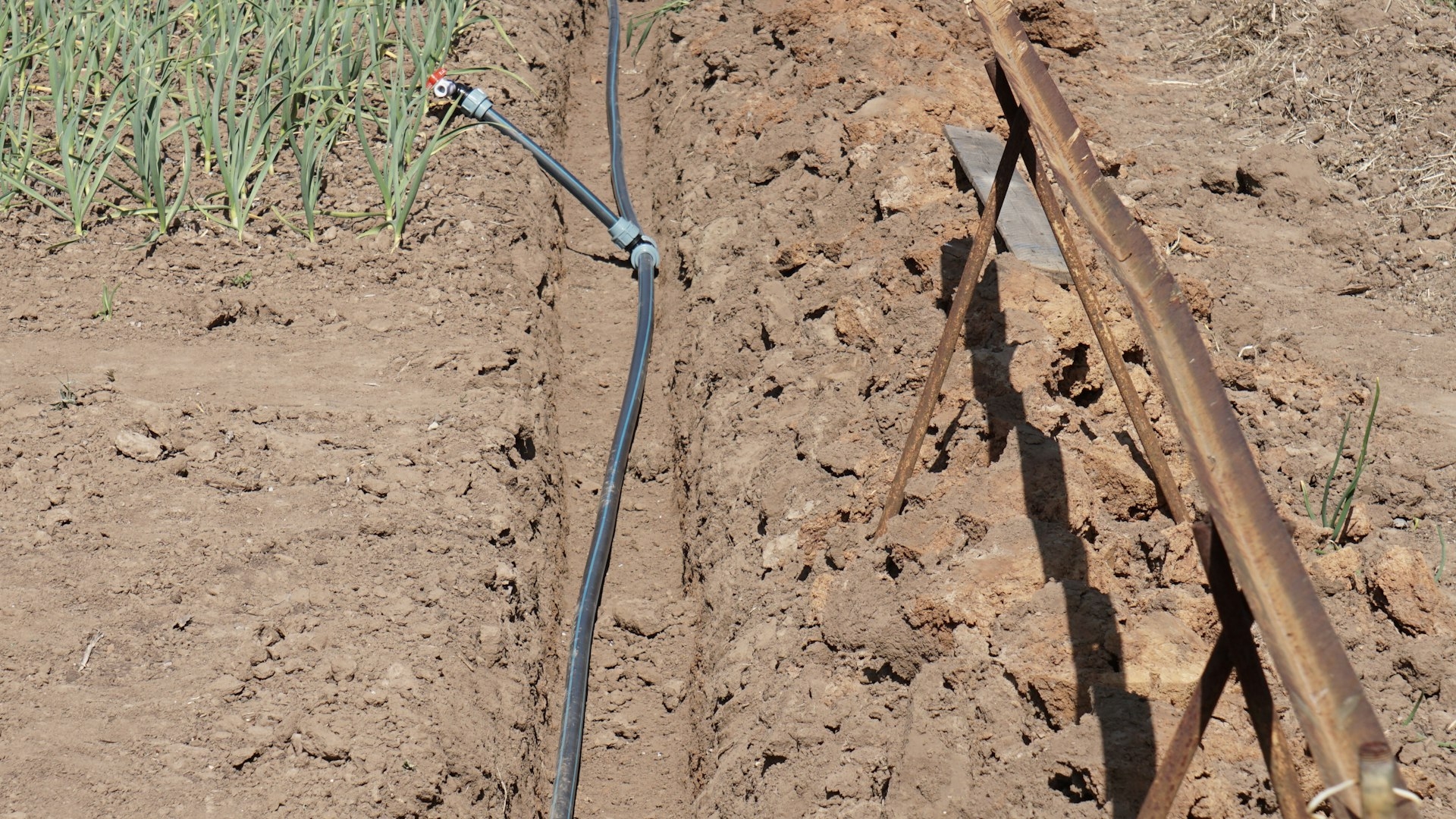
With drip irrigation, water runs through hoses fitted with emitters and reaches the roots directly, slowly, without wetting leaves or paths. According to Colorado State University Extension, drip irrigation is over 90% efficient, against 50–70% for sprinklers; the difference is lost to evaporation, wind and run-off.
When drip is the better choice:
When a sprinkler fits better: for lawns. Drip under turf is possible but more complicated and more expensive.
What the system consists of: a filter (especially with well or tank water), a pressure regulator, a main line, drip lines and a timer. The timer matters most — the system only saves water if it does not run longer than needed. Do not leave it dripping all night.
Running it from a tank: if the barrel sits only slightly above the bed, pressure is very low. There are emitters designed for gravity feed; a larger system will need a small pump.
Mulch is a layer of organic material on the soil around plants: bark, wood chips, straw, dried grass clippings, compost. It:
Spread it after a good watering and do not pile it against stems and trunks. Drip lines can run under the mulch, which hides them and protects them from the sun.
Many house owners water from a well. The rules are worth knowing:
The deadline is a long way off, but registration costs nothing. If you sell, a registered well is one less thing to explain to a buyer.
Well water is not necessarily drinkable — if you will use it in the house, have it tested by a laboratory.
The price of tap water is set for each water utility by the regulator (КЕВР, the Energy and Water Regulatory Commission) and is shown on your bill. The arithmetic is easy: 1 cubic metre = 1,000 litres. Every full one-tonne tank of rainwater is a cubic metre you do not pay for, and a drip system on a timer reduces how much you need to apply in the first place. Multiply by the price on your bill — with a large garden, the summer difference is noticeable.
For someone buying a house or holiday cottage, water in the garden is a practical question, not decoration. At viewings, buyers most often ask:
If you are buying, check the water supply alongside the legal checks on the property. If you are selling, put the well documents and a description of the system in the folder with the seller's documents. In our practice, a working irrigation system and a sorted water source make a garden easier to present, especially when viewings happen in summer.
This article is general information, not legal advice for a specific case.
If you are looking for a house or cottage with a reliable water supply — or selling one and want to present it well — call us or visit our office.
