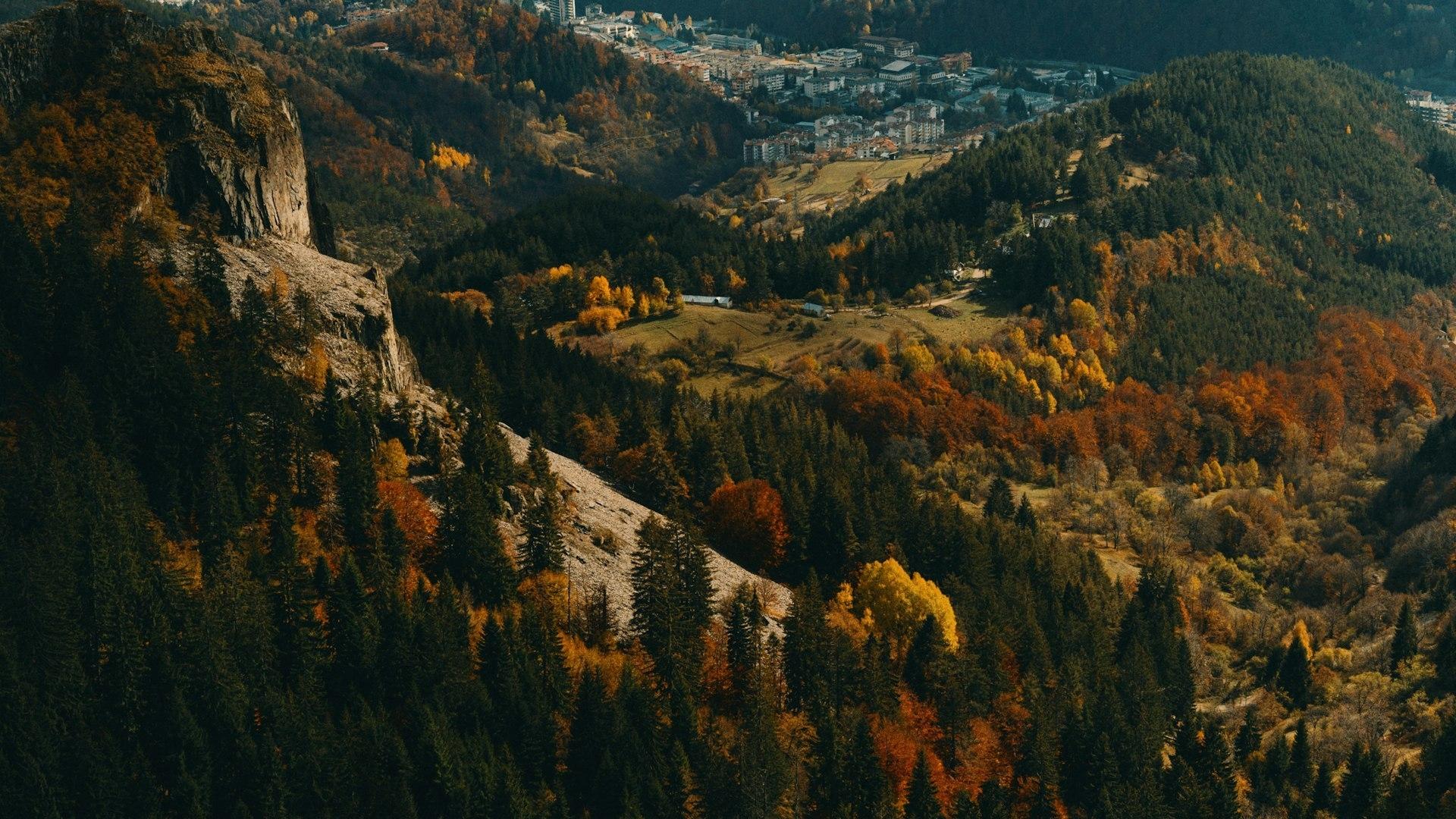
Smolyan province: 74,474 homes averaging 87 sq m – among the largest in Bulgaria – for a population of under 89,000
Smolyan province has some of the most spacious homes in Bulgaria — and far more homes than people to live in them. That is what the housing stock figures for the end of 2025 show. They were published on Thursday, 10 September, by the Smolyan statistical research department of the National Statistical Institute's (NSI) Regional Statistical Office – South, and reported by the Bulgarian News Agency (BTA).
The headline figures
At the end of 2025 the province had 74,474 dwellings — 36,410 in towns and 38,064 in villages. That is 102 more than in 2024 and 164 more than in 2022. Their total useful floor area is around 6.5 million sq m.
| Indicator (at 31.12.2025) | Smolyan province | Towns | Villages |
|---|---|---|---|
| Dwellings | 74,474 | 36,410 | 38,064 |
| Dwellings per 1,000 people | 839 | 709 | 1,016 |
| Average persons per dwelling | 1.2 | 1.4 | 1.0 |
| Living area per person | 52.8 sq m | 45.2 sq m | 63.2 sq m |
| Average useful area per dwelling | 87 sq m | — | — |
| Residential buildings | 38,800 | 13,200 | 25,600 |
Source: NSI, Regional Statistical Office – South, Smolyan department.
The average useful floor area of 87 sq m is among the highest in the country. By comparison, NSI data for the same year put the average dwelling in Burgas province at 76.2 sq m, with 863 dwellings per 1,000 people. The statisticians note that from 2025 useful area is calculated differently (from the total floor area of the dwellings), so comparisons with earlier years should be made with care.
What the building stock looks like
There are 38,800 residential buildings in the province (19 more than in 2024), or 1.9% of the national total. Almost two-thirds — 25,600 — are in villages.
- Materials: stone 38.2%, brick with a concrete slab 33.8%, brick with timber floor beams 18.4%, reinforced concrete 9.2%, prefabricated panel just 0.4%. In villages almost half of buildings (48.8%) are stone.
- Height: two-storey buildings dominate (63.4%), followed by three-storey (25.7%), single-storey (8.6%) and four or more storeys (2.3%).
- Age: the largest share (22.7%) was built between 1946 and 1960; only 0.3% were built after 2020.
According to preliminary NSI data on new construction in 2025, 29 residential buildings with 119 dwellings were completed in the province (23 of them houses), while 10 old houses with 17 dwellings were demolished, all in Zlatograd.
Fewer people, not fewer homes
The province's population at the end of 2025 was 88,819 — more than 22,000 fewer than in 2015. Yet the number of dwellings is edging up. That is the simple arithmetic behind 839 dwellings per 1,000 people: in villages there are more homes than residents, and on average 1.2 people live in each dwelling. In practice this means a good number of homes are not lived in permanently — often inherited houses that owners use seasonally or not at all.
What it means for you
If you are buying. Choice — especially of village houses — is wide and competition from other buyers is weaker than in the big cities, which leaves room to negotiate. But older stock needs care: stone buildings and those with 60–80-year-old timber floor beams should be inspected by a building surveyor (roof, damp, structure). Check the title documents too — inherited property often has many co-owners. And factor in the local property acquisition tax, whose rate is set by each municipality.
If you are selling. Supply is large and demand is selective. A realistic price and paperwork in order (title deed, certificate of heirs, cadastral sketch, tax valuation) often decide whether a property sells in months or in years. Well-maintained houses with road, water and power access, close to the resorts or towns, are in greater demand.
If you own a property you don't use. An empty mountain house deteriorates quickly. If you are not using it, consider whether to maintain it, let it (for example seasonally, near the resorts) or sell it before its condition drags down the price.
If you are looking to rent. In the province's towns an average of 1.4 people live in each dwelling, and in villages just one, so vacant homes exist; finding a well-furnished, well-maintained one is the harder part.
For a contrast with the capital, where around 37% of homes are in panel or EPK blocks more than 30 years old, see our piece on Sofia's ageing housing stock. In Smolyan province panel buildings are under 1% — here the question is not prefab concrete, but the age and upkeep of houses.
In short
- 74,474 dwellings in Smolyan province at the end of 2025, 839 per 1,000 people — 1,016 in villages.
- Average useful area 87 sq m — among the highest in the country.
- 38,800 residential buildings, 25,600 of them in villages; only 0.3% built after 2020.
- Population 88,819 — more than 22,000 fewer than in 2015.
- For buyers: wide choice and room to negotiate; for sellers: a realistic price and clean paperwork are essential.
If you are looking to buy or sell a house or flat in the Rhodopes and want a view on its real market value, call us or visit our office. We will help with the viewing and the documents.
Source: NSI (Regional Statistical Office – South, Smolyan department), BTA. This information is general and is not legal or financial advice.

