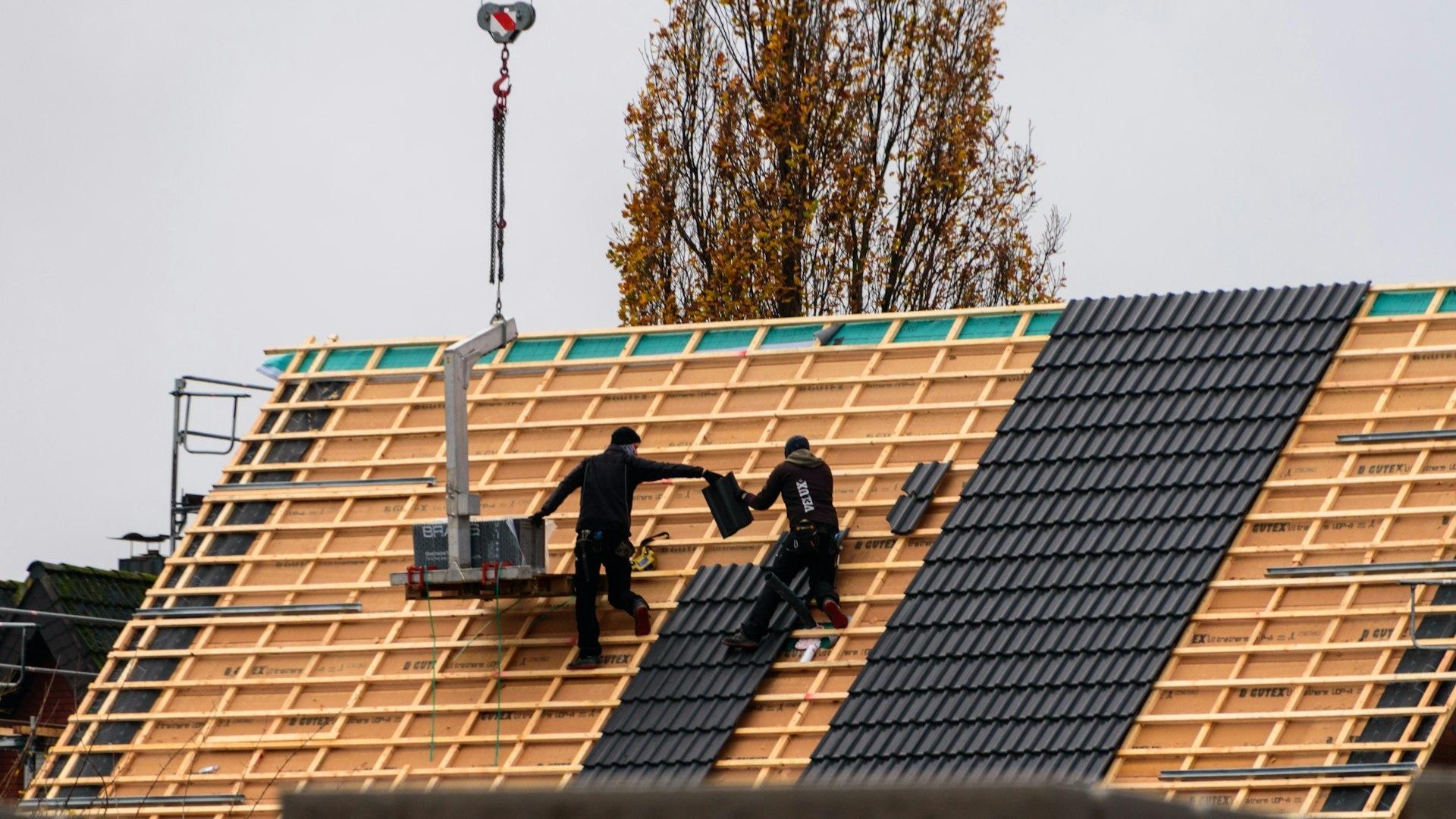
Roof leaks in a Bulgarian apartment block: who is responsible, who pays for the repair and what you can do if the building manager does nothing
Every year the first autumn rains remind top-floor owners of the same thing: a stain on the ceiling, a damp wall, water dripping in a corner. The leak comes from the roof, but the roof is not "theirs", and that is where the arguments start over who pays and who organises the repair. Bulgarian law answers these questions fairly clearly. Here are the answers, in the order you are likely to need them.
The roof is a common part, so everyone pays
In a building held as a condominium (етажна собственост), the roof is a common part under Art. 38(1) of the Property Act. That has two consequences.
First, the top-floor owner does not have to pay for the repair alone just because the leak is in their flat. Second, the ground-floor owner cannot refuse to contribute on the grounds that the roof "doesn't affect them".
Repair costs for common parts are shared by all owners in proportion to their ideal shares. That is the rule in Art. 6(1)(9) and Art. 48(3) of the Condominium Management Act (ZUES). Your flat's ideal share of the common parts is usually stated in the title deed.
One caveat: if the ownership documents say otherwise, for example where a roof terrace belongs to a particular flat, different rules may apply to that part. Check the building's documents rather than relying on habit.
What kind of repair the law says it is
ZUES distinguishes two kinds of repair, and the difference matters in practice:
- Necessary repair: bringing the building, its common parts and installations up to the technical-fitness requirements, "including the roofs", so that the building can be used normally (§ 1(8) of the Act's supplementary provisions). An ordinary leak falls here.
- Urgent repair: where there is a risk of the building or its elements collapsing, or a danger to life and health (§ 1(9)). A compromised roof structure or falling elements are examples.
Whether you need a building permit is a separate question. Replacing waterproofing, tiles or metal sheeting is normally a current repair. It does not affect the structure, so under Art. 151(1)(1) of the Spatial Development Act (ZUT) it needs no permit. If load-bearing elements are replaced, such as the timber structure or a concrete slab, or the shape of the roof changes, the work becomes a major repair or a reconstruction. In that case, talk to a design engineer first.
Step 1: document the leak and give written notice
- Photograph the leak, the stains and the damage, with dates. If you can, photograph the roof from above as well.
- Notify the building manager (the chair of the management board) in writing: by email, by letter or against a signature. A chat on the stairs does not count when deadlines matter later.
- Keep a copy of the notice. You will need it if you have to act yourself (see step 3).
Step 2: the manager and the general assembly
For a necessary repair of common parts, the manager can release funds immediately. The general assembly then approves the spending against payment documents (Art. 48(5) ZUES). The money comes from the "Repair and Renovation" fund, which every owner pays into monthly in proportion to their ideal share (Art. 50 ZUES).
If the fund does not have enough money, the general assembly decides on the repair and on raising the funds. An ordinary repair needs a majority of more than 50% of the ideal shares represented at the meeting (Art. 17(3) ZUES). A major repair, such as replacing the whole roof, needs at least 51% of all ideal shares (Art. 17(2)(5)).
A practical tip: get two or three contractor quotes and put them to the meeting. Owners agree to a specific amount and a specific contractor far more easily than to a vague "let's fix the roof".
Step 3: if the manager does nothing
Many owners do not know about this option, and it is the most important one. Art. 48(6) ZUES, as worded since 31 December 2023, states expressly that any owner may carry out a necessary repair of common parts with their own money, materials or labour, without a general assembly decision, provided that:
- they notified the manager that the repair was needed, and
- the manager did not call a general assembly within one month of being notified.
The owner's costs are reimbursed by a general assembly decision or offset against their contributions to the Repair and Renovation fund, once payment documents are produced. If they are not reimbursed, the owner can sue the other owners (Art. 48(7)).
If you take this route, keep everything: the written notice and its date, the contract with the contractor, the invoices, and before-and-after photos. Choose a contractor who issues proper documents, and keep to what is needed. Repair what is necessary, and do not add extra work just because the roofers are already up there.
When there is danger: urgent repair and the mayor
For an urgent repair, the manager releases money from the fund at once. If there is no money, the manager calls a general assembly at once (Art. 49(1)–(2) ZUES).
If no meeting is called, or it fails to decide, the manager or any interested person can notify the mayor of the municipality or district (Art. 49(3)). The mayor inspects the building. Within one month, the mayor issues an order requiring the owners to carry out the repair within a set period of no more than three months. The order can be appealed to the administrative court. If the order is not carried out, the mayor's office does the repair, and the municipality obtains a writ of execution against the owners for the cost (Art. 49(4)–(5)).
In practice this is a last resort. Still, everyone in the building should know it exists. Often, simply mentioning it gets a stalled assembly moving.
Damage inside the top-floor flat
Fixing the roof stops the leak, but it does not pay for paint, plaster or furniture. The general rule in Art. 50 of the Obligations and Contracts Act applies: the owner of a thing, and the person who has it under their supervision, are jointly liable for damage it causes. The roof is owned in common, so the claim is directed at the owners in the condominium. In court cases about common parts, the manager represents those owners (Art. 23(4) ZUES).
Before it gets that far:
- Check your insurance. If the flat is insured, the policy may cover water damage. Read the terms and notify the insurer within the deadline the policy sets.
- Try to reach an agreement. A written proposal to the manager that describes the damage and includes a repair quote often settles the matter faster than a lawsuit.
The rule also works the other way. Owners must give access to their flat when it is needed for work on common parts (Art. 6(1)(12) ZUES). If the contractor has to go through your attic space or inspect the ceiling from inside, you are legally required to let them in.
If you are buying a top-floor flat
A top floor has real advantages: light, quiet, a view. Before you sign, though, check:
- whether ceilings and corners show traces of old leaks, especially after rain;
- when the roof was last repaired, and whether there are documents for the work;
- the balance of the Repair and Renovation fund, and whether the general assembly has decided on any upcoming repair;
- whether the seller owes money to the condominium. On request, the manager issues a document confirming whether the owner has any outstanding obligations (Art. 23(1)(12) ZUES).
How to check who manages the building and whether it is entered in the new register is covered in our article on the public register of building managers. For the full set of legal checks before a purchase, see our guide to legal due diligence.
In short
- The roof is a common part. All owners pay for its repair in proportion to their ideal shares.
- Notify the manager in writing, and keep proof of the date.
- The manager can pay for a necessary repair straight away from the Repair and Renovation fund.
- If the manager does not call a meeting within one month of your notice, you can do the repair yourself and claim the money back.
- If the building or people are in danger, it is an urgent repair. If nobody acts, notify the mayor.
- Damage inside the flat below the roof is a separate matter: insurance, an agreement or, as a last resort, a claim in court.
If you are buying or selling a top-floor flat and are unsure what the state of the roof means for the deal, call us or visit our office. We will go through the building's documents with you.
This information is general and indicative and does not replace professional advice.

