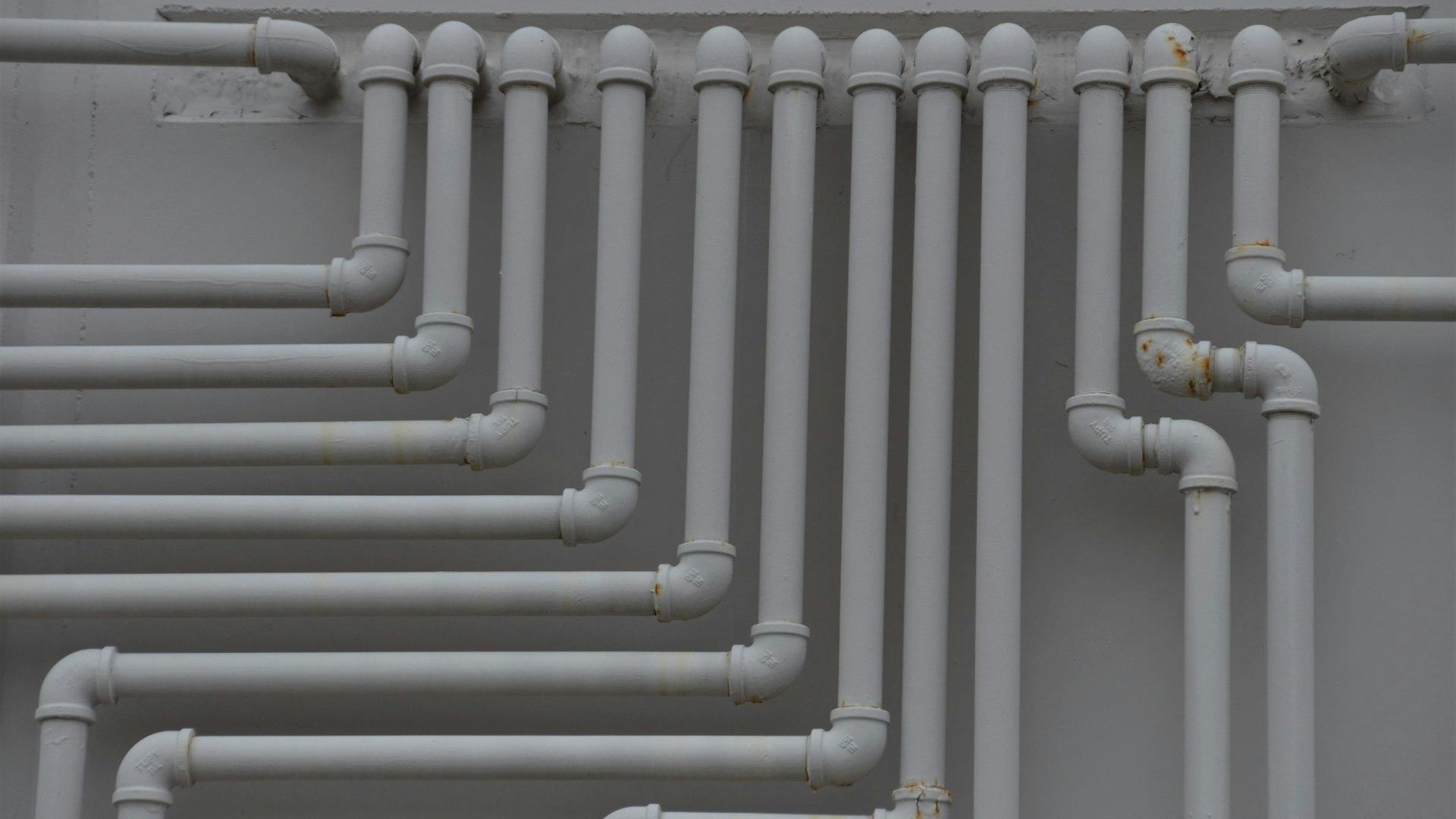
Risers in a Bulgarian apartment block: who owns them, who pays to replace them and how the owners decide
In almost every older apartment block the risers eventually have to be replaced. Leaks become more frequent, the basement pipes rust, and every plumber who renovates a bathroom says the riser is due. Then the questions start: who owns it, who pays, must all the neighbours agree, and what if someone will not let the plumbers in?
Below we explain the position under the Bulgarian Property Act and the Condominium Management Act (ЗУЕС), and what we recommend in practice.
What a riser is and who owns it
A riser (щранг) is the vertical pipe that runs through every floor and serves every flat: water supply, sewerage or heating. Each flat connects to it with its own branch.
The Property Act lists the common parts of a building, and among them are "the main lines of all types of installations and their central units" (Art. 38(1)). A riser is exactly such a main line. It is therefore a common part owned by all the owners, not by the owner of the flat it passes through.
The boundary with the water utility is elsewhere. The utility supplies water up to the meter assembly on the building's service connection; the building's water and sewer installations are the customers' property, maintained at their expense (see, for example, Sofiyska Voda's general terms approved by the regulator KEVR). So the water company does not replace the risers. The owners do.
The branch into your flat and the pipes after it are yours. Exactly where the common part ends (before or after the flat's stop valve) is the most common point of dispute. The general assembly should state it clearly in its decision on the replacement.
Who pays for the replacement
The Condominium Management Act is clear. Owners pay the costs of repairing and replacing common installations in proportion to their ideal shares (Art. 6(1)(9)). The costs of repairs to common parts that the general assembly has approved are split the same way (Art. 48(3)).
That has two practical consequences:
- Everyone pays, including the owners on the ground floor and the top floor. The split follows ideal shares, not how many metres of pipe run through your flat.
- Replacement is not "maintenance". Monthly management and maintenance costs are split by the number of occupants (Art. 51(1)), but repairing or replacing an installation is split by ideal shares.
The money can come from the repair and renovation fund (Art. 50(4)(1)), from an extra contribution, or from both.
How the decision is taken
Common installations are replaced by decision of the general assembly (Art. 48(1)). The assembly adopts the plan of repairs to the common parts (Art. 11(1)(8)) and decides on necessary or urgent expenditure (Art. 11(1)(10)(a)).
The majority depends on how the works are framed:
- under the general rule, a decision needs more than 50% of the ideal shares represented at the meeting (Art. 17(3));
- if the replacement is part of a major repair or major renovation, it needs at least 51% of all ideal shares in the building (Art. 17(2)(5)).
A good decision names which lines (water, sewer, the horizontal runs in the basement), the contractor and price, a schedule by entrance and floor, where the common part ends in each flat, and who restores the finishes (tiles, plasterboard, cabinets around the riser).
In an emergency: urgent repairs
When a riser bursts, nobody waits for a general assembly. The building manager (or management board) releases money immediately for the necessary repair, and the assembly later approves the spending against the receipts (Art. 48(5)). For urgent repairs the money comes from the repair and renovation fund (Art. 49(1)).
If the fund is empty, the manager must immediately call a general assembly to raise the money (Art. 49(2)). If no meeting is called or no decision is taken, any interested owner can notify the mayor of the municipality or district (Art. 49(3)). The mayor inspects and, within one month, issues an order requiring the owners to carry out the repair within a deadline of no more than three months. The order can be appealed to the administrative court (Art. 49(4)). If it is not complied with, the municipality carries out the repair and then recovers the cost (Art. 49(5)).
If the building manager does nothing
The law also gives an owner who is kept waiting a way out. If you have notified the manager that a necessary repair is needed and the manager does not call a general assembly within one month, you can carry out the repair to the common part with your own money, materials or labour, without a decision (Art. 48(6)). Your costs are reimbursed or offset against your future contributions by decision of the general assembly. If they are not reimbursed, you have the right to bring a claim against the other owners (Art. 48(7)).
In practice this only works with good paperwork: a dated written notice, photos, a quote, a contract and invoices.
Must you let the plumbers in?
Yes. Every owner must give access to their flat for repairs to the common parts and for checks on the condition of the installations (Art. 6(1)(12)). If the riser is boxed in or hidden behind bathroom tiles, the boxing will have to come off.
So agree in advance who pays to put the finishes back, at the meeting rather than on the day of the works.
Renovating your bathroom: can you replace "your" section?
Replacing only one section is common, but the riser is still a common part. You must not move or narrow the common line, and you should not replace a section without telling the building manager. Owners may not take over common parts (Art. 6(1)(3)) or worsen the building's design performance when renovating (Art. 6(1)(5)). The joint between the new pipe and the old one on the floors above and below must be done properly, or the next leak will be exactly there.
The best option is for the neighbours on the same vertical to agree and replace the whole riser at once.
Do you need a building permit?
As a rule, no. Replacing installations without affecting the structure counts as routine repair (§ 5, item 43 of the Additional Provisions of the Spatial Development Act). Routine repair needs no building permit (Art. 151(1)(1)). If a new opening in a floor slab is needed or load-bearing elements are affected, talk to a design engineer first. In a listed building, the works must be cleared under the Cultural Heritage Act (Art. 151(2)).
For district-heating risers, consult the heat supplier before any work.
If you are buying a flat in an older block
Risers are one of the costs you cannot see yet. Before you sign:
- Ask the building manager when the risers were last replaced and whether a replacement has been approved. You can find out who the manager is from the public register; we explain how in our guide to the building manager register.
- Ask for the minutes of the latest general assemblies. The manager must keep them, together with the building plans and the technical passport (Art. 23(1)(3)).
- Look at the basement. Rusty horizontal pipes and old leak marks tell you a lot.
- Agree in the preliminary contract who pays any contribution that has been voted but not yet paid. More on pre-signing checks in our guide to legal checks before buying.
In short
- A riser is a main line of the installation and a common part (Property Act, Art. 38). The water utility is responsible only up to the building's meter assembly.
- Replacement is decided by the general assembly and paid by all owners according to their ideal shares.
- In an emergency the manager releases money immediately. If the assembly does nothing, the mayor can step in.
- If the manager does not call a meeting within one month, you can carry out the necessary repair yourself and recover the cost.
- You must give access. Agree in advance who restores the finishes.
If you are buying a flat in an older block and want to know what lies ahead with the installations and common parts, call us or visit our office. We will go through the building's documents with you.
The information is general and indicative and does not replace professional advice.

