Property in Velingrad: a spa town, houses and mineral water — what to check before you buy
Velingrad is one of the few towns in Bulgaria that people seek out not for jobs or schools, but for the water and the air. Mineral springs, pine forests and prices that are still modest compared with the seaside and the big resorts attract second-home buyers, people looking to move for good, and investors in guest houses.
That is exactly why deals here have their own particularities. Here is what we check when a client is looking for property in Velingrad.
This description is general and reflects our experience; every street and every plot is different.
What the town is like
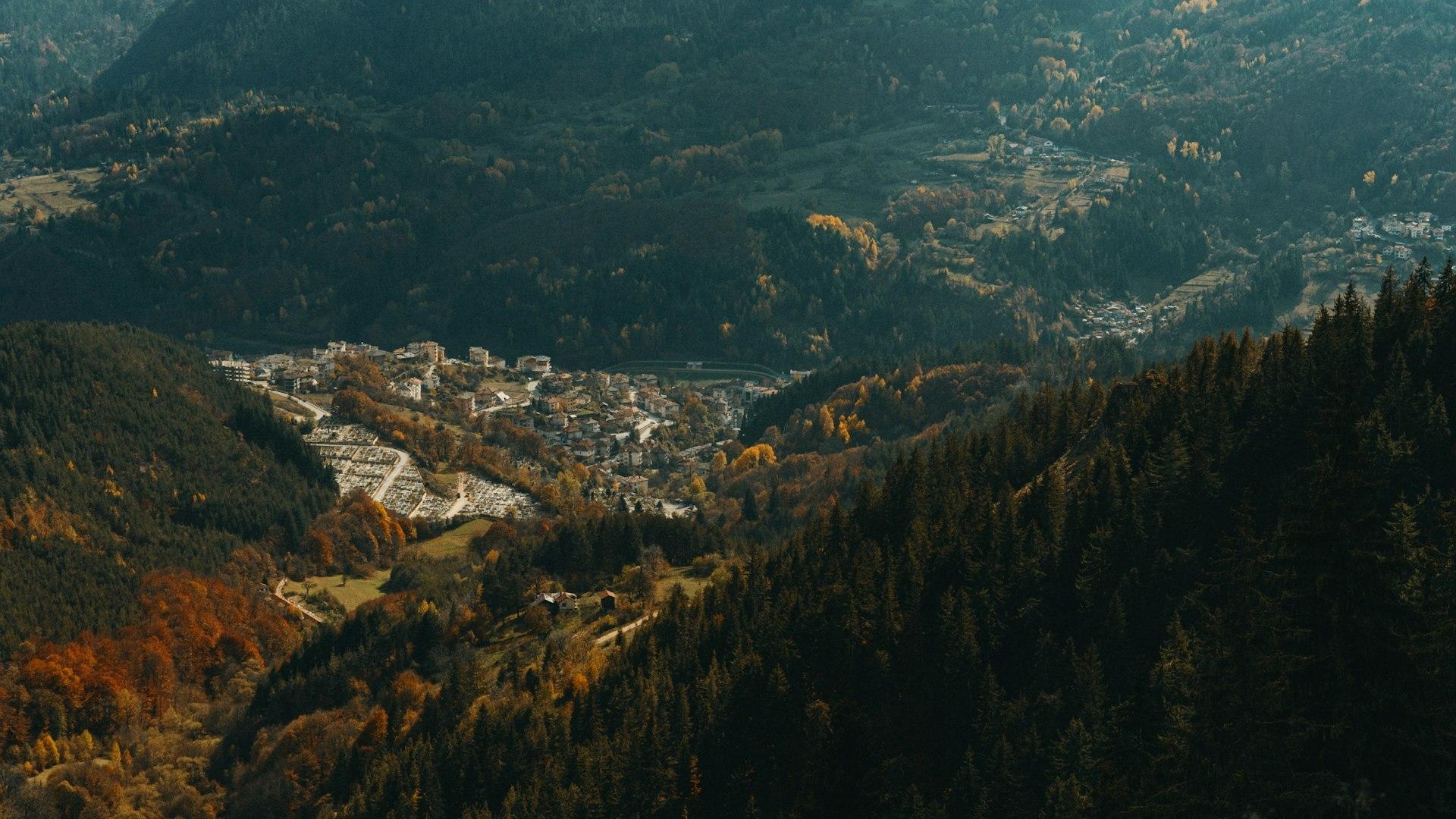
Velingrad was created in 1948 by merging three villages — Kamenitsa, Ladzhene and Chepino. The three parts still feel like separate quarters, each with its own character and its own springs. The town lies at the western end of the Chepino valley in the Western Rhodopes, at 750–850 m above sea level, in Pazardzhik province. Nearby is Kleptuza, the largest karst spring in Bulgaria, and the Septemvri–Dobrinishte narrow-gauge railway runs through the town.
The water. According to the municipality, there are four mineral-water deposits on its territory — Chepino, Ladzhene, Kamenitsa and Draginovo — with an official exploitation flow of 124.28 litres per second, the largest in the country. Temperatures reach 97.3 °C, the second highest in Bulgaria after Sapareva banya. The water is not the same everywhere: Chepino water can be drunk without restriction, Ladzhene water only at intervals because of its higher fluoride content, and Kamenitsa water is not approved for drinking. The municipality notes that the water is also used to heat buildings and greenhouses.
1. A "house with mineral water" — what exactly are you buying
This is the most common promise in listings and the most common source of disappointment.
- The water is not part of the property. Mineral-water deposits are exclusive state property, and some have been handed to municipalities to manage and use under the Water Act. You are buying the house, not a right to the spring.
- Ask for proof of the connection — a contract with the mineral-water supplier and recent bills. A verbal "we have mineral water" is not enough.
- A private borehole in the yard is a separate matter: using groundwater and mineral water requires a permit. If the seller says there is a well or a borehole with warm water, ask for its documents.
- The equipment. Thermal water is aggressive towards pipes and boilers because of its minerals. Inspect the installation and ask when it was last replaced.
- What kind of water it is — drinkable in that quarter, or only for bathing and heating (see the difference between Chepino, Ladzhene and Kamenitsa above).
2. A hillside house: the plot, the road, the zoning
Many houses and plots in Velingrad and the surrounding villages sit on slopes, at the edge of the regulated area or in villa zones.
- Is the property within the regulation plan? Urbanised land, a villa zone, or agricultural or forest land — this determines what you can build and whether an existing structure can be legalised at all.
- The road to the property. Check that there is a regulated street or at least a registered easement for access. A steep unpaved road is an inconvenience in summer and a problem in winter.
- Water, power, sewerage. In the higher parts there is often no sewer — find out how waste water is handled.
- Protected areas. The town is surrounded by forest. Check whether the property falls within forest land or a Natura 2000 protected zone — both restrict building.
- The building's paperwork. For older houses with extensions, extra floors and "bungalows" in the yard, ask for the building permit or a certificate of tolerance. What else we check in the documents is set out in our guide to legal checks before buying.
3. Winter and heating
Velingrad is a mountain town with cold winters. For a buyer from Sofia or the coast this is easy to underestimate at an August viewing.
- Ask how the property is heated and what last winter's bills came to.
- Inspect the roof, insulation and windows — with houses and villas this is the biggest hidden cost.
- If the house is heated with mineral water, find out what happens if the supply stops — is there a back-up source?
- Think about snow: who clears the street, and can the property be reached in an ordinary car?
4. A flat or a house
Flats are mainly in the central parts of the three quarters — brick blocks and newer buildings, and in recent years buildings with flats designed for holiday use. They are easier to look after from a distance, but check the maintenance fees, whether the building has an Act 16 and an occupancy permit, and what the "shared spa" really is — part of the building or not, who runs it, and for what fee.
A house gives you a yard and space, but needs regular presence or a trusted person on site. If you will not live in Velingrad full time, work out what maintenance from a distance will cost.
5. Letting to guests
Spa tourism keeps demand for overnight stays going all year round, not only in season. If you are buying to let:
- Paid overnight stays require the property to be categorised or registered under the Tourism Act, and selling stays through platforms also means complying with the new EU rules. We cover them in detail in our guide to short-term letting.
- Work out the yield on real occupancy across the year, not on the nightly rate at peak weekends.
- Competition from spa hotels is strong. A property with mineral water, good access and parking lets more easily.
Purchase costs
On top of the price, budget for the municipal acquisition tax, notary fees and the registration fee. The tax is set by each municipal council within a range of 0.1% to 3% under the Local Taxes and Fees Act — check the current rate in Velingrad Municipality's ordinance. If you are buying with a mortgage, the bank will commission its own valuation, and may be more cautious with houses in outlying parts. For current lending conditions see our mortgage guide. All amounts are indicative.
Velingrad checklist
- "Mineral water" in the listing? → contract, bills, type of water, condition of the installation.
- Borehole in the yard? → permit.
- Hillside house? → zoning, road, sewerage, forest land, Natura 2000.
- Old house with extensions? → building papers or a certificate of tolerance.
- Winter? → heating, bills, roof, access in snow.
- New build with a "spa"? → Act 16, maintenance fee, who runs the common parts.
- Letting to guests? → categorisation or registration, real occupancy.
In brief
Velingrad offers a rare combination — mineral water, mountains and prices still more affordable than the big resorts. But "a house with mineral water" is not a legal term: check the papers for the water, the plot and the road before you fall for the view.
If you are thinking of buying in Velingrad or anywhere in the Chepino valley — call us or visit the office. We will go through the documents together and tell you honestly what we see.
The information is general and indicative and does not replace a consultation.

