Living in Shumen: neighbourhoods, housing stock and what to check before you buy
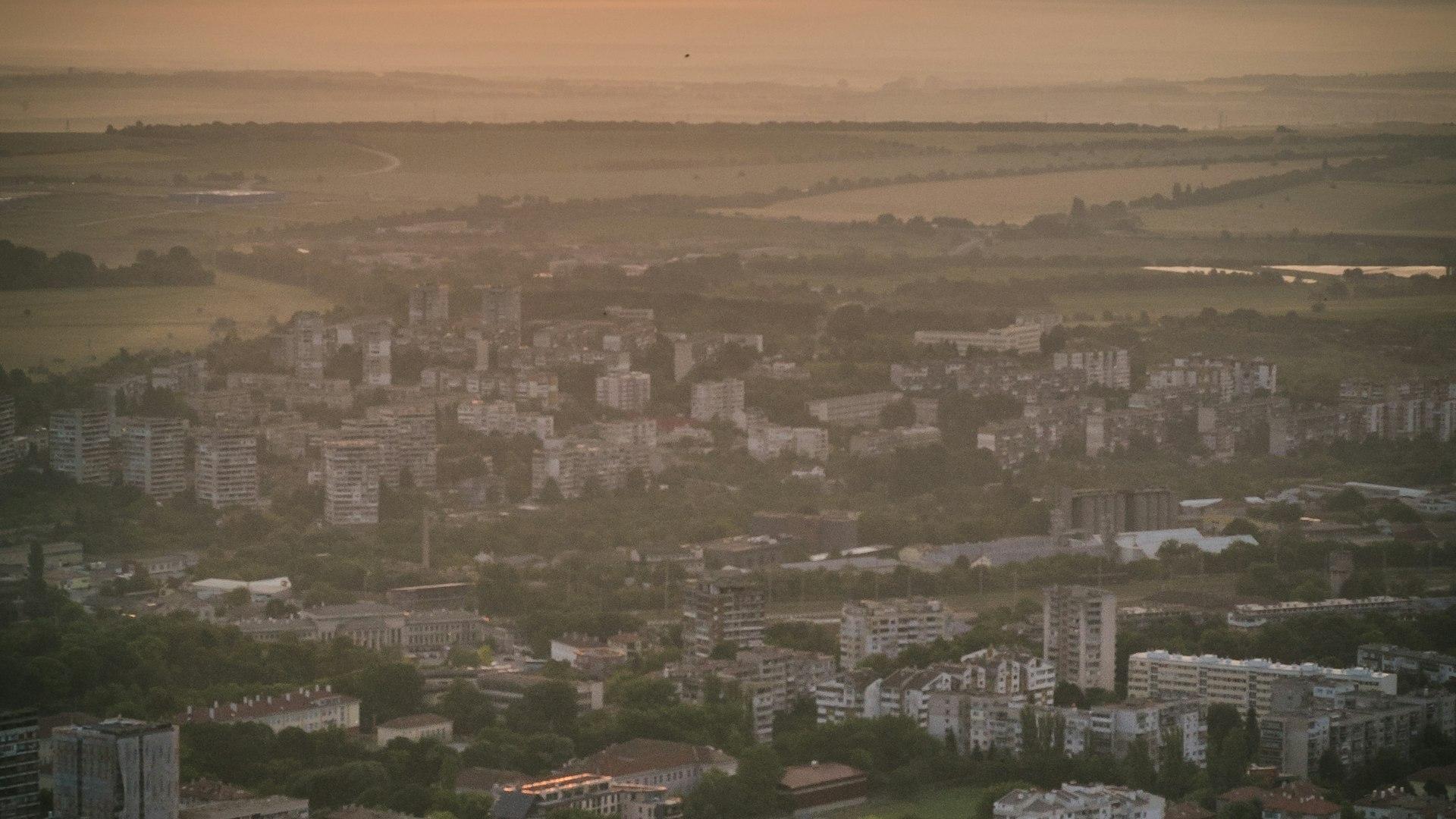
Shumen is Bulgaria's tenth-largest city and the regional centre of north-eastern Bulgaria. According to GRAO, the civil registration service, 80,683 people had their current address in the city as of 15 June 2026. The city lies in the Shumen Field at the foot of the Shumen Plateau: its western parts sit at about 280–300 m above sea level and its easternmost parts at 180–200 m. Varna is about 88 km away and Sofia about 360 km.
For a buyer, Shumen offers a compact centre, four housing estates, several former villages that are now part of the city, and a large green edge to the west: the plateau with Kyoshkove park. Below we describe the areas we are asked about most often and what we check in each.
These descriptions are general and reflect our experience; every neighbourhood has better and weaker streets. Checked as of early October 2026.
The centre
The central area brings together the town hall, the theatre, the library, the Central Park and the renovated pedestrian zone leading to the City Garden and the railway station. It is also home to the landmarks of old Shumen: the Tombul Mosque (1744) and the Bezisten covered market (1529). From the centre, a staircase climbs to the "Founders of the Bulgarian State" monument on the plateau.
Homes here are mostly apartment buildings and blocks from different decades, older houses and the occasional new building.
Who it suits: people who want to walk to work, shops and the university. Drawbacks: older buildings often need work on the roof, facade and services, and parking is difficult.
What we check: the state of the common parts, and whether the owners' association has a repair fund and an active manager. You can now look up who manages a building in a public register; we explain how in our guide to the condominium register.
The housing estates: Trakia, Dobrudzhanski, Herson and Boyan Balgaranov
Trakia is Shumen's largest housing estate, at the far eastern end of the city. It began as a refugee quarter in the early 1920s and today has its own schools, community centre (chitalishte) and vocational high school.
Dobrudzhanski lies in the south-east of the city and also grew out of refugee settlement in the same period. It is served by line 4, the most frequent bus route in the city.
Herson is a small estate in the central part of the city, next to the faculty of the National Military University. It is named after Shumen's twin city in Ukraine.
Boyan Balgaranov is in the north-west and has two parts, Boyan Balgaranov 1 and 2. Almost all bus lines terminate here, which helps people without a car.
The estates give the most space for the money and the widest choice of listings. But differences between individual blocks matter more than the name of the estate: construction method, whether the building has been insulated, and the condition of the roof, lift and services.
Who it suits: families who want a school and kindergarten nearby, and buyers on a tighter budget. Drawbacks: parking between the blocks and uneven upkeep from one entrance to the next.
Grivitsa and the western edge by the plateau
Grivitsa is in the western part of the city, at the foot of the Shumen Plateau. It borders Boyan Balgaranov to the north and the Kyoshkove area to the south: a large forest park with a small lake, a playground and restaurants, served by city buses. Hiking trails up to the plateau start here.
The closeness to the forest and the lower-rise housing make this part attractive to people looking for quiet and walks. What we check: for properties on slopes, drainage, retaining walls and any signs of cracking or settlement.
The former villages: Divdyadovo, Makak, Mutnitsa
Several former villages have been absorbed into Shumen and are now neighbourhoods with houses and gardens.
- Divdyadovo is 3–4 km south of the centre, on the road to Veliki Preslav, at the foot of the plateau. It became part of the city in 1971.
- Makak lies north of the main part of the city, towards the village of Tsarev Brod, and is served by bus line 8.
- Mutnitsa is about 8.6 km east of the centre, on the Shumen – Varna motorway, close to Madara and Kaspichan.
What we check: whether ownership is clearly divided, whether there is an agreement on the use of the yard, and whether the buildings are legal. Read more about the documents in our guide to legal checks before buying. We also check the street, water and sewerage, which in the former villages are not always up to the standard of the centre.
Nature: the plateau and the climate
Shumen's biggest asset is the Shumen Plateau Nature Park, declared in 1980. The plateau rises some 250–300 m above the city and covers the forests to its west and south. It is home to the "Founders of the Bulgarian State" monument and Shumen Fortress.
The climate is temperate continental. In winter, cold air from the north and north-east sweeps in freely, so when buying pay attention to insulation, windows and heating, especially on top floors and in corner flats.
Transport, university and work
Public transport is bus only; Shumen has no trolleybuses. The railway station and the Central Bus Station stand side by side on Rishki Prohod Boulevard. Three first-class roads cross the municipality: I-2 Ruse – Shumen – Varna, I-4 towards Targovishte and Sofia, and I-7 Silistra – Shumen – Yambol.
Shumen University "Bishop Konstantin Preslavski" (founded in 1971) and the National Military University faculty keep up demand for smaller rental flats, which matters if you are buying to let. Industry is concentrated in the Industrial Zone in the south-east of the city, on both sides of Madara Boulevard: workshops, warehouses, freight-forwarding centres and car services.
What to check on any purchase in Shumen
- The block and the owners' association. Has the building been insulated, is there a repair fund, are big costs for the roof or lift coming up?
- Slopes towards the plateau. For houses and buildings on slopes, ask about retaining walls and drainage.
- The Industrial Zone. See what is around the property and how heavy traffic moves, especially in the south-east.
- Liquidity. Think about how quickly you could sell or let the home in a few years. Well-located homes in the centre and in the most sought-after estates sell more easily.
- Transaction costs. The local acquisition tax differs from municipality to municipality; we explain how to check the rate in our guide to the property acquisition tax.
- Financing. We explain how a mortgage works in our mortgage guide. Work out your monthly payment in our mortgage calculator before you start viewing.
In brief
- The centre offers walkable living and a historic setting, but older buildings need a check of the common parts.
- Trakia, Dobrudzhanski, Herson and Boyan Balgaranov give the most space for the money; the individual block is what decides.
- Grivitsa and Kyoshkove sit by the plateau forest; the former villages of Divdyadovo, Makak and Mutnitsa offer houses with gardens.
- The city has bus transport, a university and a direct motorway link to Varna.
- Check the slope, the insulation and the distance to the Industrial Zone, and think about liquidity for a future sale.
If you are looking for a home in Shumen and would like us to compare a few neighbourhoods against your budget and lifestyle, give us a call or visit our office. We will show you our current listings and what lies behind each of them.
This information is general and indicative and does not replace professional advice.

