Living in Pleven: neighbourhoods, housing stock and what to check before you buy
Pleven lies in the middle of the Danubian Plain, at the western foot of the Pleven Heights, roughly halfway between the Danube and the Balkan Mountains. Sofia is about 150 km away. It is Bulgaria's seventh-largest city and the regional centre for much of north-central Bulgaria.
For a buyer, Pleven has a clear structure: a compact centre with squares and parks, two large housing estates (Storgozia and Druzhba), several smaller districts and villa zones around the city. Below we describe the areas we are asked about most often and what we check in each of them.
These descriptions are general and reflect our experience; every district has better and weaker streets. Checked as of August 2026.
The centre
Central Pleven has large squares, cascades and fountains, the Regional History Museum, the Ivan Radoev Drama and Puppet Theatre, the City Garden and plenty of shops and cultural venues. Homes here are in apartment buildings from different decades, older houses and the occasional new building.
Who it suits: people who want to walk to work, shops and culture. Drawbacks: older buildings often need work on the roof, façade and installations, and parking is hard.
What we check: the condition of the common parts, and whether the owners' association has a repair fund and an active building manager. You can now look up who manages a building in a public register; we explain how in our guide to the building manager register.
Storgozia and Druzhba: the two large estates
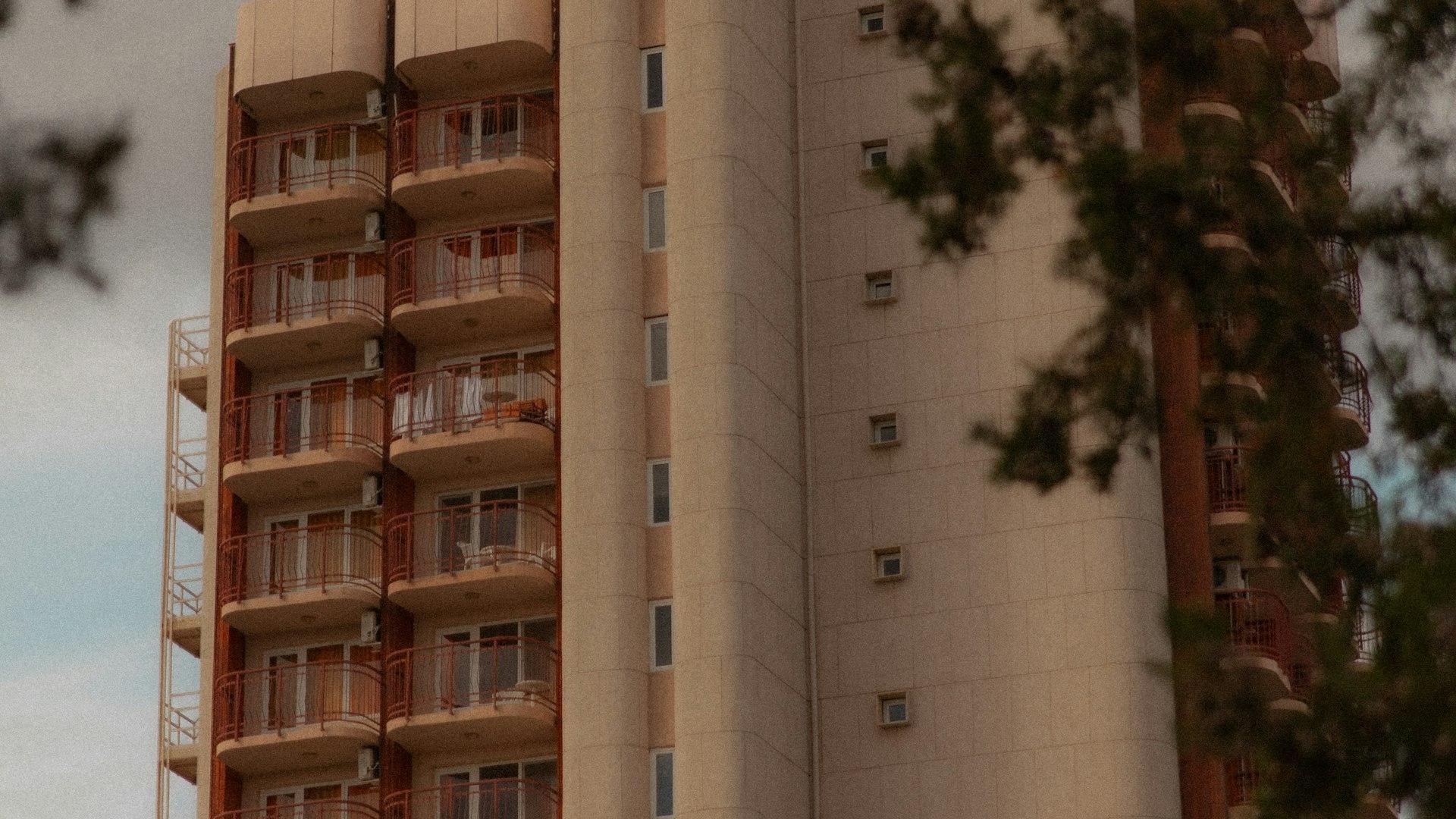
Most people in Pleven live in Storgozia and Druzhba. Both estates consist mainly of apartment blocks built during the socialist period, in the brutalist style typical of the era. They have schools, kindergartens, shops and trolleybus lines to the centre. Storgozia takes its name from the Roman fortress whose ruins stand at the entrance to Kaylaka park.
These estates give you the most floor space for your money and the widest choice of listings. But the differences between individual blocks matter more than the name of the estate: construction method, whether the building has been insulated and renovated, and the state of the roof, lift and installations.
Who they suit: families who want everything close by, and buyers on a tighter budget. Drawbacks: parking between the blocks, and maintenance that varies from one entrance to the next.
The smaller districts: Mara Dencheva, Deveti Kvartal, Kaylaka, Voden, Skobelev
Around the centre and the estates there are several smaller districts with lower-rise buildings and a calmer pace. Kaylaka sits next to the park of the same name, and Skobelev next to Skobelev Park with the "Pleven Epic 1877" Panorama. Supply is smaller here, but it often includes low-rise apartment buildings, houses and floors of houses.
What we check: for a house or a floor of a house, whether ownership is clearly divided, whether use of the yard has been allocated and whether the buildings are lawful. More on the paperwork in our guide to legal checks before buying.
The villa zones around the city
Pleven has several low-density villa zones: Orleto and Bulin Dol to the west, Martva Dolina to the south-west and Kozhuharskata Cheshma to the east. They attract people who want a house with a garden close to town.
What we check: whether the plot is within the regulation plan and what it is zoned for, whether there is a built street, water, sewerage and electricity, and whether the house has the documents that prove it is lawful. A villa zone does not always allow comfortable year-round living, so check this before paying a deposit.
The parks: Kaylaka and Skobelev Park
Kaylaka park is the city's greatest asset. It lies south of the centre in the karst valley of the Tuchenitsa river, with limestone cliffs, lakes and walking paths. The protected locality "Kaylaka (incl. Bohot Forest)" was declared in 1972 and covers about 1,000 hectares. The park contains the ruins of the Storgozia fortress, the zoo and the Summer Theatre. Skobelev Park is a memorial park on the site of the 1877 battles.
Living close to the parks is a real plus when choosing a home, for walks, sport and children.
Transport and connections
Pleven's urban transport runs entirely on trolleybuses. They arrived in 1985, making Pleven the third Bulgarian city with trolleybuses after Sofia and Plovdiv. The city is an important station on the Sofia–Varna railway, and the E-83 Sofia–Ruse main road passes to the north.
The Medical University and rentals
The Medical University of Pleven, founded in 1974, attracts students from across the country. That supports demand for smaller rental flats near the university and the centre, which matters if you are buying to let.
What to check with any purchase in Pleven
- The river. The Tuchenitsa flows through parts of the city. If a property is in the low-lying areas near its bed, ask how it has fared in heavy rain and check that the basement and cellar are dry.
- The industrial zones. The large industrial zones are in the north of the city, along the railway. See what is around the property and how heavy traffic moves.
- Earthquakes. Northern Bulgaria is within reach of the strong earthquakes from the Vrancea region of Romania. In an older block, ask whether load-bearing walls have been cut through or removed on any floor.
- The block and its owners' association. Has the building been renovated, is there a repair fund, and are large costs for the roof or lift coming up?
- Demographics. Pleven's population has been falling since the early 1990s, as in most towns in northern Bulgaria. That makes liquidity important: how quickly you could sell or let the home in a few years' time. Well-located flats in the centre and in the most popular estates sell more easily.
- Financing. We explain how a mortgage works in our guide to mortgage loans in Bulgaria. Work out the monthly payment in our mortgage calculator before you start viewing.
In short
- The centre offers a walkable life, but older buildings need their common parts checked.
- Storgozia and Druzhba give the most space for the money; the individual block is what decides.
- The smaller districts and villa zones offer houses and floors of houses, with more paperwork to check.
- Kaylaka park and the trolleybus network are among the city's biggest advantages.
- Check how close you are to the river and the industrial zones, and think about liquidity when you come to sell.
If you are looking for a home in Pleven and would like us to compare a few districts against your budget and way of life, call us or visit our office. We will show you the current listings and what lies behind each one.
The information is general and indicative and does not replace professional advice.

