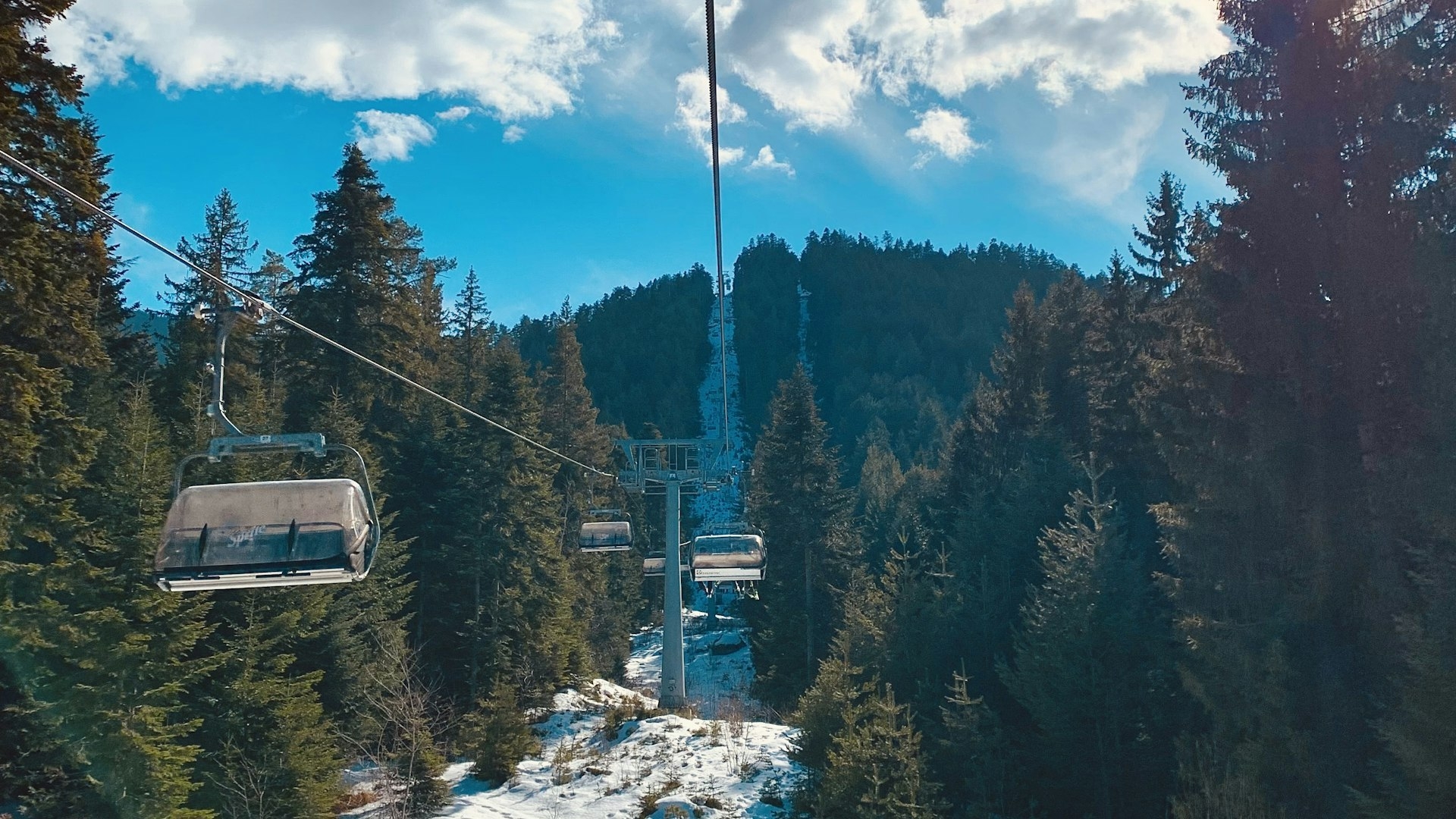
A mountain apartment is bought on the excitement of the first ski day. It is owned all year, though — with a maintenance fee that keeps running in May, heating that costs most exactly when the place is in use, and months when the resort is nearly empty. Below is the checklist we go through for every mountain property before a client pays a deposit.
Verified as of October 2026. Figures and contract terms vary widely between complexes — always check the actual document.
Three resorts, three different markets
- Bansko — the country's largest ski resort and the biggest supply of holiday apartments. It also has a summer season — mountain tourism, festivals, golf nearby — which helps occupancy. The ski area lies within Pirin National Park, and its concession and development have repeatedly been disputed. Supply is large, so resale can be slow, especially for a standard flat in an outlying complex.
- Borovets — the closest of the three to Sofia, in the Rila mountains. It draws many weekend and short-stay guests. The housing stock is smaller and more varied — hotels, apartment complexes, chalets.
- Pamporovo — in the Rhodopes, with a relatively mild climate and a family crowd. The summer season is weaker, so off-winter occupancy depends heavily on the specific complex and the nearby villages.
Which is "better" depends on your purpose: your own use, letting, or both.
Maintenance fees and the management contract
Most mountain complexes have a management company and an annual fee, usually charged per square metre. If the complex is a gated residential complex within the meaning of the Condominium Management Act, its management is governed by a written contract with notarised signatures, recorded against each unit, and it binds later buyers too (Art. 2 of the Act). We covered this regime in detail in our guide to buying a holiday property on the coast — the same rules apply.
What is specific to the mountains is what the fee covers. Ask for a list and check:
- snow clearing of the access road, the car park and the roofs — who does it and whether it is included;
- heating of the common parts and how the apartment itself is heated (electricity, the complex's central boiler, a heat pump) — with central heating, find out how the bill is split;
- pool, spa, reception, ski storage, shuttle to the lift — convenient, but they push the fee up every year;
- building insurance and a repair fund — roofs and façades wear faster in the mountains;
- how the fee changes — unilaterally, by indexation, or by decision of the owners;
- the seller's unpaid fees — ask the manager for a document confirming there are no arrears.
Legal status: dwelling or hotel apartment
In the advert everything is an "apartment". In the documents it may be a dwelling — or a unit in a hotel or apartment-type tourist complex, in which case there is often a contract with a hotel operator that decides when you can use the unit and how income is shared. Check:
- the designated use in the title deed, the cadastral diagram and the building's certificate of use;
- whether the building is categorised as tourist accommodation under the Tourism Act, and who the categorised operator is;
- property tax — a holiday home is usually not a main residence, so the 50% reduction does not apply.
If the designated use and the terms of the operator contract don't match what you want to do with the property, that is a reason not to proceed.
Letting it out — in season and out of season
The winter season is short — in practice a few months, with peaks over the holidays and school breaks. Outside it, demand is thin. The options:
- Through the complex's operator (a "rental pool") — convenient, but read the contract: what percentage the owner receives, which costs are deducted, how many weeks you can use it yourself, whether there is a guaranteed income and under what conditions it falls away.
- On your own, through platforms — a larger share for you, but also registration, tourist tax, cleaning, key handover and dealing with guests from a distance. We explained registration and the new EU regulation in Short-term letting after 20 May 2026.
- Long-term outside the season — to seasonal workers, remote workers or local tenants. Demand is limited and depends on the resort; in Bansko, which is a year-round town, it is more realistic than in an isolated complex.
Rental income is taxable — see what tax you owe and who pays it.
The numbers: realistic, not brochure
Work out the net income: rent at realistic occupancy, minus the maintenance fee, heating and electricity, the operator's or platform's commission, cleaning, property tax, insurance, income tax and a repair reserve. How to do it properly is in Rental yield: how to calculate it. If the numbers only work with full occupancy all winter, treat the property as a place for your own holidays rather than an investment.
What to look at on site
- Winter access — is the road to the complex cleared, and is there a slope cars can't manage without chains?
- The real distance to the lift — "5 minutes" may mean by car. Check whether there is a ski bus and how often it runs.
- Damp and mould — especially in low-floor flats and in buildings that aren't heated all year.
- The roof and the snow — leaks around chimneys and gutters; ask when it was last repaired.
- Who is there out of season — is reception open, are windows lit, is the pool maintained?
- The building's legality — certificate of use or commissioning certificate.
The most useful viewing is twice: once at the height of the season and once in May or October.
In short
- The maintenance fee is paid all year — read the management contract and exactly what it covers.
- Check whether the unit is a dwelling or a hotel apartment with an operator contract.
- The season is short; outside it, rental income is uncertain.
- Work out the net income at realistic occupancy.
- View both in season and out of season.
If you are considering an apartment in Bansko, Borovets or Pamporovo, call us or come into the office. We'll go through the documents and the management contract with you before you pay a deposit.
This is general information, not legal or tax advice for a specific case. Verified as of October 2026.