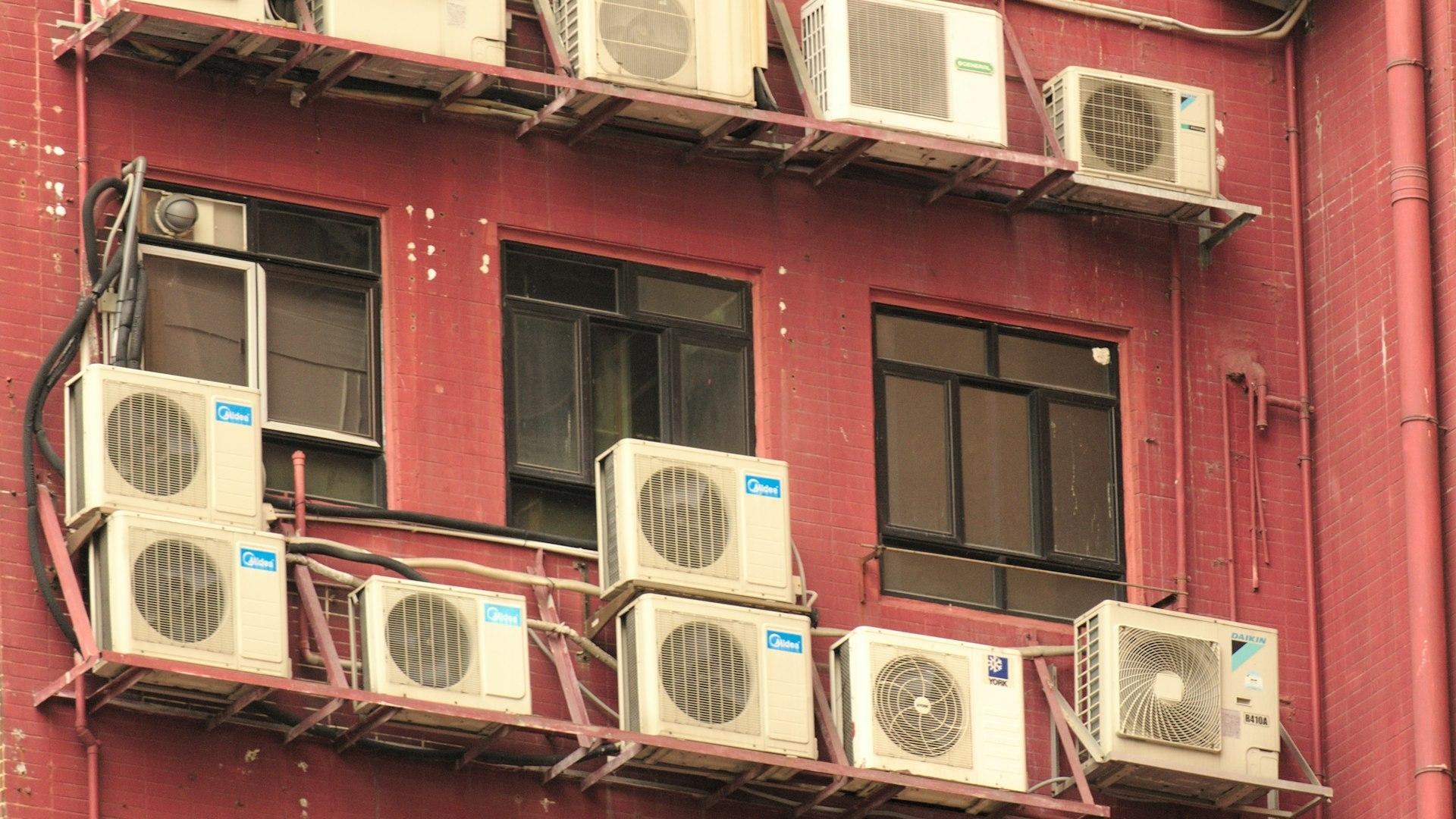
An air-conditioner on the façade in Bulgaria: what the law allows, what the condominium can decide and how to avoid a dispute with the neighbours
Every summer the same question comes back: can you simply fix the outdoor unit of your air-conditioner to the wall next to your window, or do you need to ask someone first? The answer has two parts. Under the Spatial Development Act (ЗУТ), installing an air-conditioner is, in the normal case, not construction that needs a permit. Under the Condominium Management Act (ЗУЕС), however, the façade is not yours alone — and the rules there are stricter than many owners assume.
What the Spatial Development Act says
The Act does not mention air-conditioners expressly. Art. 151(1) lists the works that need no building permit, and first on the list is routine repair of buildings and installations (item 1). The Act defines routine repair as improving and maintaining buildings and installations in good order, provided that the structure is not affected and the use of the rooms does not change (§ 5, item 43 of its Additional Provisions).
Fixing an outdoor unit on brackets, with a hole for the pipes and cable, is by its nature close to that category. That is why, in the usual case, the municipality issues no building permit for a home air-conditioner. There are two important caveats, though:
- if the load-bearing structure is affected — say, a large opening in a reinforced-concrete wall, or heavy equipment on a roof bracket — this is no longer routine repair and should be discussed with a structural designer;
- if the building is a listed cultural value or sits in its protection zone, even Art. 151(1) works may only be carried out after clearance under the Cultural Heritage Act (Art. 151(2)). In the historic centres of Sofia, Plovdiv, Varna and other towns this affects quite a few buildings — check the status before you book the installer.
"No building permit" does not mean "no rules". The rest of the rules come from the condominium.
The façade is a common part of the building
Under Art. 38(1) of the Property Act, the external walls are a common part of the building. That includes the façade: it belongs to all the owners according to their ideal shares, not to whoever's window happens to be next to it.
The Condominium Management Act turns this into specific duties. Owners must:
- not carry out works in the common parts, including on the façade, that breach their integrity and architectural appearance, load-bearing capacity, fire safety or safe use of the building (Art. 6(1)(19) ЗУЕС, added in 2016);
- not cause damage to other units or to the common parts (item 2);
- not cause the neighbours more disturbance than is usual (item 4);
- use the common parts in the way set out in the building's house rules (item 15).
In practice, an air-conditioner mounted neatly under a window or on a balcony is rarely a problem. A unit hanging over the entrance, cutting across a decorative element, piercing freshly laid insulation or dripping onto someone else's balcony is exactly what items 19 and 2 have in mind.
What the general assembly can decide
The general assembly adopts, amends and supplements the house rules (правилник за вътрешния ред, Art. 11(1)(1) ЗУЕС). That is the right place for clear rules on air-conditioners, for example:
- where outdoor units go — on the balcony, under the window, on the courtyard side rather than the street side;
- how condensate is drained — to the sewer or into a container, not freely down the façade;
- which brackets and fixings are allowed, especially on external insulation;
- who is responsible if the common parts are damaged.
If your building already has such rules, they bind every owner and tenant. If it does not, but a thermal renovation is coming, now is the time to agree them: during renovation units are often taken down and re-fitted, and well-laid insulation is easily damaged by poor fixings.
Condensate, noise and the neighbours
Most air-conditioner disputes are not about permits but about water and noise. A few practical rules:
- Drain the condensate with a hose to the sewer or into a suitable container. Water dripping onto a neighbour's balcony, window or car is damage within the meaning of Art. 6(1)(2) ЗУЕС.
- Do not point the unit at someone else's window or mount it right next to a neighbour's bedroom.
- Use anti-vibration pads and check the fixings — over the years brackets rust and noise increases.
- Clean and service the unit. It will be quieter as well as more efficient.
Municipal ordinances — on public order or on the look of the urban environment — may add requirements, especially where a unit hangs over a pavement or sits on a street-facing façade. In Sofia and the other large cities, check with the district administration before mounting a unit on the street side.
Installation: who does it
Air-conditioners contain fluorinated refrigerants. Under the EU rules on fluorinated gases, installation is carried out by a certified technician. Ask for a record of the installation — it helps with a warranty claim and when you sell the property.
Working at height on the outside of a building is not a DIY job either. Good firms install from the balcony or from a cherry-picker and secure the area below.
If you are buying or renting
When buying a home:
- check which air-conditioners stay with the property and list them in the contract;
- look at where the outdoor units are mounted and how condensate is drained — a unit installed in breach of the house rules may have to be moved, at your expense;
- ask for the house rules and whether a thermal renovation is planned;
- in a new build, check whether the design provides places for outdoor units — niches, platforms, openings. If you are buying a shell flat, air-conditioning is part of the second budget — see our guide Buying a shell apartment.
The general legal checks before buying — title, encumbrances, lawfulness of the building — are set out in our guide Legal checks before buying a property.
When renting, fitting a new air-conditioner is an improvement to someone else's property — get the landlord's written consent and agree whether the unit stays when you leave.
In short
- The Spatial Development Act requires no building permit for an ordinary air-conditioner installation that does not affect the structure (Art. 151(1)(1) and § 5, item 43).
- Listed buildings and their protection zones need clearance under the Cultural Heritage Act (Art. 151(2)).
- The façade is a common part: do not breach its appearance or integrity (Art. 6(1)(19) ЗУЕС) and do not cause damage to the neighbours.
- The general assembly can regulate air-conditioners in the house rules — and the rules bind everyone.
- Drain the condensate, dampen the noise, and have a certified technician install the unit.
If you are buying a home and want to know how the use of the façade is regulated in that particular building, or you are selling and want to have the documents ready in advance, call us or come into the office. We will go through what needs to be checked together.
The information is general and indicative and does not replace professional advice.

