
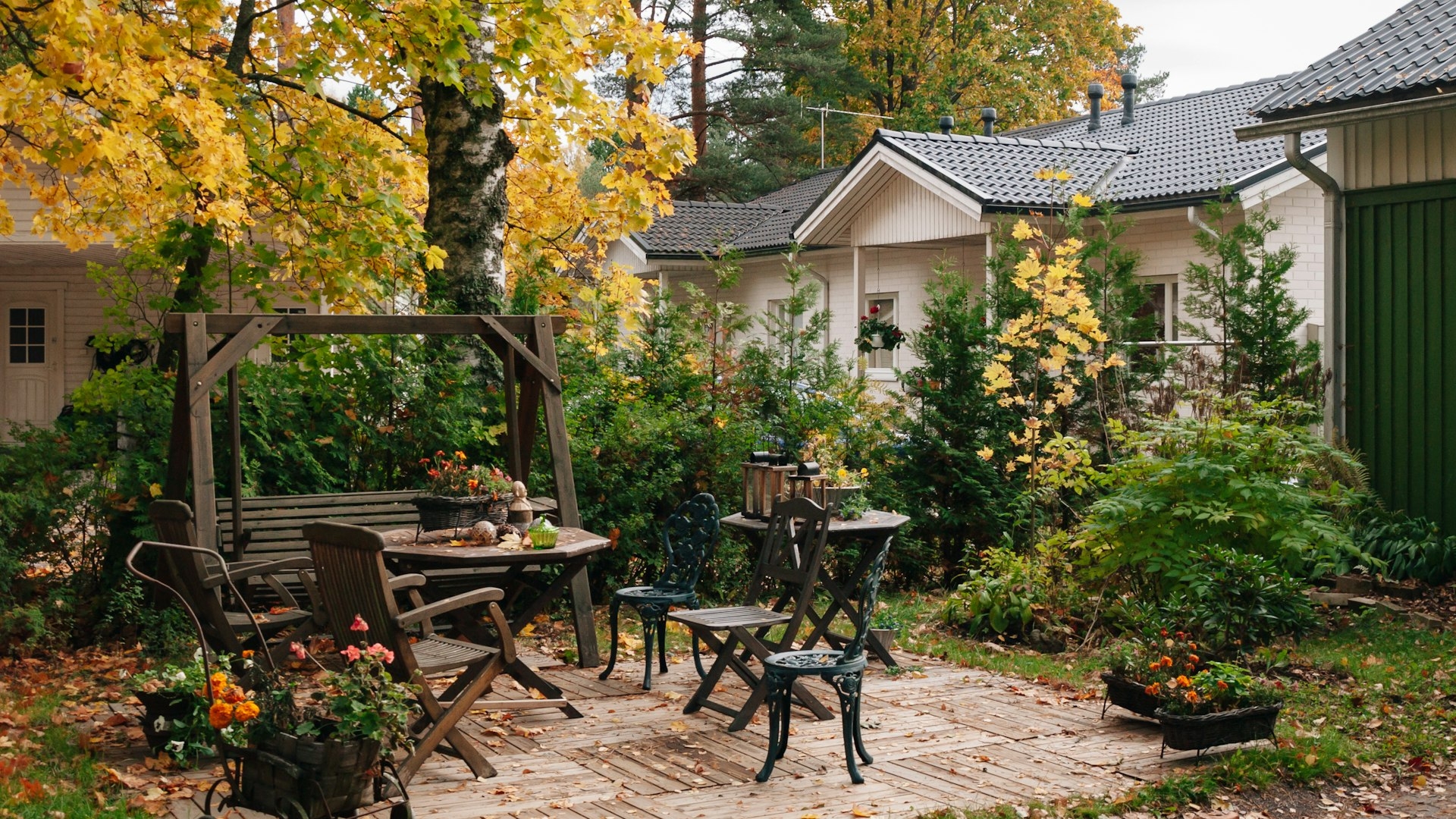
Most of the houses we show around Sofia come with a yard, from a small garden in Boyana to a plot with an orchard in a village outside the city. Buyers look at the yard closely: it is part of the price, but also part of the work they will inherit. Here is how to make it cope with the climate without taking over every weekend.
The Sofia plain lies at about 550 m above sea level. Winters are cold and summers hot and increasingly dry. A plant that thrives in Plovdiv or on the coast does not always survive January near Sofia; a mountain plant often struggles in August.
Soil matters too. According to the soil survey prepared for Sofia's General Development Plan (Sofiaplan, based on the 2003 environmental assessment), the most widespread soils in the municipality are cinnamon forest soils with a heavy sandy-clay texture, followed by leached chernozem-smolnitsa soils, which are clayey, and alluvial soils. In practice this often means soil that holds water in winter and cracks and compacts in summer. Before planting, dig a test hole and watch how the water drains after rain.
The safest choices are species that also grow in Bulgaria's natural vegetation. The drought-tolerant list compiled by the Information and Nature Conservation Foundation (an EU LIFE project) includes, for example:
| Group | Examples |
|---|---|
| Trees | field maple, Tatarian maple, manna ash, silver lime, Turkey oak, Hungarian oak, downy oak, field elm |
| Conifers | black pine, junipers |
| Shrubs | smoke bush, lilac, oriental hornbeam, Christ's thorn |
The same source gives simple advice: choose species for the purpose and the site, and buy saplings from the nearest nursery, as they are already used to local conditions.
Practical notes from the yards we see: silver lime and black pine become large trees, so keep them away from the house and from the fence on a small plot. For a hedge, lilac and smoke bush cope with a dry summer better than many ornamental evergreens.
| When | Suits |
|---|---|
| Autumn (November–December) | most fruit species, in warmer, well-drained soils: soon after the growing season ends and at least about 15 days before lasting frosts |
| Early spring | heavy, clayey, cold and wet soils; and the more frost-sensitive peach, apricot and walnut in years with a harsh winter |
That is the guidance from the Bulgarian agricultural portal Agri.bg on planting times. One practical detail: even if you plant in spring, prepare everything in autumn, including ordering the trees, digging over the ground and digging the holes.
The Royal Horticultural Society (RHS) adds that bare-root stock is usually available from November and is planted while dormant so it can root before spring. Container-grown plants give more freedom over timing, but they too establish best outside the summer heat.
After planting, the first three years are when drought stress is most likely (RHS). A mulch at least 5 cm deep around the tree holds moisture, but keep it about 10 cm away from the trunk so the bark does not rot.
Our advice: a backbone of perennials, with annuals only in a few pots or one bed by the entrance, where they are seen.
Grass is the best surface where people walk and play. In a dry Sofia summer, though, it is either watered regularly or it turns yellow.
Groundcover plants are a sensible alternative on slopes, in shady corners and wherever nobody walks. According to university extension advice for gardeners (University of Delaware), they need regular watering until established, about 3 months, after which species suited to the site need little or no extra water except in severe drought. They do not tolerate heavy foot traffic, so keep grass or a path there.
Collecting rainwater and watering more efficiently are covered in a separate guide.
Before planting a tree near the fence, check exactly where the boundary is and respect the minimum distances in Art. 52 of the Property Act (Закон за собствеността):
| Trees | Minimum distance from the boundary |
|---|---|
| Tall | 3 m |
| Medium | 1.5 m |
| Low | 1 m |
The neighbour may ask the mayor of the municipality, district or village for permission to cut branches and roots that reach into their property, and may ask for trees planted closer than allowed to be moved. Separately, removing long-lived ornamental trees, even in your own yard, usually requires the mayor's written permission under the local ordinance. Check with your district or municipality before you cut.
For a house buyer this matters: a large tree on the boundary is a common cause of disputes, and the fence does not always match the cadastral boundary. When buying, check the documents and the sketch; see our legal checks before buying.
Buyers view houses in autumn too. Mown grass, trimmed shrubs, leaves cleared from paths and gutters and a tidy terrace show that the property is looked after. Don't plant anything large "for the photos": buyers value healthy, well-placed trees more than new saplings. For pricing and viewings this season, see our guide to selling in autumn.
If you are looking for a house with a garden near Sofia, or want to sell yours, call us or visit our office. We will tell you what buyers notice in a yard and what is worth tidying before viewings.
